
An AXIOS report citing two US officials set off volatility in the market this afternoon. The report claims the US and Iran have agreed on a 60-day framework to extend their current ceasefire and resume talks on Iran's nuclear program. However, the agreement remains unofficial pending President Trump's final approval and signature.
It is important to know that neither the US nor Iran has officially confirmed the deal yet. Markets, however, are already running with it (gold rallied, oil prices slid and the US dollar retreated) showing just how sensitive global markets are right now to news around the US-Iran conflict.
What's Actually In the Deal/MOU
According to the report, the 60-day ceasefire framework requires Iran to guarantee free and unimpeded passage through the Strait of Hormuz, without levying fees or interfering with shipping traffic. Also, Iran has 30 days to clear out all the underwater bombs, called mines, from the area. In return, the US military will stop blocking the waters as normal shipping gets back to normal.
Iran reportedly gave commitment not to pursue nuclear program moving forward. Both sides will also discuss about getting rid of Iran's highly enriched nuclear material during the 60 days, the report said.
A top US official reportedly told Axios that this agreement is just a small first step. Its main goal is simply to get everyone to sit down and talk so they can figure out the harder details later.
The Trump Variable
The main problem holding things up is still the White House. US officials reportedly said that the details of the deal were mostly settled by Tuesday, and Iran confirmed they were ready to sign it.
However, when negotiators showed the final plan to President Trump, he did not sign it right away. Instead, he told the people helping with the deal that he wants a few days to think about it.
How did the Markets React
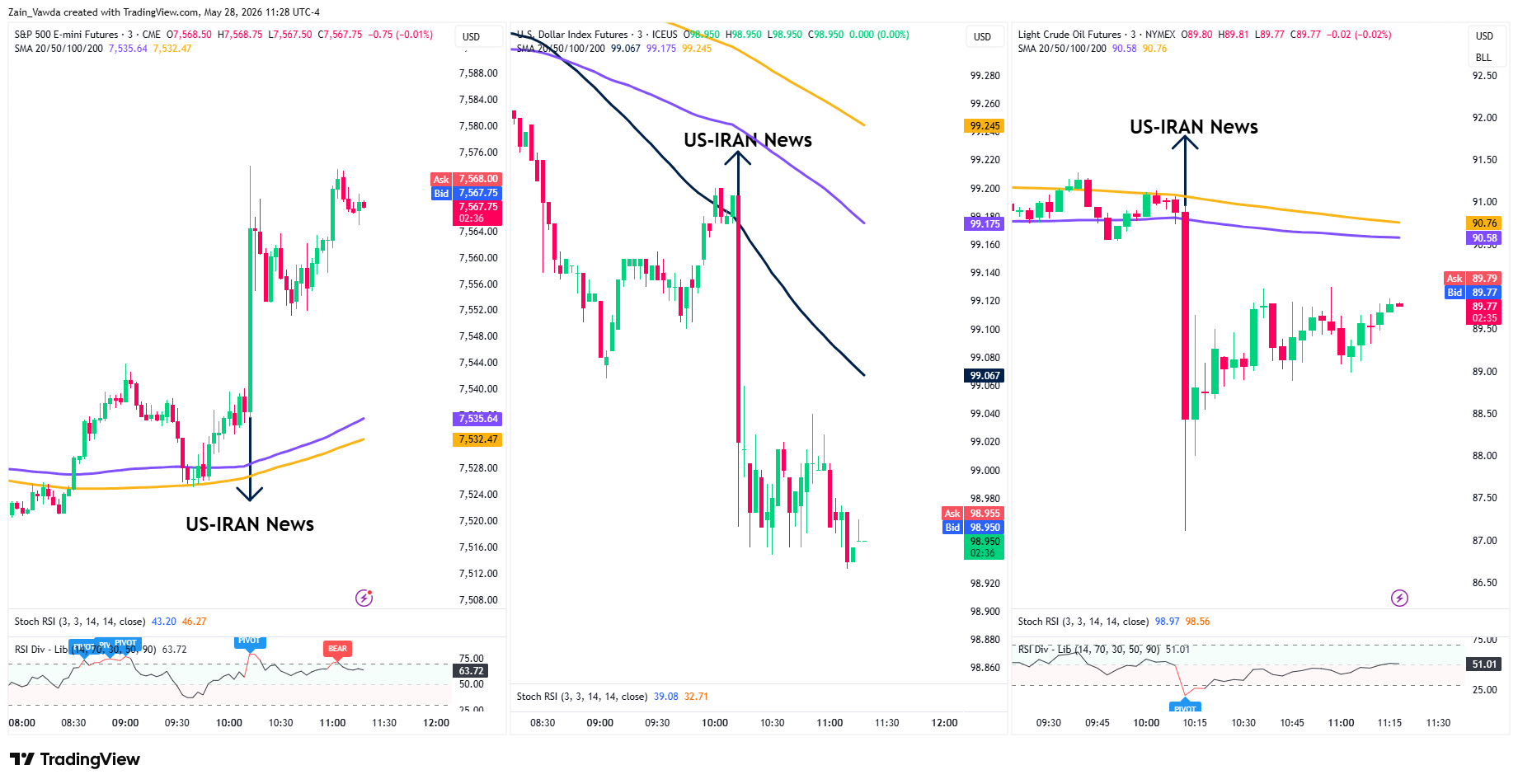
Oil already began to price in the deal optimism, although the news hasn't been confirmed officially. CL futures dropped back below the $90 a barrel mark when the news broke. It remains to be seen whether the bearish momentum continues.
Market Overview - S&P 500 (ES), US Dollar Index, Crude Oil Futures
Source: TradingView
If the framework is officially confirmed and receives Trump's endorsement, markets could see a swift de-escalation trade: crude prices selling off further, the Hormuz risk premium unwinding, global shipping normalizing, and central banks from the Federal Reserve to the Bank of Korea gaining much-needed breathing room on inflation.
South Korea's central bank, one of the most exposed to Iranian oil disruptions given the country imports more than 84% of its energy needs, just shifted hawkishly at its latest meeting precisely because of the Iran-driven commodity spike.
The US dollar may prove to be the biggest loser from this deal. The Dollar Index has already retreated, trading just below the 99.00 handle from 99.18 just before the news broke.
The Outlook Moving Forward
As markets have shown recently, knee jerk reactions such as these tend to falter pretty quickly if there is no follow through.
This is not the first time a deal has almost happened. Trump and his advisors thought they were close to an agreement several times earlier in the war, but the talks always broke down.
If confirmation does materialize, the current rally may gain further traction but doubts will linger. A US-Iran deal is often seen as flimsy because of a deep history of broken promises and mistrust.
The US distrusts Iran due to its history of backing regional militant groups and secret nuclear activities. Iran, on the other hand, have a sour taste from the JCPOA (nuclear deal) agreement which took years to build but was suddenly canceled by the U.S. in 2018.
Add to that the recent military skirmishes which have taken place, the last of which occurred this morning and it is clear that stability for markets may be some way off.
Because of this history, traders in the financial markets should proceed with caution, and not assume the problem is solved just yet.
Read More: Update: Hot Inflation, Slowing Growth, and a Resilient Labor Market Leave the Fed Stuck in Place


