
U.S. consumers remained fairly resilient in May, even in the face of the still-unresolved Iran conflict in the Middle East that has reignited inflation worries, according to the Conference Board's consumer confidence survey results published Tuesday. Consumer mood held its ground, primarily due to the stock market's record climb, which exerted a positive impact on their income expectations.
The results were based on responses gathered on May 1-19.
The headline U.S. consumer confidence index for May edged down 0.7 points to 93.1, but exceeded the consensus estimate of 91.9.
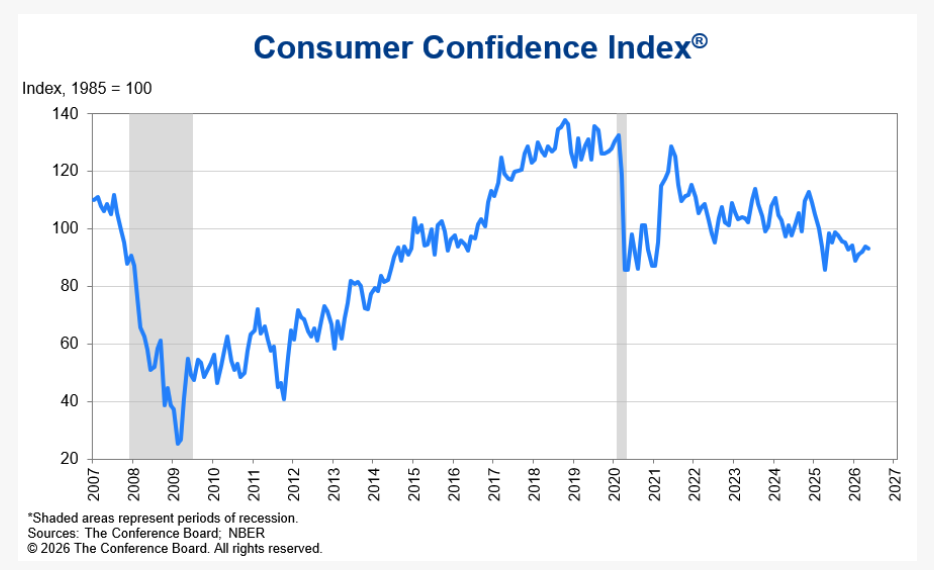
Source: Conference Board
- The present situation index, which reflects consumers' assessment of current conditions, fell by 3.2 points and yet remained above 100 at 121.2.
- On the other hand, the expectations index, constructed based on consumers’ short-term outlook for income, business, and labor market conditions, rose a point to 74.4.
Income expectations eased in May as those expecting less income rose,
Commenting on the report, Conference Board Chief Economist Dana Peterson said, "Consumer confidence edged downward in May as the inflationary impacts of the war in the Middle East intensified."
Write-in responses from consumers showed that factors affecting the economy continued to skew towards pessimism in May.
- References to prices and oil and gas increased in frequency for a second consecutive month.
- Mentions of war, geopolitics, and conflict remained elevated, likely signaling consumers’ underlying concerns about the inflationary impacts of the war in the Middle East on their wallets.
Among the other findings of the survey:
- Consumers’ average and median 12-month inflation expectations ticked downward but remained elevated.
- The percentage of consumers saying interest rates over the next 12 months will be higher on net stood at nearly 50% in May.
- The ongoing stock market rally, largely fueled by the tech sector and rising hopes for an end to the Middle East conflict, likely influenced consumer expectations of higher stock prices a year from now.
The Conference Board's special sets of questions posed in May showed that
- Two-thirds of consumers cited cutting back on spending overall due to rising prices.
- Most who are cutting back bought fewer items and delayed expensive purchases.
- Many who said they are delaying purchases of items they want rather than need, plan to buy them in the next six months.
- Consumers planned to economize on clothing and footwear, hobby items, and games/toys.
A separate survey by the University of Michigan showed last week that consumer morale fell to a record low of 44.9 in May, while inflation expectations ticked up.
This leaves the Federal Reserve in a difficult position on monetary policy and the future trajectory of interest rates, particularly at a time when the central bank is navigating a leadership transition.


