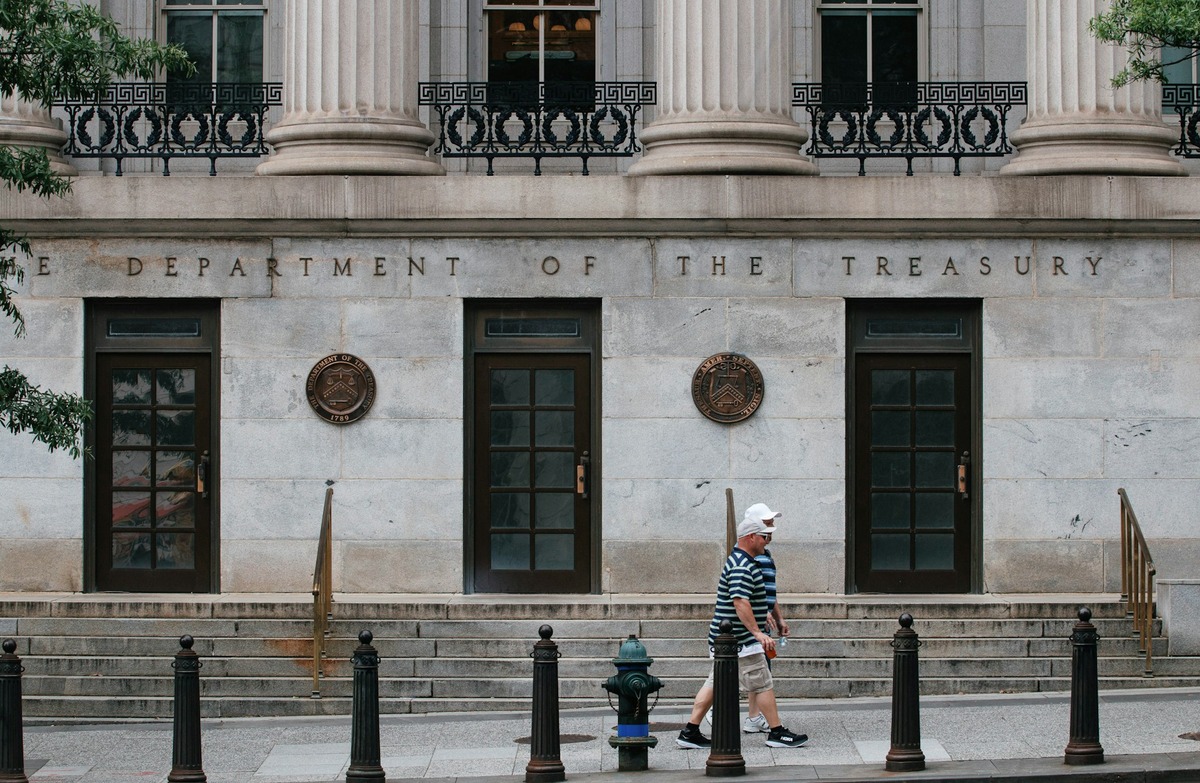
The U.S. bond market is starting September under renewed pressure, with the 10-year Treasury yield climbing toward 4.80%, as escalating U.S.-Iran tensions push oil prices higher and revive concerns that an energy shock could keep inflation elevated. The yield reached roughly 4.79%, its highest level since January 2025, while Brent crude moved above $92 a barrel.
Danish investment bank Saxo said the market remains unsure as to how aggressively to price in Fed policy tightening after Fed Chair Kevin Warsh’s Jackson Hole address last Friday. This is reflected in the long-dated Treasury yields rising faster than than the yields at the front of the curve.
The rate shock is hitting the Nasdaq 100 particularly hard. NQ futures were down roughly 1% early Tuesday, compared with a decline of about 0.5% for S&P 500 futures, highlighting the sensitivity of technology and growth stocks to higher borrowing costs and discount rates.
Iran Escalation Reignites the Oil-Inflation Link
The latest move in yields is not simply a geopolitical risk-off trade. Ordinarily, a conflict could send investors toward Treasuries and push yields lower. This time, the opposite is happening because the conflict threatens to keep energy prices elevated.
Renewed U.S.-Iran hostilities and concerns around the Strait of Hormuz have pushed Brent toward $92 and WTI toward $88. That raises the prospect of an energy-driven inflation shock just as markets are reassessing the Federal Reserve's policy path.
That creates an uncomfortable combination for bonds: higher oil → higher inflation expectations → less room for Fed easing or greater odds of tightening → higher yields.
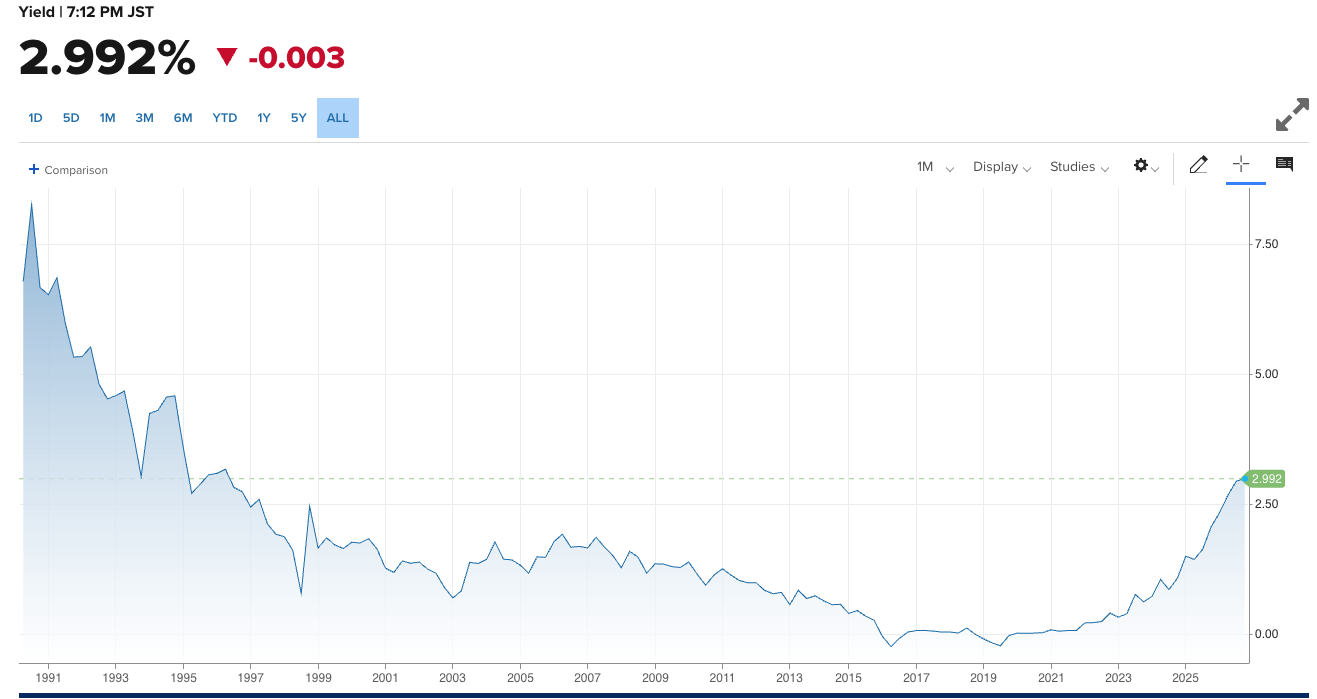
The Treasury sell-off is also broader than the U.S. Japan's 10-year yield has moved above 3% for the first time since 1996, while European government bond yields have also surged. The global nature of the move suggests investors are demanding greater compensation for inflation and fiscal risks rather than simply seeking safety.
Japanese Bond Yields Go Soaring
Source: CNBC
Why NDX Is Bearing the Brunt
The Nasdaq 100 is particularly vulnerable because its valuation is heavily influenced by long-term interest rates.
When the 10-year yield rises, the present value of future corporate earnings falls. That effect is especially important for high-growth companies whose expected cash flows are weighted further into the future.
This creates a duration squeeze:
Oil rises → inflation concerns increase → yields rise → discount rates increase → growth-stock valuations come under pressure.
That explains why NQ is falling more sharply than ES as September begins. Nasdaq 100 futures were recently around 29,200, down more than 1% in some early-session readings, while S&P 500 futures were down roughly 0.5%.
The move is therefore not necessarily a sign that investors suddenly expect a collapse in technology earnings. It is more immediately a valuation and liquidity problem: higher yields make expensive growth stocks harder to justify at the margin.
Warsh Adds to the Rate Pressure
The bond sell-off also comes with markets still digesting Warsh's hawkish Jackson Hole message.
Markets are now assigning meaningful odds to a September rate increase, with the odds of a rate hike rising to around 65% as of Tuesday. Warsh's emphasis on inflation has made the market less willing to assume that the Fed will simply look through an oil-driven inflation shock.
That matters because the Iran escalation has arrived at precisely the wrong time for duration-sensitive assets.
If oil continues higher, the Fed could face a difficult trade-off: support growth with easier policy or prioritize inflation control despite weaker risk assets. Warsh's recent rhetoric suggests the latter may receive greater weight.
September Seasonality Adds Another Headwind
The timing is also notable.
September has historically been the weakest month for U.S. equities, with the S&P 500 averaging a roughly 0.7% decline since 1926. That seasonal weakness is now meeting a combination of rising yields, higher oil and renewed geopolitical risk.
The Nasdaq's August rebound therefore enters September facing a very different macro backdrop. Rather than being driven solely by earnings or AI optimism, NDX is now being forced to contend with the cost of capital.
That makes the 10-year yield an increasingly important variable for NQ traders.
What to Watch Next
The immediate question is whether 4.80% becomes a ceiling or a new floor for the 10-year yield.
How Different Yield Scenarios Will Play Out
| Scenario | 10-year Yield | NDX/NQ Implication |
|---|---|---|
| Yield rejection | falls back below 4.75% | relief for growth stocks; potential NQ rebound |
| Yield consolidation | holds 4.75%-4.80% | choppy two-way trade as market reassess rates |
| Yield breakout | sustains above 4.80% | stronger valuation pressure on NDX; downside risk increases |
| Oil/Yield shock | Oil accelerates while yields rise | most bearish for NDX |
For NQ traders, 4.80% in the 10-year is becoming a key macro threshold. A sustained move through it would reinforce the argument that the market is transitioning from a growth-and-AI narrative toward a rates-and-inflation regime.
The critical distinction, however, is whether yields rise because of stronger economic growth or because of an oil-driven inflation shock. The latter is considerably more problematic for equities because it can push rates higher while simultaneously threatening consumer and corporate demand.
For now, that is the risk NDX is confronting as September gets underway.
MarketFramework’s latest NQ Positioning Edge shows a strong bearish divergence: profitable traders are 51% long versus 60% for unprofitable traders, making the former 9 percentage points less long. With NQ around 29,167.75 and down more than 1%, the setup suggests traders who have been more successful are leaning against the current long positioning of losing traders.


