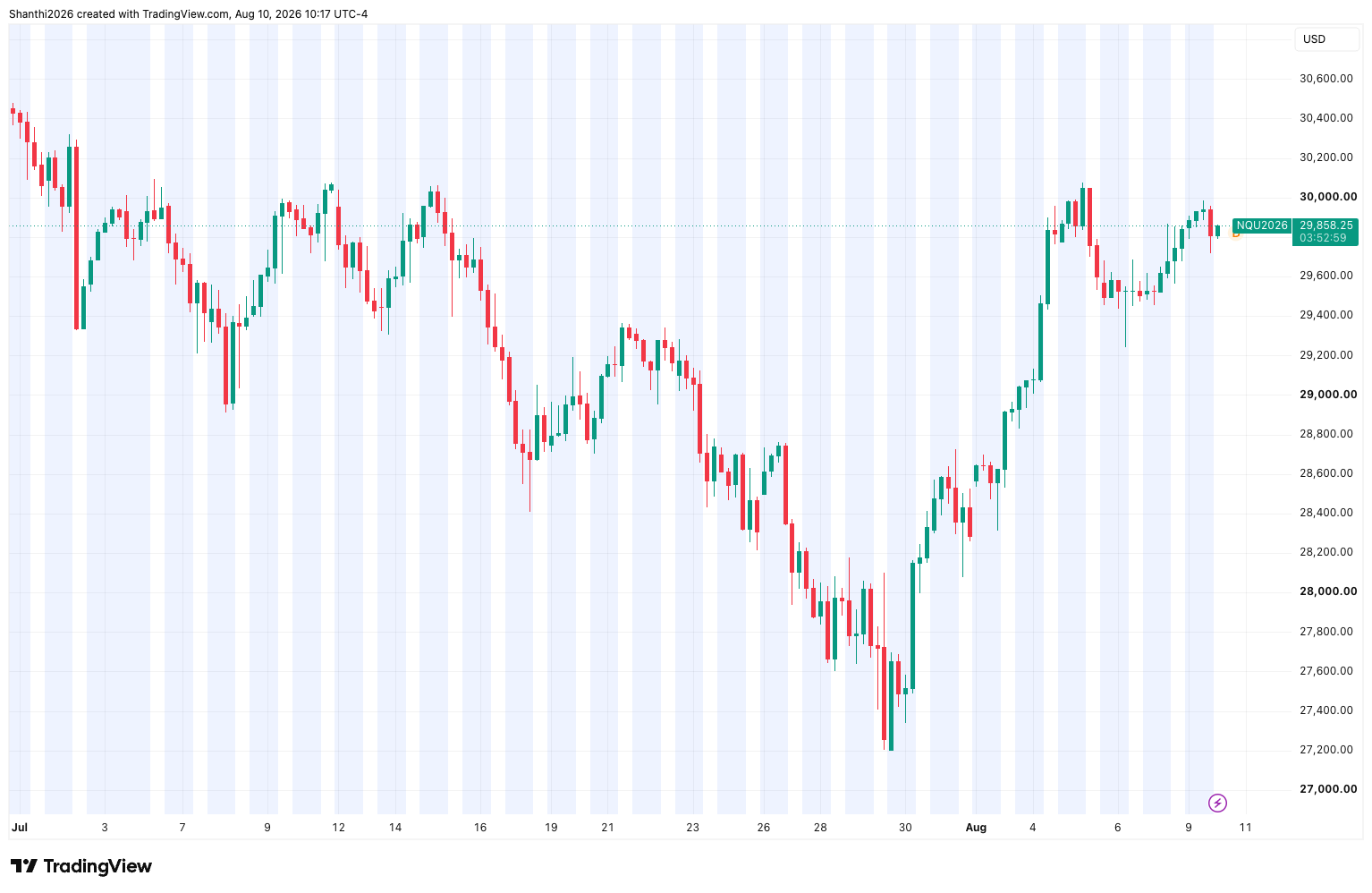
The Nasdaq E-mini futures (NQ) enter the week riding real momentum, but the ground underneath that rally has shifted twice in the past ten days. Driven by dovish rate repricing and renewed investor confidence in artificial intelligence (AI)-driven mega-cap tech stocks, the Nasdaq 100 Index rebounded nearly 10% over seven trading sessions from its July 29 low of 27,176.03, successfully snapping back from an 11.7% correction.
Ahead of the July jobs report, Fed funds futures were pricing in a 57% chance of a September rate hike, with several Fed officials publicly signaling support for tightening if inflation didn't cool. In other words, tech was rallying even as the rate backdrop was turning more hostile
Under the Hood of the Earnings Rally
The bounce wasn't a narrow, mega-cap-only move, with semiconductors, software names, and hyperscalers all participating, and the driving catalyst was better-than-expected forward guidance suggesting massive AI infrastructure spending is starting to translate into actual returns rather than just capex promises. Not every reaction was uniformly bullish. Some individual names slipped even after solid results, a reminder that dispersion still exists beneath a broadly positive tape.
Positioning and Flows
The latest CFTC positioning data for Nasdaq 100 E-mini futures, as of August 4, shows a notable divergence across trader groups. Dealers/intermediaries turned more bullish, with their net long position rising to 8,749 contracts as longs increased and shorts declined sharply. Asset managers remain heavily net long at 64,359 contracts, although their positioning became less bullish over the week.
Meanwhile, leveraged funds remain aggressively bearish, holding a net short position of 78,333 contracts after adding significantly to shorts. The divergence is notable given the Nasdaq’s recent rebound. If the rally extends, the sizable leveraged-fund short position could provide additional fuel through short covering.
MarketFramework’s in-house Positioning Edge toolshows strong bearish divergence, with profitable traders holding a more cautious stance than unprofitable traders. Profitable traders are 55% long, compared with 61% long among unprofitable traders, meaning profitable traders are 6 percentage points more short. This suggests that traders positioned more defensively have been performing better, while the larger long exposure among losing traders could signal vulnerability if the Nasdaq futures continue to weaken.
The Jobs Report That Broke the Narrative
That tension broke on August 7. July nonfarm payrolls fell by 23,000, missing consensus by over 100,000 jobs and marking the first negative print since February, while the BLS also revised down May and June payrolls by a combined 103,000. Wage growth came in soft too, with average hourly earnings rising just 3.2% year-over-year, below the 3.5% expected and the weakest pace since 2021.
The market reaction was immediate: traders cut the odds of a September Fed rate hike from 57% to 44% within hours of the release. For NQ, that's the more important headline than the jobs number itself. A lower probability of further tightening removes a major overhang for tech valuations, reinforcing an already strong rally fueled by upbeat earnings and bargain hunting in previously beaten-down technology names.
The Technical Picture
The record (30,968) notched up by the NQ contract in late-June was followed by a sharp corrective leg down to around 27,200 in late July, an 12% drawdown that qualified as a technical correction. Price has since staged a strong V-shaped recovery, reclaiming the 29,800–30,000 zone and now consolidating just below the psychological 30,000 level. Today's daily candle is essentially flat, showing the market pausing to digest the prior week's sharp rebound rather than continuing to press higher.
Source: TradingView
Key levels on the daily chart:
- Resistance: 30,000 (psychological resistance) → 30,400–30,800 (prior distribution zone from the June top)
- Support: 28,800–29,200 (mid-June/July breakdown shelf) → 27,600–28,000 (the last major shelf before the July low) → 27,176 (the correction low / structural support)
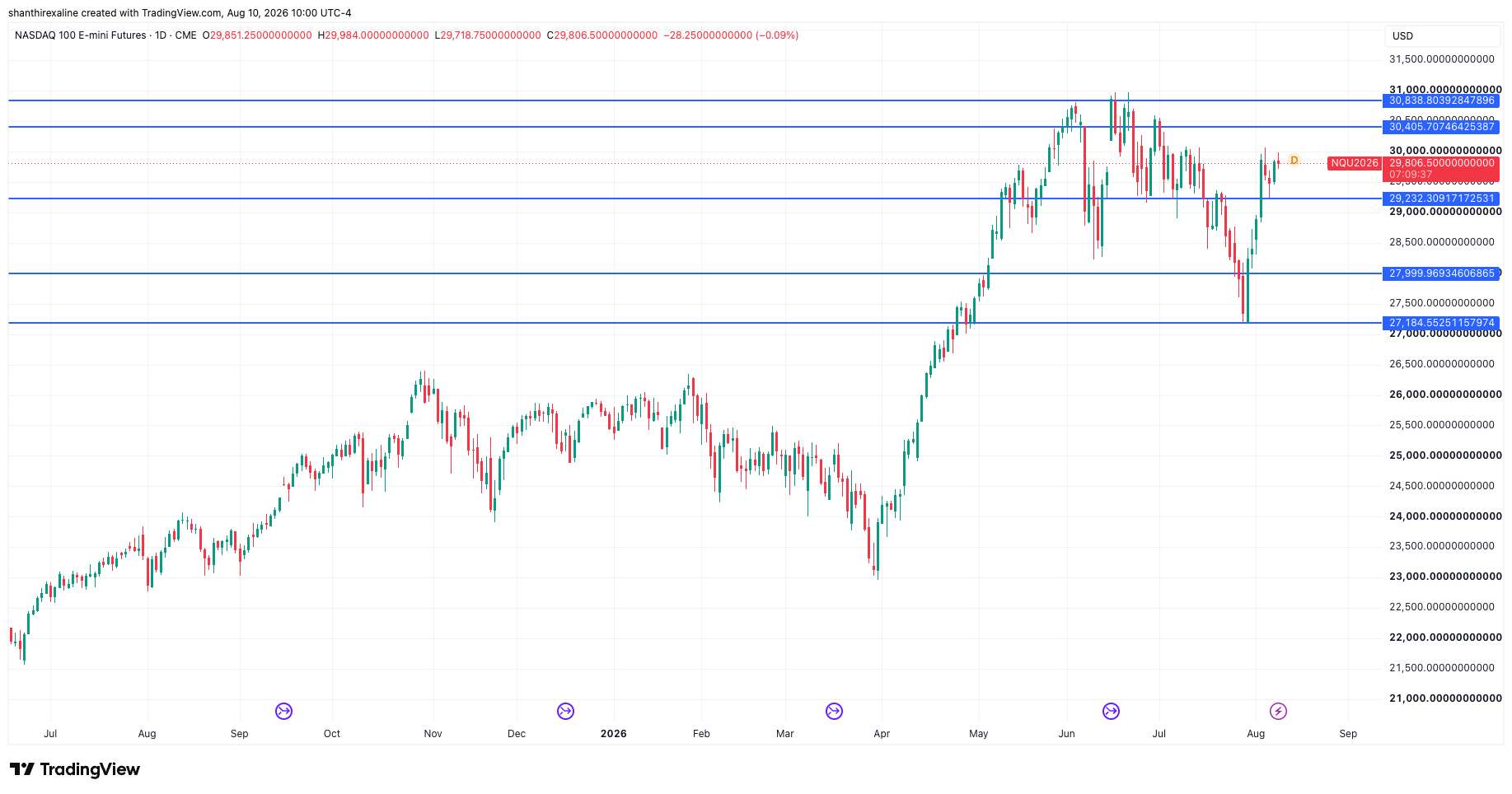
The daily structure still favors the bulls as long as price holds above the high-27,000s. A clean break and hold above 30,000 would reopen the path toward retesting the June highs near 31,000; failure to clear 30,000 on repeated attempts would suggest the rally is running into supply from trapped longs who bought the June top.
Valuation and Concentration Risk
The bull case isn't free of tension. Mega-cap tech remains an outsized share of both the Nasdaq 100's market cap and its earnings growth, meaning the index's direction still depends heavily on a small handful of names delivering on very high expectations. This dynamic cuts both ways. It supports the rally as long as those companies keep executing, but it also means any disappointment from one or two of them can move the entire index disproportionately, and current multiples leave less room for error than in a more broadly distributed market.
Two Competing Stories Into September
Going forward, the setup into the September 16 FOMC meeting is genuinely two-sided.
The bull case: a softening labor market plus contained wage growth gives the Fed room to stay on hold, or even pivot toward easing language. Such a development will be constructive for high-multiple tech names that are sensitive to discount-rate assumptions.
The risk case: if the July print isn't a blip and August data confirms a real slowdown in hiring, markets could shift from "rate relief" to "growth scare," which tends to hit risk assets broadly, tech included, regardless of what the Fed does with rates.
What to Watch Before the Fed Meets
The next two data points that matter most are the August jobs report and the next three consumer inflation prints, both of which will shape whether the Fed narrative settles into "patient hold" or reopens the hike debate that was live just two weeks ago. Until then, expect NQ to trade with elevated sensitivity to every incoming labor and inflation data point — the market has shown in the last ten days alone how fast the rate narrative, and tech's reaction to it, can flip.


