The latest U.S. producer price inflation (PPI) data is exposing an increasingly important divide across the metals complex. Gold is retaining some of its safe-haven appeal, while silver, copper platinum and palladium are more vulnerable to the combination of higher yields, tighter financial conditions and concerns about industrial demand.
The split comes after August PPI rose 0.4% month over month (MoM) and 5.4% from a year earlier, with energy prices jumping 4.2% as renewed U.S.-Iran tensions pushed crude higher. The inflation report also lifted expectations for a September Federal Reserve rate hike, putting additional pressure on metals that do not generate income.
Gold Has a Different Role in the Metals Complex
Gold's appeal is tied less directly to industrial activity than that of silver and the platinum-group metals. That makes it more capable of attracting defensive demand when geopolitical uncertainty rises, even as higher real yields create a headwind.
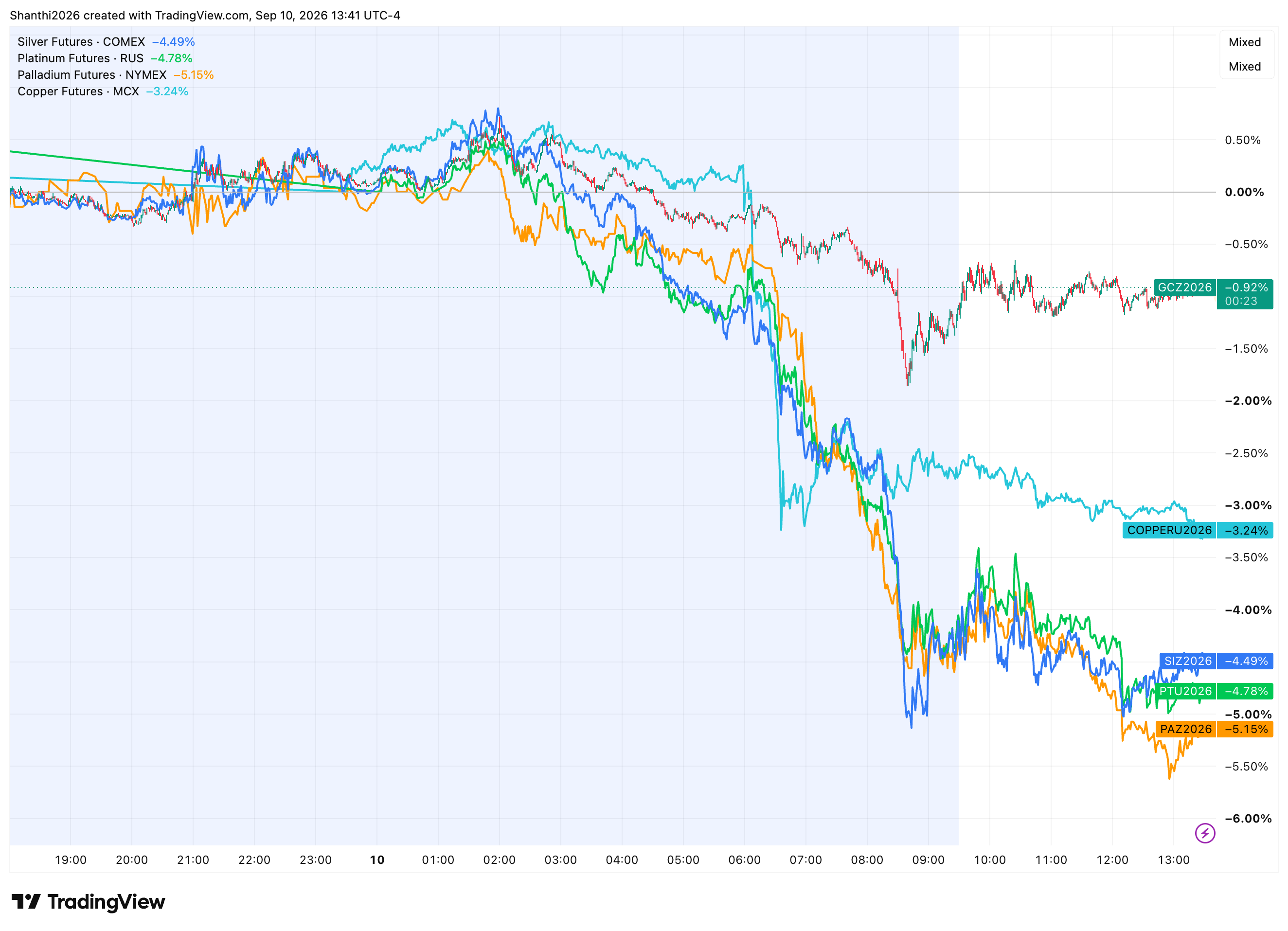
That support is being tested, however. Gold fell about 1% Thursday as the PPI report strengthened expectations for a Fed hike, while Treasury yields and the dollar weighed on the non-yielding metal.
Gold Vs. Industrial Metals
Source: TradingView
The key question is whether safe-haven demand can offset the pressure coming from monetary policy.
Silver Is Caught Between Two Worlds
Silver is more complicated because it combines monetary and industrial characteristics. When investors are focused on falling real rates and monetary debasement, silver can behave like a high-beta precious metal. But when higher rates raise concerns about economic activity and manufacturing demand, its industrial exposure becomes a liability.
That distinction was visible Thursday. Silver fell more than 4%, substantially more than gold, while platinum and palladium also suffered sharp declines.
The divergence suggests traders are becoming less willing to treat the entire precious-metals complex as one trade.
MarketFramework’s Positioning Edge tool shows that profitable traders are sitting at 38.5% long, which means they are effectively short-leaning. On the other hand, unprofitable traders are 70% long. The 32-point gap shows extreme bearish divergence. The two cohorts were tracking each other loosely through the session but pulled apart meaningfully into early-afternoon trading. This suggests the more successful traders are positioned for the softness to continue, while the less profitable crowd is still leaning on gold’s safe-haven reputation, and getting caught by the same rate-driven pressure, although to a lesser degree relative to the other metals.
Higher Oil Changes the Industrial-Metals Equation
The oil rally adds another layer to the story. Higher crude prices can initially support commodity prices through a broader inflation trade, but persistently expensive energy also raises production and transportation costs for manufacturers and miners.
That creates a difficult environment for industrial metals. If higher energy prices feed into inflation and force central banks to maintain tighter policy, borrowing costs can remain elevated just as businesses face higher operating expenses.
The result is a potentially negative combination for metals whose valuations depend heavily on global industrial activity.
Fed Expectations Are Becoming a Bigger Driver
The PPI report showed why inflation remains central to the metals outlook. While the monthly increase was broadly in line with expectations, the annual rate accelerated to 5.4%, and energy was a major contributor.
Markets subsequently increased the probability of a September rate hike, with the odds jumping to around 70% or higher after the report.
That creates a particularly important test for silver. A hotter consumer price inflation (CPI) print on Friday could push yields and the dollar higher again, increasing pressure on the industrial side of the metals complex. A softer CPI, by contrast, could revive expectations for lower rates and allow silver to reconnect with gold's bullish momentum.
CPI Could Decide Whether the Divergence Widens
Friday's CPI report therefore becomes the next major catalyst. The important question is not simply whether inflation is higher or lower, but whether energy-driven price pressures are spilling into broader inflation.
Hot CPI: Higher yields and a stronger dollar could extend the pressure on silver, platinum and palladium, while gold may find greater support from safe-haven demand.
Contained CPI: A decline in rate-hike expectations could relieve pressure across the metals complex and allow silver to recover more quickly.
Hot headline, contained core: The market could distinguish between an energy shock and broader inflation, potentially creating a more mixed response across metals.
Soft headline and core: Lower yields and a weaker dollar would create the strongest setup for a broad precious-metals rebound.
The Gold-Silver Relationship Is Worth Watching
The gold-silver relationship could become an important signal of where investors see the greater risk. If gold holds up while silver continues to underperform, the market is effectively favoring defensive monetary exposure over cyclical commodity exposure.
That would suggest investors are becoming more concerned about the economic consequences of higher energy prices and tighter financial conditions.
If silver begins catching up again, however, it would indicate that traders are looking beyond the immediate rate shock and back toward the longer-term supply, industrial-demand and precious-metals investment story.
One Metals Trade Is Becoming Two
The PPI reaction highlights why treating gold, silver and the broader metals complex as a single trade may no longer work.
Gold can benefit from geopolitical uncertainty even when higher yields hurt it. Silver needs both a supportive monetary backdrop and confidence in industrial demand. Platinum and palladium are even more exposed to the health of the manufacturing and automotive sectors.
For traders, Friday's CPI may therefore do more than determine the next move in gold. It could reveal whether the current divergence between safe-haven metals and industrially exposed metals is the beginning of a larger shift in the commodity landscape.
The key question is whether safe-haven demand can offset the pressure coming from monetary policy.