The Offshore Chinese Renminbi futures (CNH) advanced on Monday, ignoring a batch of weak domestic economic data that trailed expectations. The CNH contract, which was trading above the 6.80 level, retreated late Sunday as traders digested weak April retail sales, industrial production and fixed asset investment data.
The yuan, however, pared some of its gain, heading into Monday’s New York open.
CNH Futures Chart
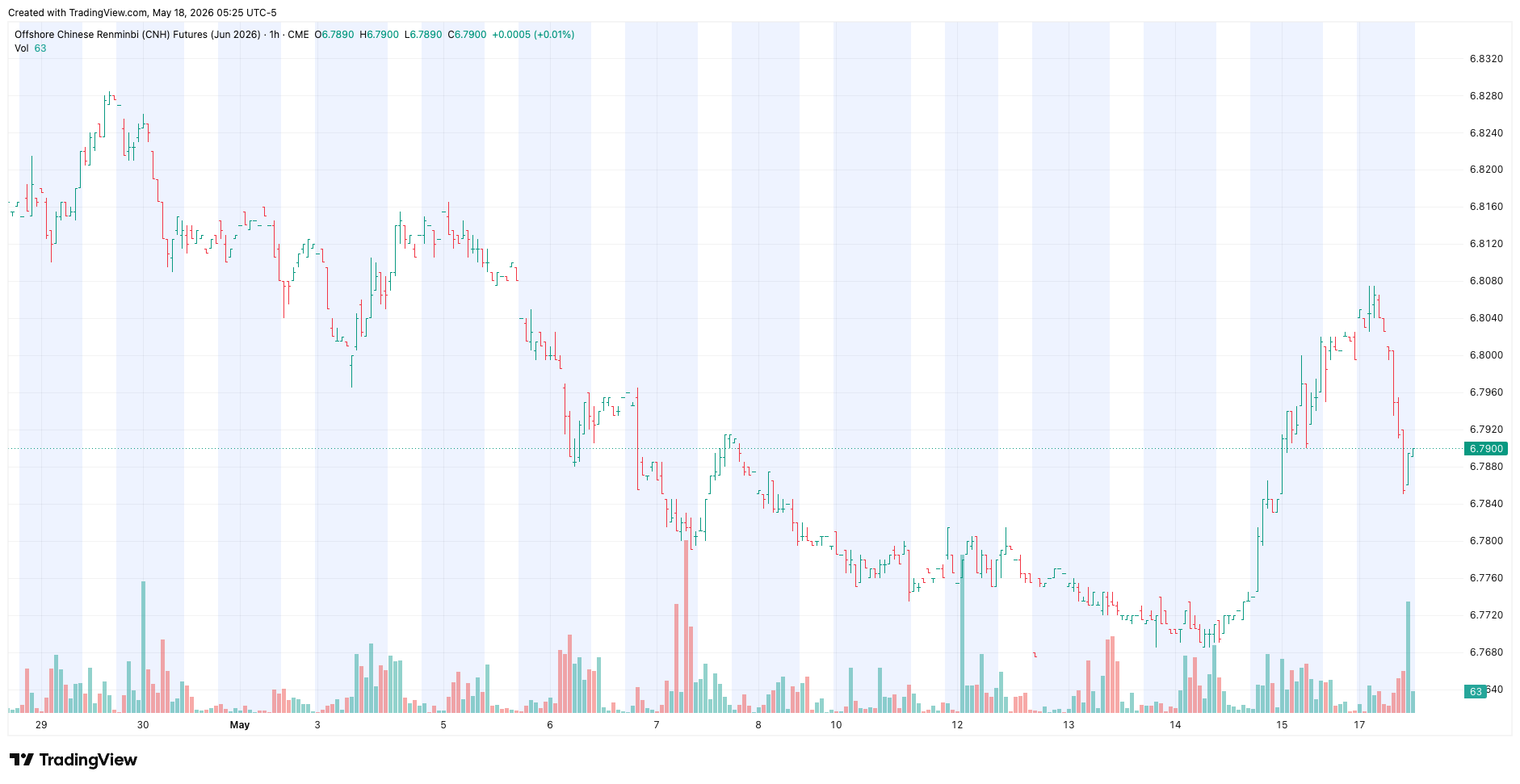
Source: TradingView
Disappointing Domestic Data
- Retail sales in China edged up merely 0.2% year over year (YoY) in April, sharply lower than March’s 1.7% growth and the consensus estimate of 2%. The April growth was the slowest since 2022.
- Industrial production climbed 4.1%, a smaller increase relative to the 5.7% growth in March and the consensus estimate of 6%.
- Fixed asset investment fell 1.6%, trailing the 1.7% growth in March and the consensus that expected a steady growth pace for April.
- House prices continued to fall, dropping 3.5% in April compared to a 3.4% decline in the previous month.
- The April unemployment, however, edged down to 5.2% from 5.4% and was also lower than the 5.3% consensus.
Weighing in the numbers, ING Greater China Chief Economist Lynn Song said the economy was now “paying for front-loaded demand from the trade-in policy, which we have been warning about since last year.” The economist pointed to the sales of autos, household appliances and furniture that witnessed steep declines.
Song also noted that the pullback in gold prices as the U.S.-Iran war dented gold and jewellery sales. However, consumer staple categories fared better, offering a glimmer of hope.
Despite strong export data seen in recent months, industrial output slowed to a 33-month low. ING’s Song said sluggish domestic activity underperformed. He also flagged anti-involution practices impacting the data, such as in the solar category, the sales of which fell sharply due to a broader crackdown on overcapacity and excessive price competition.
China Industrial Output
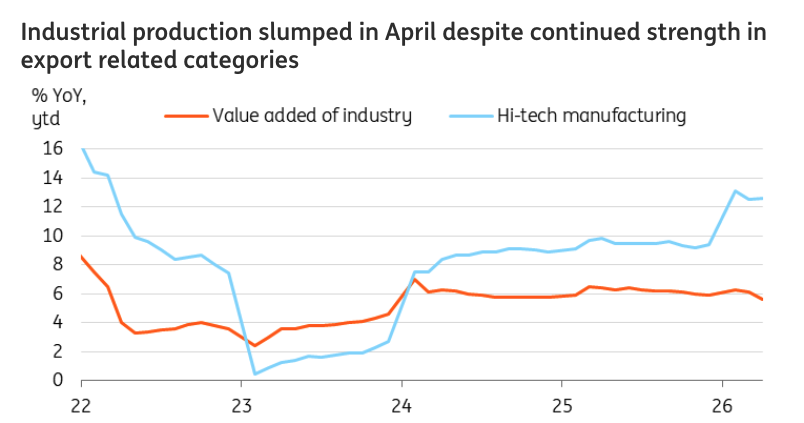
Source: ING
Policy Implications
ING’s Song expects more stimulus forthcoming. “The sharper-than-expected deterioration in April's data highlights downside risks and should be seen as a warning sign that additional stimulus might be needed to stabilise the domestic side of the economy,” he said.
That said, the recent pick up in inflation complicates the policy outlook. “We've seen limited urgency for stimulus so far this year, but if data continue to deteriorate, this could change soon,” Song said.
Read Next: US Industrial Output Rises at Fastest Pace in a Year, Leaving the Fed in a Bind


