
U.S. consumer confidence unexpectedly improved, albeit slightly, in April, according to the Conference Board’s survey results released Tuesday. Evidence suggesting souring consumer mood comes a day ahead of the Federal Reserve’s April monetary policy decision.
The cut-off date for data collection was April 22.
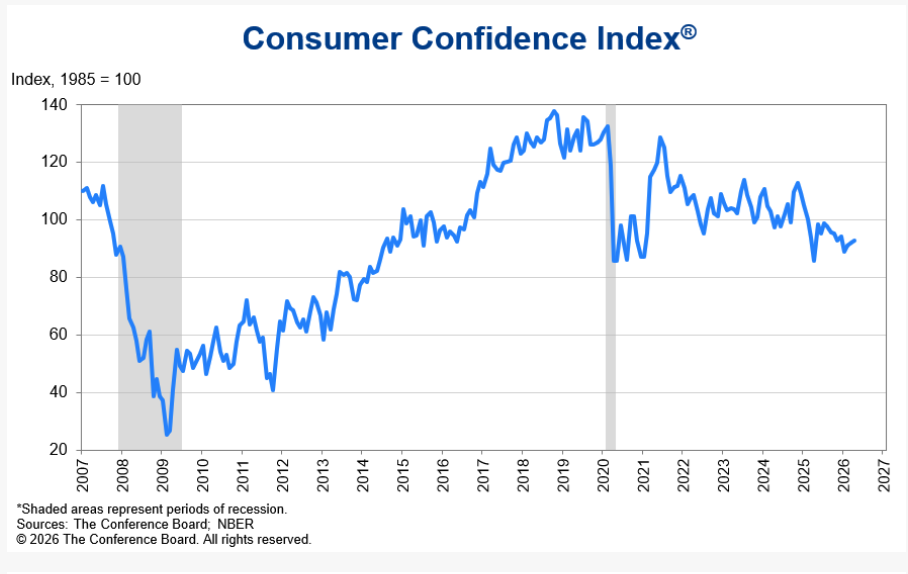
Consumer Morale Holds Up The headline consumer confidence index was at 92.5 in April, up from March’s upwardly revised reading of 92.2 (revised up from 91.8), while economists had expected a decline to 89. Nevertheless, the headline index remained below 100, a reading that demarcates optimism and pessimism.
US Consumer Confidence Index
Source: Conference Board
The present situation index, which is based on consumers’ assessment of current business and labor market conditions, edged down by 0.6 points to 123.8. On the other hand, the expectations index climbed by 1.2 points to 72.2. The expectations index is compiled based on consumers’ assessment of the short-term outlook for income, business and labor market conditions.
Conference Board Chief Economist Dana Peterson said, “Consumer confidence edged up in April but was overall little changed, despite material concern about rising gasoline prices as the war in the Middle East prompted a surge in Brent crude oil prices.” The economist said, while consumer appraisals of current and expected business conditions declined moderately relative to the previous month, their perception of the labor market, both current and expected, as well as, income expectations was slightly more optimistic than in March.
Rumors of a potential ceasefire that helped spark a rebound in stock market indices helped ease concerns about financial conditions somewhat in April.
Factors Restraining Confidence: Write-in responses from consumers showed they were worried about factors affecting the economy such as prices, oil & gas and war. This is seen by the Conference Board as “a likely signal of consumers’ underlying worries about how the war in the Middle East will impact their pockets.”
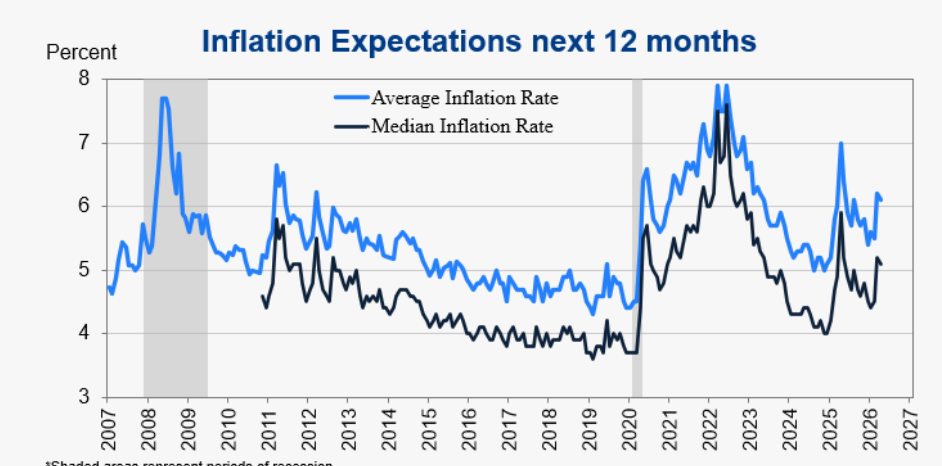
Inflation Expectations Tick Down: Consumers’ average and median 12-month inflation expectations ticked down but continued to remain elevated.
Source: Conference Board
Another consumer sentiment survey for April indicated a decline, reaching its lowest level since mid-2022. The University of Michigan’s preliminary consumer sentiment index, released last week, recorded a 3.5-point drop.
The S&P 500 Index, which had been trading lower ahead of the Conference Board data due to concerns over artificial intelligence following OpenAI’s weaker-than-expected financial and operational performance, pared some losses. However, the broader market gauge continued to trade moderately lower.