Jobless claims fell sharply, undercutting the case for a rate cut ahead of the Federal Reserve meeting, as a divided committee weighs resilient hiring data against pressure to chart a clearer path forward.
As Fed officials head into next week's policy meeting, the labor market is sending a message that's neither weak enough to justify an imminent rate cut nor strong enough to settle the debate over where policy goes from here. That ambiguity — not outright strength or weakness — is the real problem confronting the Fed.
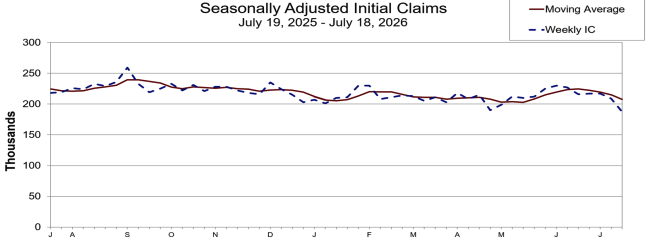
Initial jobless claims fell by 22,000 to 187,000 in the week ended July 18, well below economists' expectations for a rise to roughly 212,000. That's the lowest reading of 2026, underscoring that layoffs remain exceptionally scarce even as hiring has cooled elsewhere in the economy. Continuing claims also edged lower, suggesting laid-off workers aren't struggling meaningfully to find new jobs.
Source: BLS
Why the Timing Makes This Harder, Not Easier
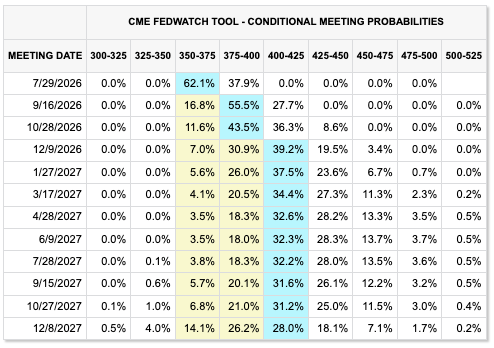
The report lands three days before a Fed meeting where markets already lean firmly toward inaction: as of July 23, CME FedWatch pricing put the odds of a hold at the July 28-29 meeting at roughly 62.1%. The Fed left rates unchanged at 3.50%–3.75% in June, and minutes from that meeting revealed a committee split — some officials open to cuts, others favoring hikes amid inflation risk tied to renewed Middle East conflict, which had pushed September rate-hike odds toward 70% befoare cooling somewhat after Chair Kevin Warsh signaled inflation risks had eased.
Source: CME FedWatch Tool
Against that backdrop, a labor market print this strong doesn't just argue against a cut — it hands ammunition to the hawks on the committee who were already pushing for a hike later this year. That's a sharper read than "the Fed will wait and see": this data point actively feeds an existing internal fight, not a hypothetical one.
A Labor Market Cooling Without Cracking
For most of the past year, the Fed's task was comparatively simple — inflation stayed above target while employment held up, letting officials keep policy restrictive without worrying much about growth. That picture has since blurred. Hiring has slowed from post-pandemic highs, job openings have drifted down, and business surveys show more caution among employers. Yet layoffs remain rare, unemployment stays low, and wage growth hasn't cooled enough to signal real slack.
The result: a labor market losing momentum without actually breaking — the exact condition that makes a committee already divided between hike and cut camps even harder to unify.
The Setup for Next Week
With a hold already priced at roughly 62%, this report likely doesn't move the July decision — but it matters for the tone of Chair Warsh's press conference and the statement language. A number this strong makes it harder for Warsh to lean dovish without appearing to ignore the data, and easier for hawkish committee members to justify keeping a hike on the table for September. Watch for how explicitly the post-meeting statement references labor-market resilience versus slowing hiring trends — that balance of emphasis will signal which faction has more influence heading into the fall meetings.
The Fed's real problem next week isn't deciding whether to move. It's that this data gives every member of a divided committee something to point to — which makes consensus on the path forward, not the July decision itself, the harder question.