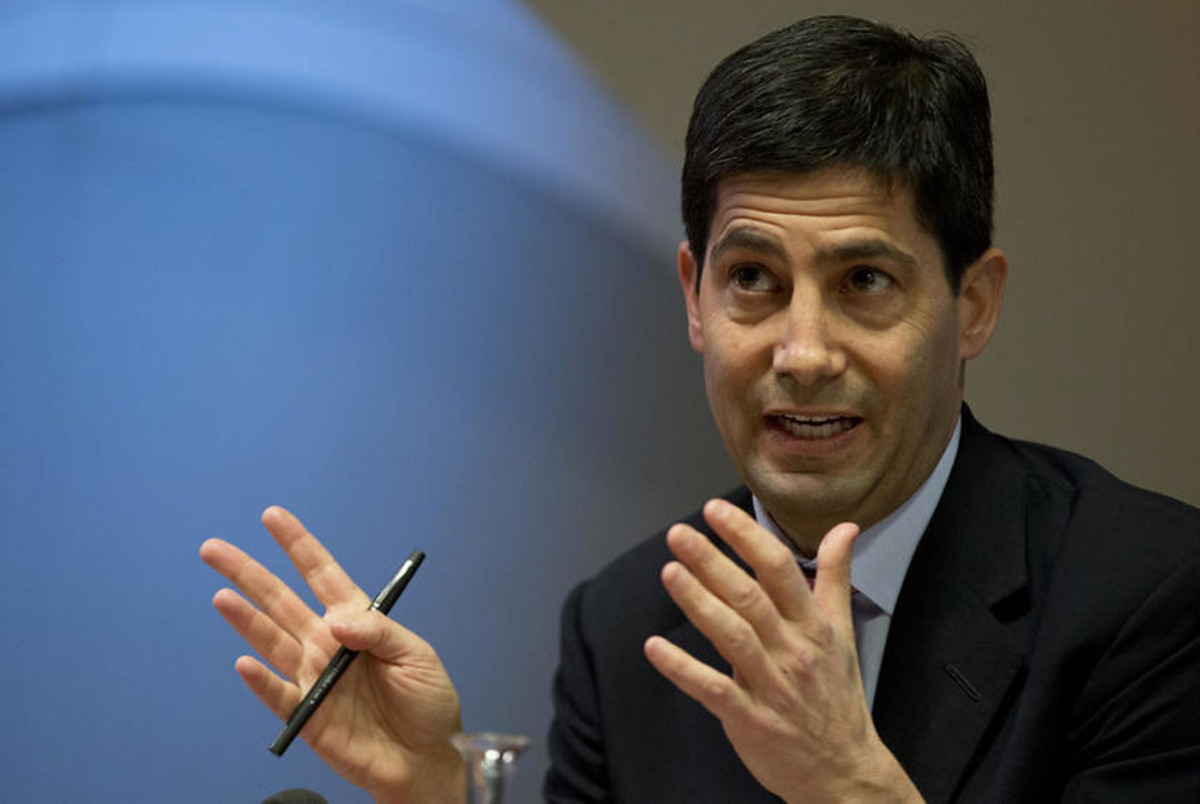
President Donald Trump’s Federal Reserve Chair nominee Kevin Warsh faces his first major test as he heads to Capitol Hill to a Senate confirmation hearing, due Tuesday at 10 a.m. ET.
If Warsh, who served as a Fed Governor between 2006 and 2011, secures the top job, he will face an uphill task, steering monetary policy amid an uncertain economic and geopolitical environment. The incumbent Jerome Powell, has served as the Fed chair for two four-year terms, after initially being nominated by Trump in 2017.
His current term as chair expires by May 15, and next week’s rate-setting meeting could be the last under his chairmanship.
Warsh’s Credentials: Born in New York, Warsh is an alumnus of Stanford University and the Harvard Law School. After completing his studies, he joined Morgan Stanely, where he held various roles until Feb. 2002. His career took a different turn when he joined the then George W Bush administration, and he was later nominated to the Fed Board of Governors in 2006.
After leaving the board, he returned to Stanford as a lecturer, and became a partner at Duquesne Family Office, the firm run by billionaire investor Stanley Druckenmiller. He has also served on the boards of companies such as UPS and Coupang.
Will Warsh Bring a Radical Shift in Approach? Powell has been a centrist in his approach toward monetary policy, preferring to err on the side of caution. The Fed under Powell has sworn by a data-dependent stance and a wait-and-watch approach to see the impact of the previous policy actions. He has also been a fierce defender of the central bank’s independence.
That put Powell at odds with Trump, who began applying political pressure on the Fed chair to drop rates in order to stimulate growth ever since he assumed for a second time. The president has thrown the “too-late Powell” phrase in his social-media posts far too often to show his displeasure and even alleged that the Fed chair has mismanaged renovations at the central bank’s headquarters.
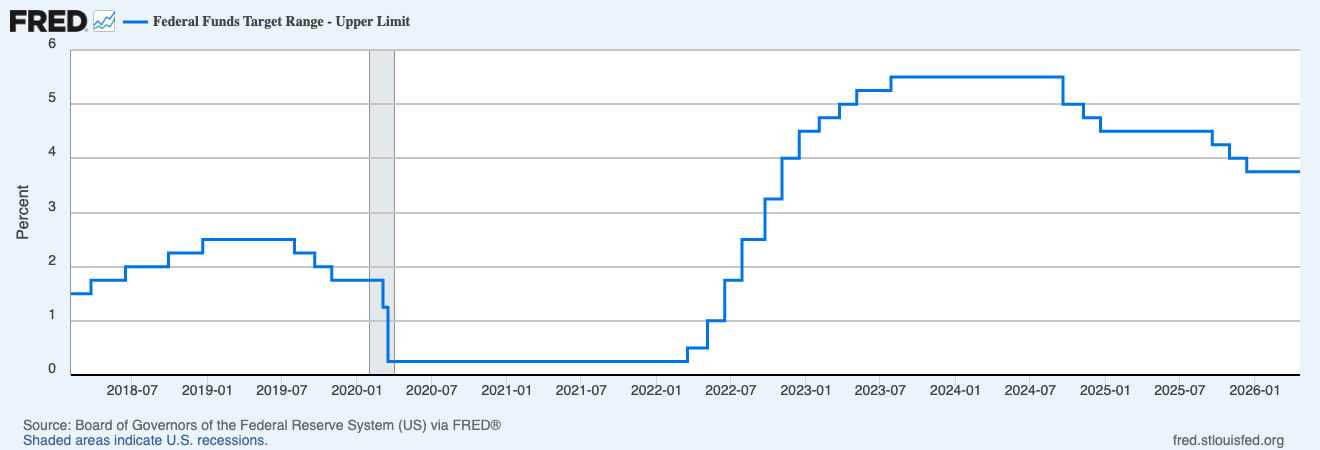
Powell took over the Fed’s reins as monetary policy was already on the normalization path, following years of ultra-low interest rates after the 2007-08 Great Financial Crisis. The COVID-19 pandemic forced Powell & Co. to reduce rates to near-zero levels, before a surge in inflation, driven by stimulus spending and supply disruptions stemming from the Russia-Ukraine war, emerged in 2022.
After taking rates to a 22-year high of 5.25%-5.50% by July 2023, and keeping it at those levels until September 2024, the Fed began easing policy as inflation showed signs of cooling, delivering a series of rate cuts that brought borrowing costs from their peak.
Fed funds rate under Powell
Source: St. Louis Fed
Warsh, though critical of the current Fed and has called for a regime change, had previously batted for central bank independence. In a 2010 speech entitled “An Ode to Independence,” Warsh said:
“If the Federal Reserve lost its independence, its hard-earned credibility would quickly dissipate. The costs to the economy would be incalculable: Higher inflation, lower standards of living, and a currency that risks losing its reserve status.”
Warsh has also come off as an inflation hawk, going by his views aired publicly. Dutch asset management firm Robeco strategists, however, thinks portrayal of Warsh as a hawk is “overstated.” They believe that, if confirmed, he might support a further Fed rate cut by June. “Regarding his view that the Fed’s balance sheet may be excessively large, we believe it will be difficult in practice to shrink it meaningfully without regulatory adjustments to the ample-reserves regime in the banking system,” the strategists said.
At the maximum, they see the Fed’s balance sheet, which is currently at around 20% of the GDP, expanding more slowly in the coming years, and/or Warsh advocating for a faster shortening of the average maturity of the Fed’s bond portfolio.
Odds Of Confirmation: ING Chief International Economist James Knightley and Regional Head of Research Padhraic Garvey sees the confirmation hearing as one where he treads a fine line between “making the case for lower borrowing costs, which helped him get the nomination from the President, and preserving the Fed's inflation-fighting credentials.”
“Politics and the DoJ case against the Fed mean a swift confirmation is unlikely,” they said.
Knightley and Garvey expect Warsh to be questioned on how closely he would be aligned with Trump’s thinking that rates should be much lower from current levels. That said, the Iran conflict-induced inflation, though viewed transient by policymakers, may make it hard for Warsh to lean more toward dovishness, they said.
The strategists expect Warsh to emphasize the opportunity of lower borrowing costs over the medium to the longer term. They premised the view on the nominee’s recent assertion that technology, especially artificial intelligence (AI) tech, would boost productivity, allowing the economy to grow faster without generating inflation.
Tallying the votes on offer in the Senate Banking Committee, ING noted that there are 13 Republicans to 11 Democrats in the committee. Sen. Thom Tillis (R-N.C.), however, has stated that he would block Warsh’s confirmation until the “vindictive prosecution” of Powell is ended, potentially resulting in a deadlock,
If Warsh isn’t confirmed before Powell’s current chairmanship tenure ends, he could stay on until his governorship tenure is scheduled to end on Jan. 31, 2028.