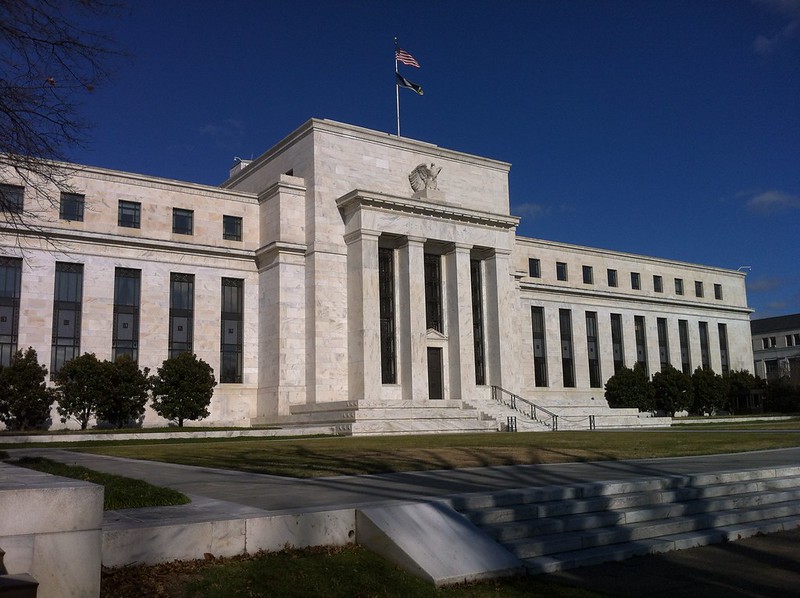
The Federal Reserve's July meeting minutes revealed a committee that remained broadly concerned about inflation and open to additional tightening, reinforcing the hawkish message that accompanied the decision to leave rates unchanged. Yet the market reaction was muted because investors have spent the past three weeks digesting softer inflation data, weaker labor-market signals, and a sharp repricing of September rate-hike expectations.
Fed officials acknowledged that inflation eased somewhat in June, helped by lower energy prices and a modest decline in core inflation. However, the minutes make clear that policymakers were far from convinced that the inflation battle has been won.
Several participants noted that price increases remained broad-based across goods and services, while others pointed out that inflation appeared elevated even after excluding categories directly affected by tariffs and energy prices. Officials also highlighted persistent price pressures in areas ranging from data-center materials such as chips and steel to consumer products including smartphones, software and electricity.
While most participants expect inflation to continue moving lower as tariff effects fade and earlier energy-price increases drop out of the annual comparisons, many expressed concern that inflation could prove more persistent than anticipated.
The minutes noted that inflation risks remain skewed to the upside.
Middle East Conflict Emerges as a Key Inflation Risk
One of the clearest themes in the minutes was concern about the renewed escalation of conflict in the Middle East.
Many participants said the conflict had significantly clouded the inflation outlook and warned that a prolonged disruption could create new supply-chain challenges while adding upward pressure to prices.
The discussion suggests policymakers are increasingly worried that another external shock could delay the return of inflation to the Fed's 2% target, much as previous supply disruptions have done in recent years.
Several officials noted that successive supply shocks have repeatedly pushed back expectations for inflation normalization, increasing concerns that elevated inflation could become entrenched in business pricing decisions and wage negotiations.
AI Is Boosting Demand Across the Economy
The minutes also reveal growing attention within the Fed to the economic effects of the artificial-intelligence (AI) investment boom.
Participants observed that AI-related spending continues to support strong business investment and economic growth. Several policymakers pointed to rising demand for skilled workers such as electricians, machinists and engineers involved in AI infrastructure projects, noting that wages in those occupations have increased significantly.
Officials were divided on how AI will ultimately affect inflation.
Some argued that AI-related investment is already pushing up aggregate demand and contributing to price pressures. Others maintained that AI's impact on consumer prices remains limited to a relatively narrow set of categories.
A number of participants suggested that productivity gains from AI should eventually help lower production costs and increase supply, but there was considerable uncertainty about how long that process might take.
Labor Market Remains Surprisingly Stable
The Fed's assessment of the labor market was generally constructive.
Participants said labor supply and demand appear broadly balanced, with unemployment remaining near estimates of its longer-run sustainable level. Payroll growth has strengthened this year, layoffs remain low and hiring activity has been stable.
Some officials pointed to signs that the labor market has improved modestly, including broader job growth across sectors and a slight increase in job openings.
At the same time, a few participants noted lingering pockets of weakness, including a low job-finding rate and elevated long-term unemployment.
Overall, policymakers expect labor-market conditions to remain stable in the near term.
AI-Driven Market Risks Draw Attention
Beyond inflation and employment, the minutes reveal increasing concern about financial stability risks linked to the rapid expansion of the AI sector.
Several participants warned that elevated valuations of AI-related companies reflect highly optimistic assumptions about future earnings. A significant disappointment in AI-related growth expectations, they said, could trigger a broad repricing of equities and tighter financial conditions.
Some policymakers also highlighted the growing use of borrowed money to finance AI infrastructure, including credit from regional banks and nonbank lenders.
The discussion suggests the Fed is beginning to monitor AI not only as an economic growth driver but also as a potential source of financial-market vulnerabilities.
Why Some Officials Wanted a Rate Hike
Although most participants supported leaving rates unchanged, the minutes show that support for tighter policy remains meaningful.
Several officials favored raising the federal funds rate by 25 basis points at the July meeting, arguing that inflation pressures remain broad-based and that a more restrictive stance may be needed to ensure inflation returns to target.
Many participants indicated that additional policy tightening could become necessary if inflation does not continue to decline.
Others questioned whether current financial conditions are restrictive enough to bring inflation sustainably back to 2%.
The debate underscores that the Fed remains firmly data-dependent but has not abandoned the possibility of future rate increases.
What It Means for Markets
For investors, the minutes reinforce the view that the Fed is not yet ready to declare victory over inflation.
The economy continues to grow at a solid pace, consumer spending remains resilient and AI-related investment is providing a powerful tailwind to business activity. At the same time, policymakers see meaningful upside risks from geopolitics, energy markets and persistent price pressures.
The minutes suggest the hurdle for future rate hikes remains lower than markets may have assumed, particularly if Middle East tensions keep energy prices elevated or if inflation proves slower to moderate than expected.
For equity markets, that could mean continued sensitivity to inflation data, Treasury yields and developments in oil markets. For bond markets, the message is straightforward: while the Fed stayed on hold in July, the discussion inside the central bank remained notably hawkish.
The overall takeaway from the minutes is that policymakers see an economy that remains resilient but an inflation outlook that remains uncertain—and they are not yet convinced that the job is finished.
Treasury yields dipped ahead of the minutes, reacting to the Treasury's announcement that it would increase the size of its government debt repurchases by “at least double.”
The E-mini S&P 500 futures held their gain amid the FOMC minutes release. MarketFramework’s Positioning Edge tool shows that 41% of traders in E-mini S&P 500 (ES) futures are long overall, indicating that the market is tilted modestly bearish.
The divergence between profitable and unprofitable traders is notable: only 37.5% of winning traders are long, compared with 46.7% of unprofitable traders. For ES, the positioning points to caution rather than a strong bullish setup: with fewer winning traders betting on upside, a sustained rally may face resistance unless positioning shifts or price action improves. Conversely, the relatively low overall long exposure means the market is not excessively crowded with longs, which could limit the risk of a sharp long-position unwind and leave room for a rebound if a positive catalyst emerges.
What's Comes Next
The focus now shifts from what Fed officials said at the July meeting to how their views evolve as fresh data arrive. The Jackson Hole Economic Policy Symposium will be the next major opportunity for investors to gauge the Fed's thinking, particularly if Chair Kevin Warsh uses his remarks to address the balance between persistent inflation and a still-resilient labor market. That message could be important for September rate expectations, especially after several officials argued in July that additional tightening could be warranted if inflation fails to decline. The Fed's next scheduled policy meeting is scheduled for September 15-16, making the data and Fed communication between now and then particularly important.
Between Jackson Hole and the September FOMC meeting, investors will have several potential catalysts to digest: July PCE inflation, August CPI and PPI data, August employment report, GDP revisions, and developments in oil prices and the Middle East conflict. The key question will be whether incoming data validate the Fed's expectation that inflation will continue to ease or instead reinforce the minutes' warning that price pressures could remain elevated.


