The Federal Reserve left interest rates unchanged for a fifth consecutive meeting on Wednesday, opting to keep policy restrictive as officials continued to balance persistent inflation pressures against a resilient economy and elevated geopolitical uncertainty.
The Federal Open Market Committee (FOMC), the Fed's rate-setting body, voted to maintain the federal funds target range at 3.50%-3.75%, in line with market expectations. Ahead of the decision, Fed funds futures implied a 68.5% probability that policymakers would stand pat, while the remaining traders had priced in a 25-basis-point increase to 3.75%-4.00%.
Split Vote Signals Hawkish Undercurrent
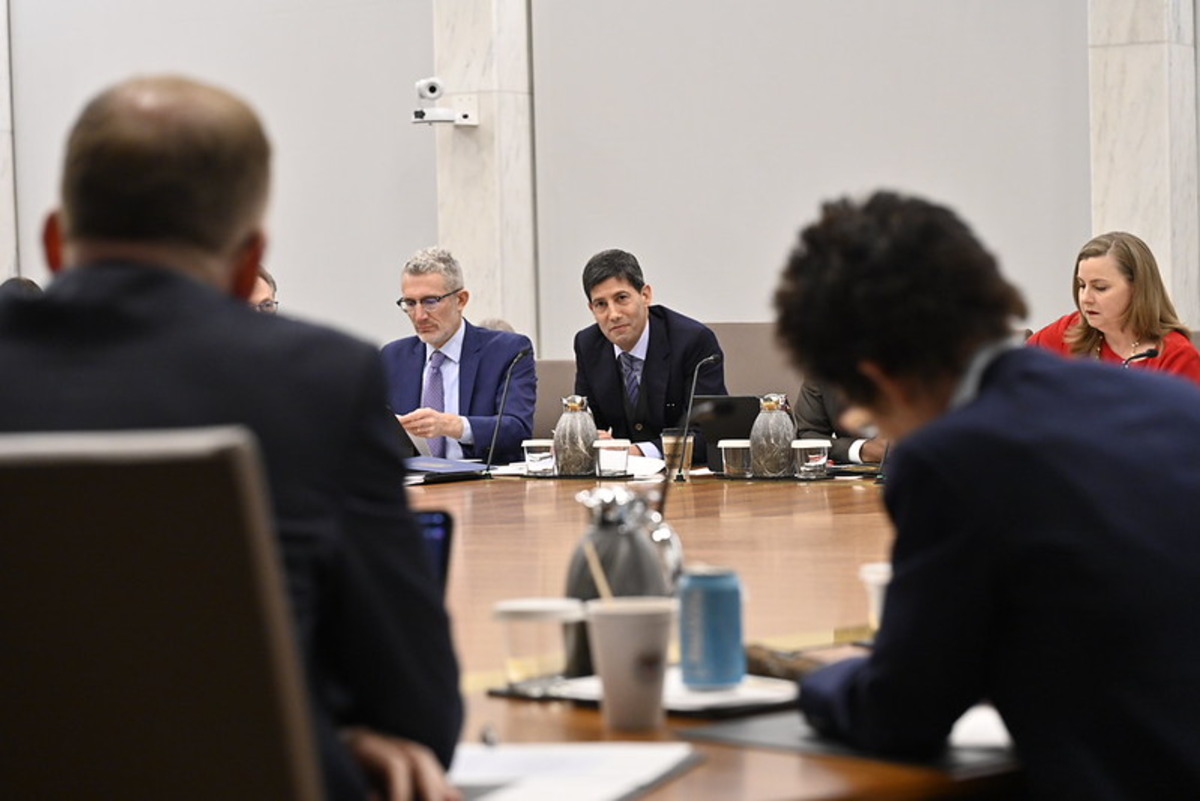
Although the policy decision itself was widely anticipated, the vote was not unanimous. The committee approved the decision with three dissents, marking a departure from June's unanimous vote—the first meeting chaired by Fed Chair Kevin Warsh.
Among the hawks who argued for a quarter-point hike were Cleveland Fed's Beth Hammack, Dallas Fed's Lorie Logan and Minnepolis Fed's Neel Kashkari.
The split gives the decision a hawkish undertone, suggesting some policymakers remain unconvinced that inflation has cooled sufficiently and continue to see the case for additional policy tightening if price pressures persist.
Statement Largely Unchanged
The accompanying policy statement was little changed from June. Policymakers continued to describe economic activity as "expanding at a solid pace," despite acknowledging that uncertainty remains elevated, partly because of ongoing geopolitical tensions in the Middle East.
The committee said productivity growth and business investment remain strong, while job gains have continued to keep pace with labour-force growth and the unemployment rate has changed little. Officials also reiterated that inflation remains elevated relative to the Fed's 2% objective and reaffirmed their commitment to restoring price stability over time.
The lack of meaningful changes suggests the committee remains comfortable maintaining a data-dependent approach rather than signalling an imminent shift in policy.
Attention Turns to Warsh's Press Conference
With the policy statement offering few surprises beyond the split vote, investors will now turn their attention to Warsh's 2:30 p.m. ET press conference for greater clarity on the policy outlook.
Because July was a non-Summary of Economic Projections (SEP) meeting, offering no updated dot plot or economic projections, the vote count and dissent language carry more weight than usual as a signal of the committee's leanings. That puts extra emphasis on Warsh's press conference as the only explicit forward guidance markets will get before the September 15–16 meeting, where futures traders are already pricing meaningfully higher odds of a hike.
Markets will be looking for clues on whether the dissents reflect a broader shift within the committee, how policymakers assess recent inflation and labour-market data, and whether the Fed still believes current policy is sufficiently restrictive. Any comments on AI-driven investment, productivity gains, financial conditions, or geopolitical risks could also influence expectations for the remainder of the year.
Treasury yields, the U.S. dollar, Fed funds futures and equity index futures are likely to remain highly sensitive to Warsh's remarks as investors reassess the likelihood of another rate increase versus an extended pause.
How Markets Reacted
Markets showed muted reaction in the minutes after the statement's release, with the dollar index, Treasury yields, and equity futures all adjusting to the confirmation of a hawkish-leaning hold.