Corn, wheat and soybean futures moved higher on Friday after the U.S. Department of Agriculture's (USDA) latest World Agricultural Supply and Demand Estimates (WASDE) report pointed to a tighter supply outlook for key grain markets. While soybean ending stocks were left unchanged, the agency reduced its projections for wheat and corn inventories, reinforcing expectations that supplies could remain constrained heading into the 2026/27 marketing year.
Wheat Production Falls to a Five-Decade Low
Wheat led the bullish narrative. The USDA lowered its estimate for 2026/27 U.S. wheat production by 7 million bushels from the previous month to roughly 1.54 billion bushels, the smallest harvest since the 1970/71 marketing year. The reduction reflects persistent drought-related challenges in key producing regions, particularly for hard red winter wheat. With both beginning stocks and production revised lower, total wheat supplies fell by 22 million bushels, while domestic consumption and export projections were left unchanged. As a result, ending stocks tightened further, underscoring an increasingly constrained wheat market.
Check out MarketFramework’s Trade Validator tool for insights on positioning among retail traders.
Strong Corn Demand Offsets Higher Output
Corn's balance sheet also turned more supportive. USDA reduced beginning stocks for the 2026/27 marketing year by 125 million bushels to 2.0 billion bushels, reflecting stronger feed and residual demand that more than offset lower corn use for ethanol. The agency also raised its outlook for exports, resulting in lower projected ending stocks despite a marginal increase in production following updated acreage estimates from the June 30 Acreage Report. In other words, demand growth is currently outpacing the increase in supply.
Higher Production Meets Strong Demand in Soybean Market
Soybeans presented a more balanced picture. USDA raised its production forecast by 40 million bushels to 4.48 billion bushels, largely due to increased harvested acreage. Total supplies increased by 30 million bushels as larger production offset lower beginning stocks. The agency also increased its soybean export forecast by 30 million bushels, citing stronger global demand. Because stronger demand absorbed the additional supply, soybean ending stocks remained unchanged, helping futures participate in Friday's advance despite a less overtly bullish balance sheet than wheat or corn.
Why the Market Reacted Positively
The report's key takeaway was not production alone, but the direction of ending stocks. Ending stocks represent the amount of a commodity left over at the end of the marketing year and are one of the most closely watched indicators of market tightness. Lower ending stocks generally imply less cushion against weather disruptions, export demand surprises, or production shortfalls, which tends to support prices.
For wheat, the combination of the smallest U.S. crop in more than five decades and declining inventories reinforced concerns about supply availability. For corn, stronger demand projections offset higher production, resulting in a tighter balance sheet. Soybeans remained comparatively neutral, but stronger export demand prevented inventories from building despite larger harvest expectations.
Wheat Vs Corn Vs. Soybean - Futures Price Performance
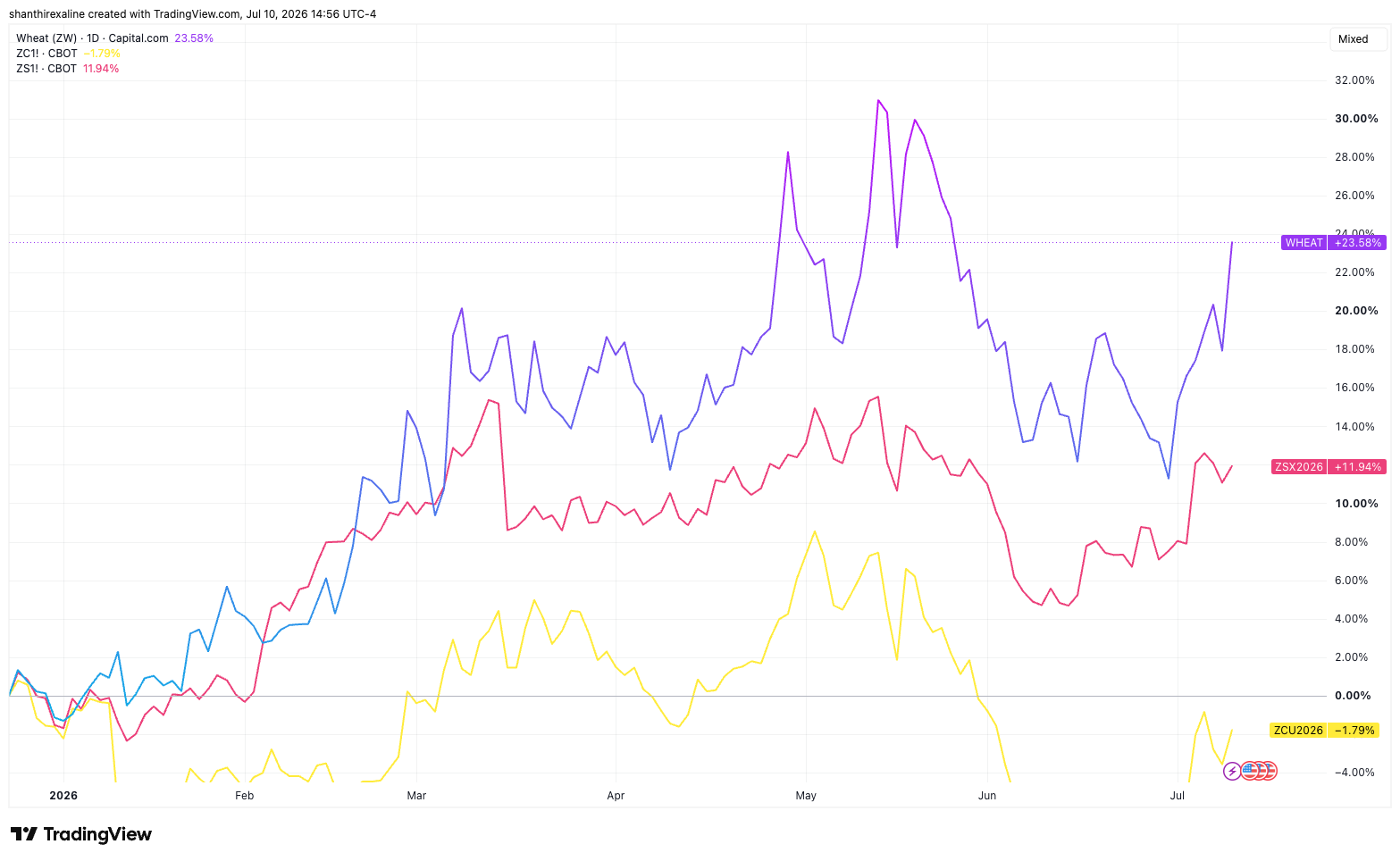
Source: TradingView
Broader Implications
The latest WASDE report suggests grain markets remain fundamentally driven by tightening inventories rather than expanding production. While weather conditions across North America will remain the dominant near-term driver of prices, Friday's report indicates that demand remains resilient enough to keep supply cushions relatively thin.
For traders, the message is clear: the USDA's revisions point to a grain complex where wheat appears the most fundamentally bullish, corn remains supported by strong demand, and soybeans continue to rely on export growth to absorb increasing production. As long as inventories continue to trend lower, dips in grain prices may attract buyers looking for exposure to tightening agricultural supplies.


