This story has been updated to include details from the Bank of Canada's April monetary policy report, market reaction
The Bank of Canada (BoC) on Wednesday announced a pause decision for a fourth straight session, despite the pickup in inflationary pressure due to the U.S.-Iran war.
Following the rate decision, the S&P/TSE Composite Index cut its losses and yet traded modestly lower early Wednesday. The Canadian dollar fell against the greenback in early reaction, and was last seen trading down 0.10%.
Rate Held Amid Uncertainty
The central bank’s Governing Council kept its target for the overnight rate at 2.25% following the conclusion of its monetary policy meeting, aligning with the consensus estimate. The bank rate and deposit rate were also left at 2.50% and 2.20%, respectively.
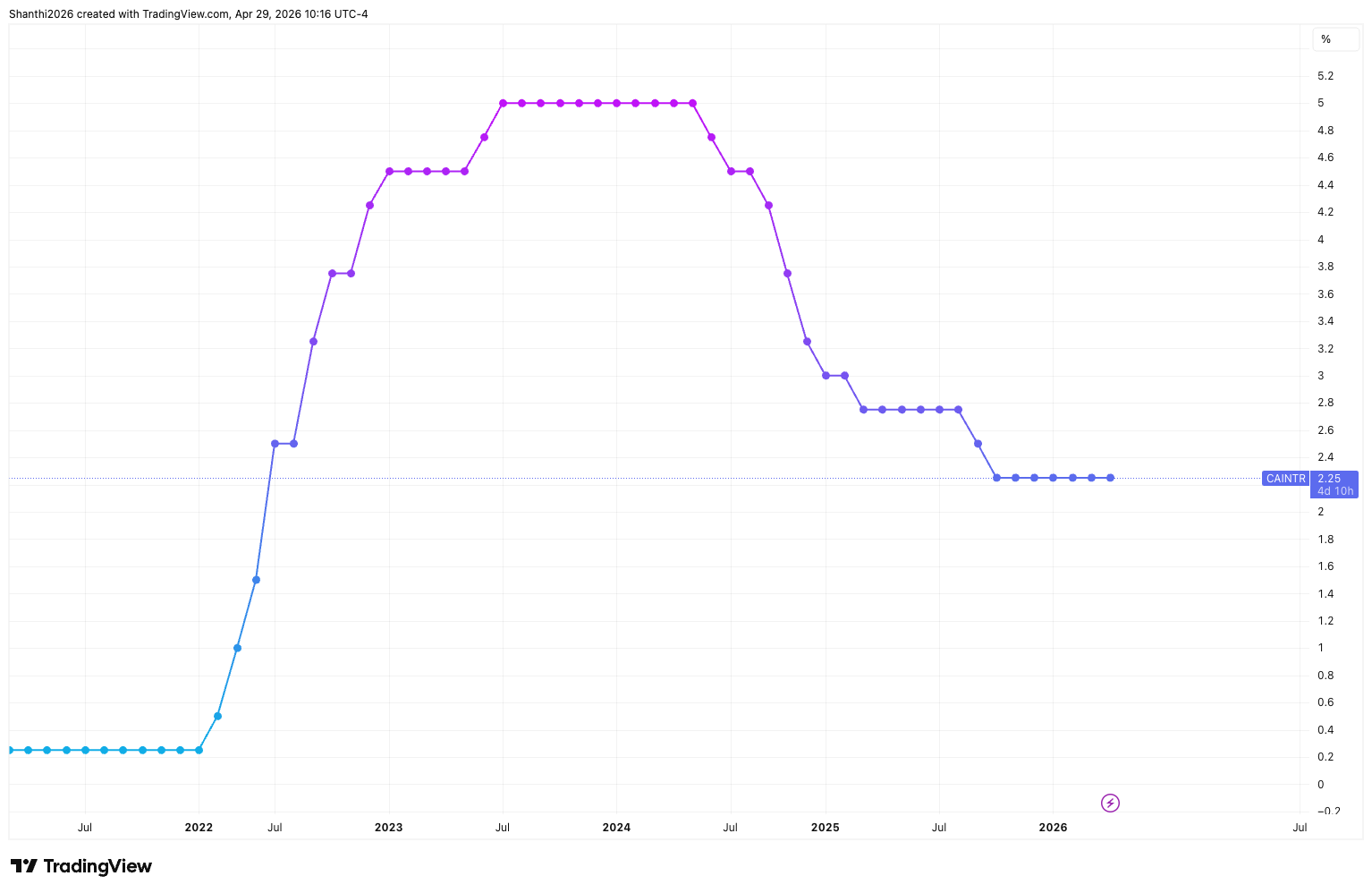
“The evolving conflict in the Middle East is causing heightened volatility and US trade policy continues to reshape global trade patterns. Both are ongoing sources of uncertainty,” the central bank said in a statement.
U.S. tariffs have dealt a significant blow to Canada's economy, with the hardest-hit sectors being autos, steel, aluminum, and lumber. About three-quarters of merchandise exports and nearly one-quarter of Canada's entire GDP flow to the United States.
Canada has fought back with retaliatory measures and a "Buy Canada" push, and exports to non-U.S. markets rose 17% year-over-year through January 2026 but merchandise exports to the U.S. fell 10% over the same period.
Growth to Hold Up, Inflation to Hit High-end of Target
In the latest Monetary Policy Report, the BoC said economic growth has been broadly consistent with the projections in January, underpinned by solid consumer and government spending. The central bank blamed U.S. tariffs and related trade uncertainty for the softer exports and investment.
Canada's 2026 GDP growth is estimated at 1.2% in 2026, before picking up pace to 1.6% in 2027 and 1.7% in 2028. Inflation is expected to peak at about 3% in April, before returning to the 2% target in early 2027.
The central bank said the assumptions are based on tariffs remaining unchanged and oil gradually declining to US$90 in the second quarter of 2026 and dropping further to $75 by mid-2027.
"If the global price of oil remains high for longer than assumed in the base case, broader cost pressures could emerge. This raises the risk that elevated inflation will persist," BoC said.
The March consumer price inflation report released last week showed a 2.4% year over year increase, faster than the 1.8% rise in February, with the acceleration attributable to higher energy prices, especially that of gasoline, due to the Middle East conflict. Backing off energy, the annual inflation rate was a more benign 1.9%.
RBC Capital Markets expects May inflation to exceed the central bank’s 1%-3% target for the first time since December 2023. “Lags in the impact of interest rates on the economy mean the central bank needs to set monetary policy based on where inflation will be in the future, not just where it is today,” the firm said.
Reflecting the dilemma before the central banks as global economies face the fallout of a supply shock, this tension was evident when the Bank of Japan decided to leave its key policy rate unchanged at 0.75% by a split vote. The three dissenting Governing Council members called for a rate hike to 1%.
Macklem Signals Policy Stability
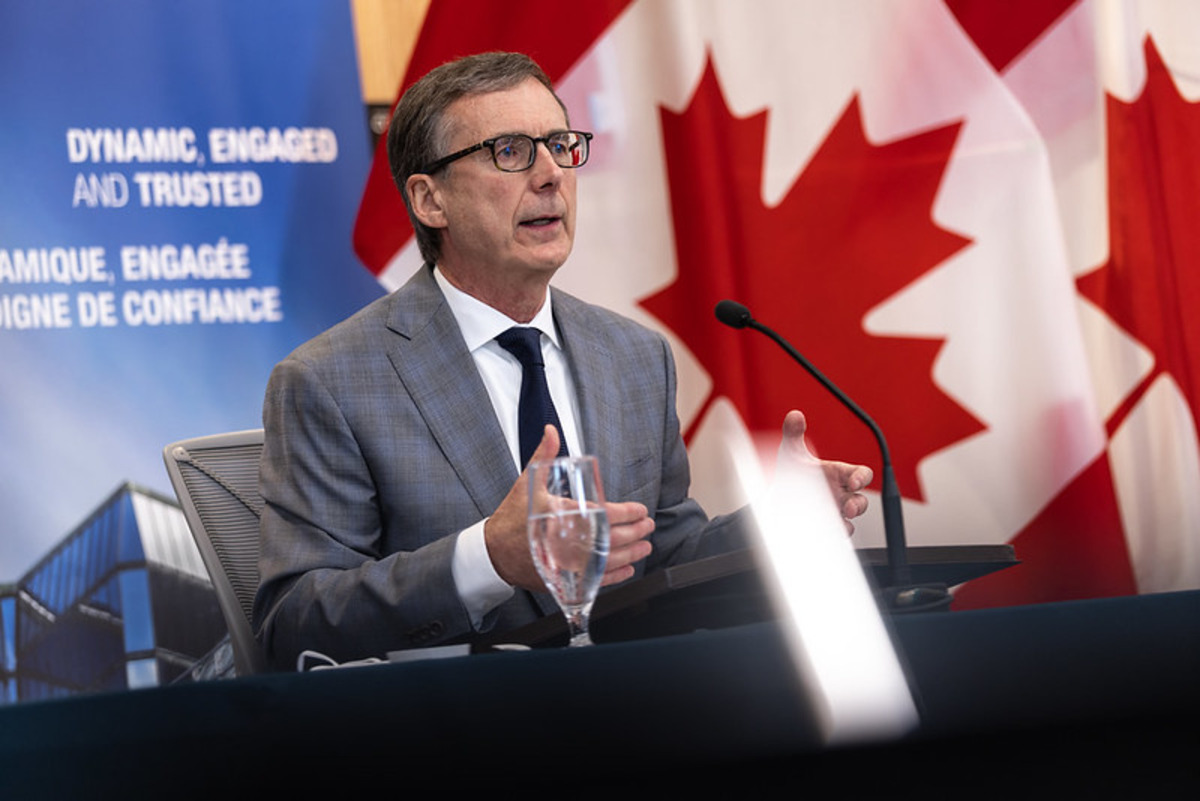
In prepared statement delivered in the MPR press briefing, BoC Governor Tiff Macklem soothed concerns about the economy. ", Canada is being buffeted by global events and geopolitical uncertainties, but our economy is growing and is expected to continue to grow," he said.
The governor also said the central bank is committed to keeping inflation low and stable over time and that it is focused on ensuring that the jump in energy prices do not turn into persistent inflation.
"If the economy evolves broadly in line with the base case, changes in the policy rate can be expected to be small," Macklem said, adding that "However, uncertainty is unusually elevated, and there are many possible outcomes. Monetary policy may need to be nimble."
All Eyes on Fed Now
The U.S. Federal Reserve is set to announce its policy decision Wednesday afternoon. In what is most likely to be the last meeting chaired by Jerome Powell, the central bank is widely expected to stand pat but strategists expect Powell to adopt a hawkish tone at the post-meeting press conference.