
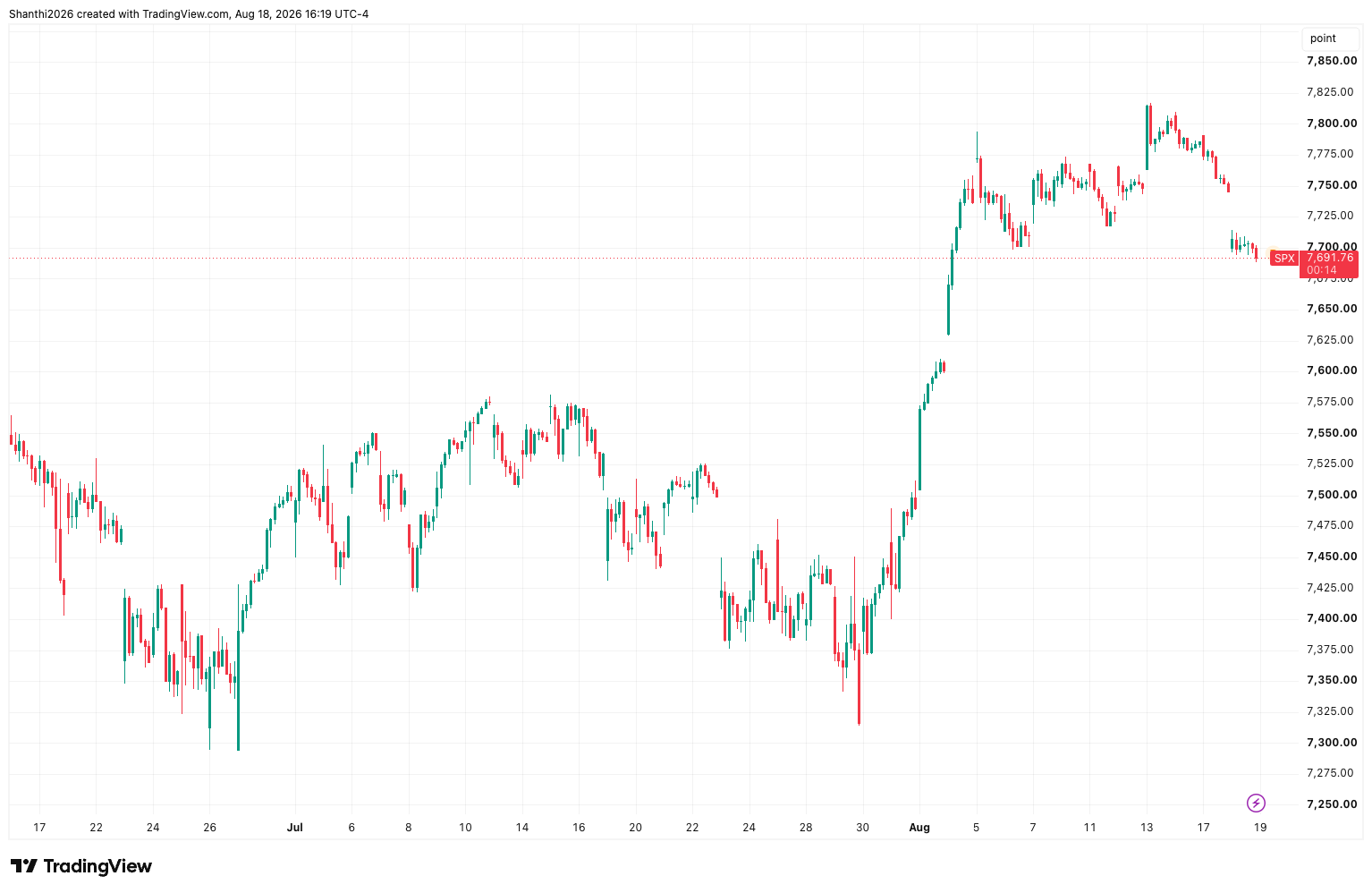
The S&P 500 is facing its first meaningful test after a powerful run to record territory. The index cleared 7,800 for the first time on August 13 before pulling back over the next three sessions. The retreat comes as rising Treasury yields, higher oil prices and renewed pressure on technology stocks challenge the rally's momentum.
A Pause After a Powerful Run
The pullback needs to be viewed in the context of how quickly the market climbed. The S&P 500 had moved from 7,700 to above 7,800 in just seven trading sessions, leaving stocks vulnerable to profit-taking.
Source: TradingView
So far, the decline looks more like a cooling-off period than a decisive break in the broader uptrend. The index remains relatively close to its record, keeping the door open for buyers to step back in.
Yields Are the Bigger Test
The bigger concern is what is happening in the bond market. Long-term Treasury yields have moved sharply higher, with the 30-year yield reaching its highest level since 2007. Higher yields can put pressure on equity valuations, particularly for growth and technology stocks whose valuations depend heavily on future earnings.
Higher oil prices add another complication by potentially keeping inflation pressures elevated and making the Federal Reserve's policy path less predictable.
Is the Dip Buyable?
For bulls, the key question is whether the recent selling remains contained. If Treasury yields stabilize and market breadth holds up, the three-session decline could prove to be nothing more than healthy consolidation after the record-setting advance.
But if selling broadens, technology leadership deteriorates further and yields continue climbing, investors may want to see more evidence of stabilization before treating the decline as a buying opportunity.
The Next Signal Matters More
The S&P 500's reaction from here could tell investors more than the pullback itself. A quick stabilization would reinforce the "buy the dip" mentality that has supported the market throughout its advance.
A failure to attract buyers, however, would suggest that investors are becoming less willing to chase stocks at elevated levels.
For now, the dip is a test—not yet a verdict on the bull market.


