The U.S. dollar has slipped to a three-month low, with the dollar index around 98.8, as investors reassess the outlook for U.S. Treasury yields, fiscal policy and Federal Reserve policy. The latest decline came after the Treasury announced plans to double its purchases of longer-dated debt to at least $4 billion per operation.
The Treasury Just Gave the Dollar Another Reason to Fall
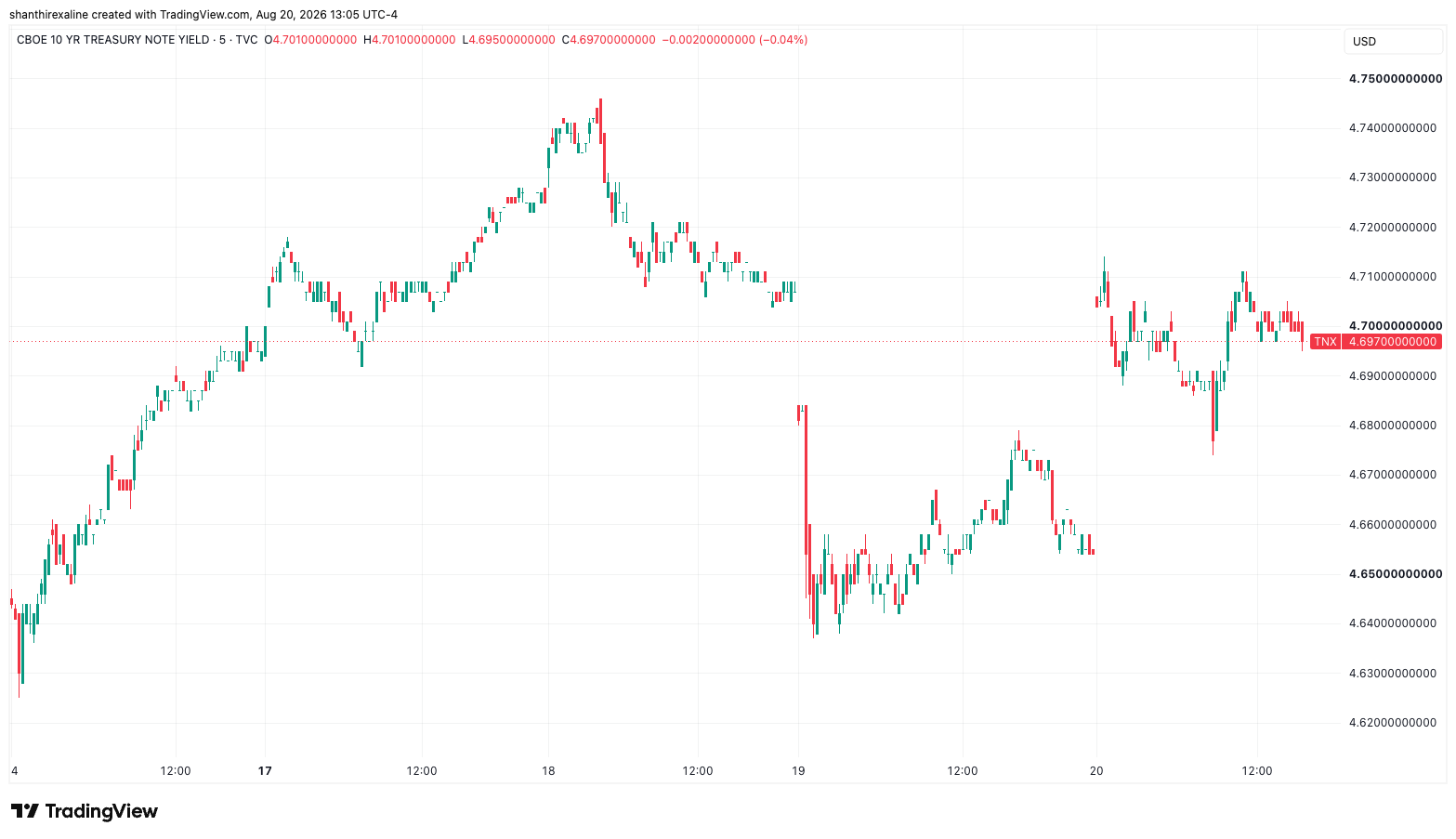
The Treasury's decision to increase buybacks of 10- to 30-year debt initially pushed long-term yields sharply lower. That removed an important source of support for the dollar and helped push the greenback to its weakest level since May. The euro climbed as high as $1.171, its strongest level since May 14.
US10Y Yield Plummets Only to Recover
Source: TradingView
But the market reaction is more complicated than a simple yield story.
Treasury yields have started climbing again as investors question whether relatively small buybacks can materially change the supply-demand dynamics of a U.S. government bond market dealing with more than $40 trillion of debt.
ING strategist Padhraic Garvey said the Treasury’s move is unlikely on its own to change the trajectory for long-end yields.
It does mute it though. And moreover, it reminds the market that the Treasury could double the long tenor buyback sizes again, and again if needed. That’s the real kicker from this move: the anticipation for more should long-dated yields decide to morph higher again in an overly sinister fashion in the days and weeks and months ahead.
Garvey continues to identify upward pressure on long-end yields as a dominant factor that the market will need to deal with.
The Bigger Problem: Fiscal Credibility
This is where the dollar story becomes more interesting.
The latest weakness comes against a backdrop of growing concerns about the U.S. fiscal deficit, elevated government debt and the inflation implications of higher oil prices. The Treasury intervention may calm bond-market volatility temporarily, but it does not address the underlying fiscal pressures.
That raises a key question: Is the dollar falling because yields are falling or because investors are demanding a greater risk premium to hold U.S. assets?
If the latter becomes increasingly important, the dollar's weakness could prove more persistent.
Fed vs. Treasury: A New Currency Risk
The upcoming Jackson Hole symposium adds another catalyst.
Markets are trying to determine how Fed officials will respond to persistent inflation pressures, while the Treasury is actively attempting to influence longer-term borrowing costs. The divergence could create additional uncertainty for currency markets, particularly if the Fed maintains a relatively hawkish stance while Treasury policy pushes in the opposite direction.
Three Scenarios for the Dollar
Bearish dollar: The DXY remains below 99, long-term yields stay contained and concerns about U.S. fiscal sustainability intensify. A sustained break below recent support could extend the dollar's broader decline.
Range-bound: The Treasury intervention fades, yields stabilize and markets turn toward Jackson Hole. The dollar could consolidate around current levels while traders await clearer Fed guidance.
Dollar rebound: Long-term yields resume their climb and Fed officials push back against expectations for easier policy. Higher U.S. yields could restore some of the dollar's appeal and trigger a short-covering rebound.
The Key Question
The important issue is no longer simply whether the dollar can bounce from a three-month low. It is whether investors are beginning to treat dollar weakness as a reflection of deeper concerns about U.S. fiscal and monetary credibility.
That distinction could determine whether the current decline is merely another leg in the dollar's cyclical pullback or the beginning of a more structural repricing of the greenback.


