
Traders scaled back expectations for further Federal Reserve rate tightening after the June nonfarm payrolls report came in well below forecasts. Fed funds futures subsequently reduced the implied probability of a September rate hike to around 60%, down from roughly 75% before the data release.
The odds declined further following Tuesday's data, which hinted at a stagflationary mix of softer growth and sticky inflation, putting the Fed in a policy bind as it balances inflation risks against a slowing economy.
September Rate Move Odds
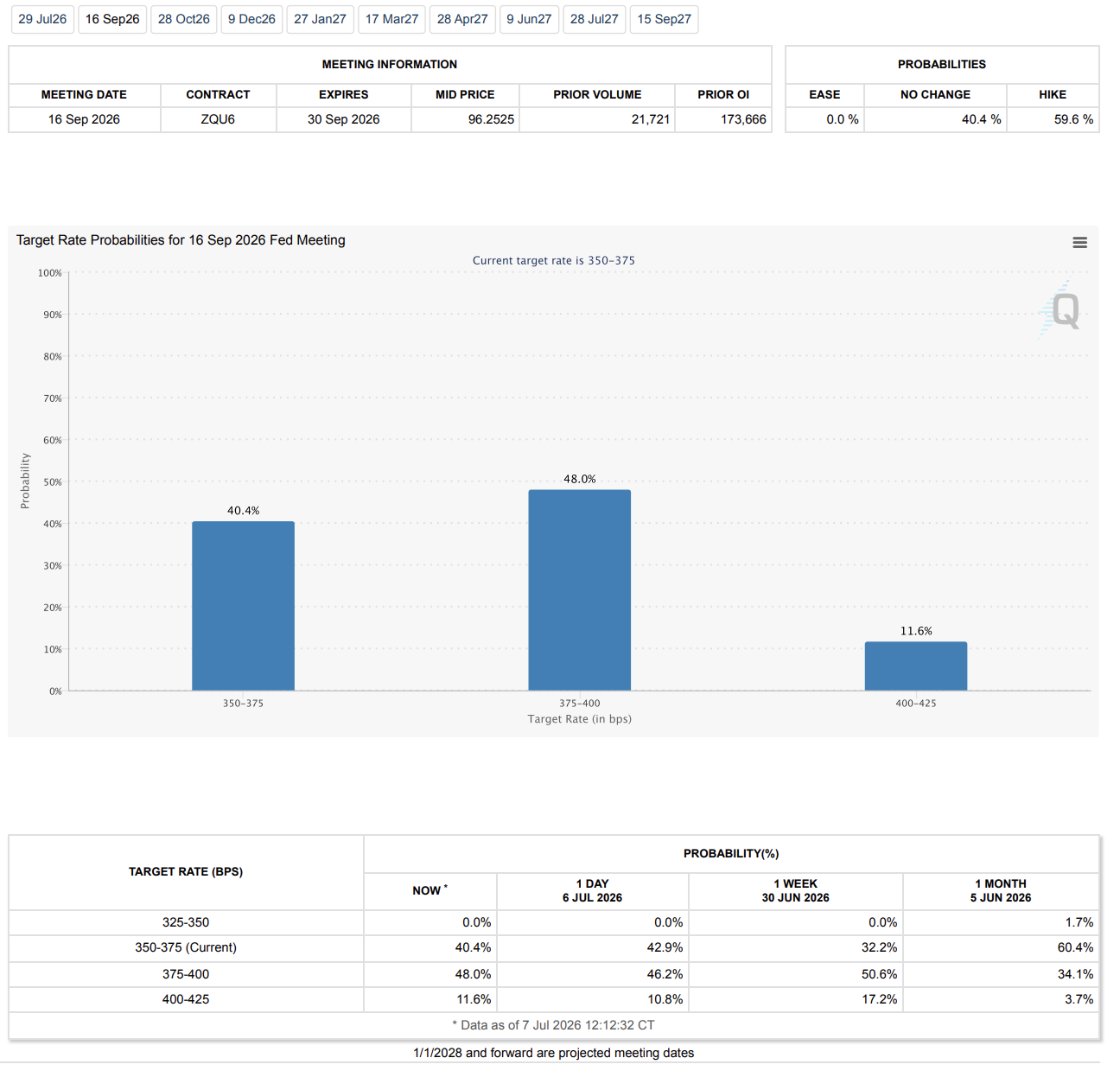
Source: CME FedWatch Tool
The combination of slowing growth and persistent inflation has complicated the policy outlook, leaving policymakers with few easy options.
Recent economic data have painted a mixed picture. Labor-market conditions appear to be cooling, while some inflation indicators remain uncomfortably elevated. At the same time, rising Treasury yields suggest bond investors continue to demand compensation for inflation risks and an uncertain policy path.
Check out MarketFramework's Trade Validator toolfor the latest on futures traders' positioning.
Muted Growth Outlook
The latest estimate from the widely followed Atlanta Fed GDPNow model points to U.S. economic growth slowing to an annualized 1.4% in the second quarter, down from 2.1% in the first quarter. The projection has also weakened significantly from the model's initial 3.7% estimate in late April, highlighting a notable loss of momentum as the quarter progressed.
Much of the downward revision stems from a deterioration in net exports, which have turned into a significant drag on growth. The shift suggests that while domestic demand has remained relatively resilient, external trade has weighed more heavily on economic activity than previously anticipated.
The slowing growth backdrop complicates the Federal Reserve's policy calculus. While softer economic momentum argues for caution on further rate hikes, policymakers must also contend with inflation pressures that have yet to fully subside. That tension is one reason markets continue to view a September rate hike as a possibility, even as expectations for additional tightening have eased.
Inflation Expectations Head the Wrong Way
As growth concerns mount, inflation expectations are showing renewed signs of firming, adding another layer of complexity to the Federal Reserve's policy outlook.
The latest New York Fed Survey of Consumer Expectations showed one-year-ahead inflation expectations rising by 0.2 percentage point to 3.7% in June, the highest level since September 2023. Expectations at the three-year horizon also increased by 0.2 point to 3.3%, marking their highest reading in four years.
While longer-term inflation expectations remained unchanged at 3.0%, they continue to run well above the Fed's 2% inflation target, suggesting consumers remain unconvinced that price pressures will fully normalize in the years ahead.
Perhaps more concerning for policymakers is that inflation expectations increased despite a sharp improvement in consumers' outlook for gasoline prices. Expectations for gas-price inflation fell 3.5 percentage points to 1.5%, the lowest level since August 2022. The divergence suggests consumers are becoming increasingly worried about broader price pressures beyond energy costs.
Taken together, the data reinforce the stagflationary concerns that have begun resurfacing in financial markets. With growth indicators weakening and inflation expectations edging higher, the Fed faces the difficult task of preventing inflation from becoming entrenched without inflicting further damage on economic activity.
Bond Market Signals Growing Inflation Anxiety
Treasury yields have been sending a warning signal of their own. Despite evidence of slowing economic growth, longer-dated yields have continued to rise, reflecting concerns that inflation may prove more persistent than previously expected. The unusual combination of weaker growth and higher yields has tightened financial conditions and complicated the outlook for risk assets, while underscoring the difficult trade-offs facing Fed policymakers ahead of their September meeting.
Yields Stay Elevated
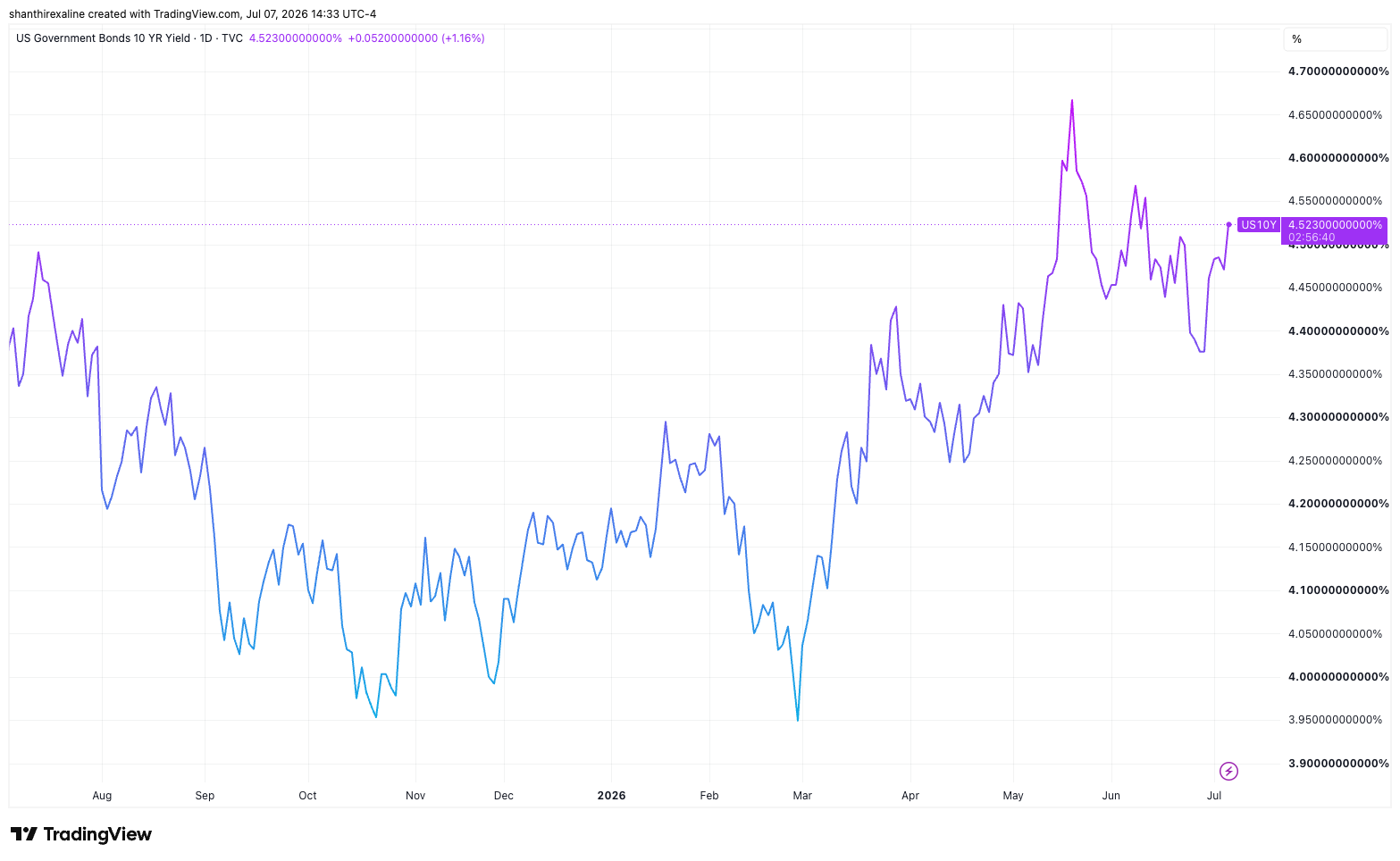
Source: TradingView
The rise in the 10-year Treasury yield despite signs of slowing economic growth underscores investors' growing concern that inflation may remain elevated for longer than previously expected. The unusual combination of softer growth and higher yields is consistent with a market increasingly worried about stagflation, complicating the Federal Reserve's policy outlook ahead of its September meeting.
Why It Matters for September
For markets, the implication is straightforward: a slowing economy alone may not be enough to take a September rate hike off the table. As long as inflation expectations remain elevated and policymakers remain concerned about inflation persistence, the Fed is likely to maintain a hawkish bias even as growth loses momentum. That helps explain why investors have reduced, but not eliminated the probability of additional tightening later this year.
The Fed minutes arrive at a pivotal moment for markets. Evidence of slowing growth would normally argue for a less restrictive policy stance, but rising inflation expectations and higher bond yields tell a different story. How policymakers reconcile those competing signals could determine whether September remains a live meeting for another rate hike, or marks the beginning of a shift toward a more cautious approach.


