West Texas Intermediate (WTI) crude oil futures for August delivery remained firmly bid on Monday, with the contract trading at session highs. The catalyst was a renewed escalation of tensions in the Middle East, as the U.S. and Iran exchanged strikes over the weekend and Tehran claimed control of the Strait of Hormuz, the critical waterway through which roughly a quarter of global oil and natural gas shipments pass.
Oil Raises the Stake Ahead of CPI Report
Against this backdrop, Tuesday’s June Consumer Price Index (CPI) reporthas taken on added significance. The combination of escalating geopolitical tensions and an upside inflation surprise would likely prove particularly unsettling for markets, potentially triggering a sharp repricing of interest-rate expectations. Even if the CPI report meets expectations or comes in slightly softer, investors may be reluctant to interpret it as a sign of easing inflation pressures if energy prices continue to surge in response to developments in the Middle East.
The consensus calls for
- 0.1% month-over-month (MoM) dip in consumer prices Vs. 0.5% growth in May
- 0.2% monthly core inflation rate, flat with last month
- Cool off in annual CPI to 3.8% from 4.2%; and steady 2.9% annual core inflation rate
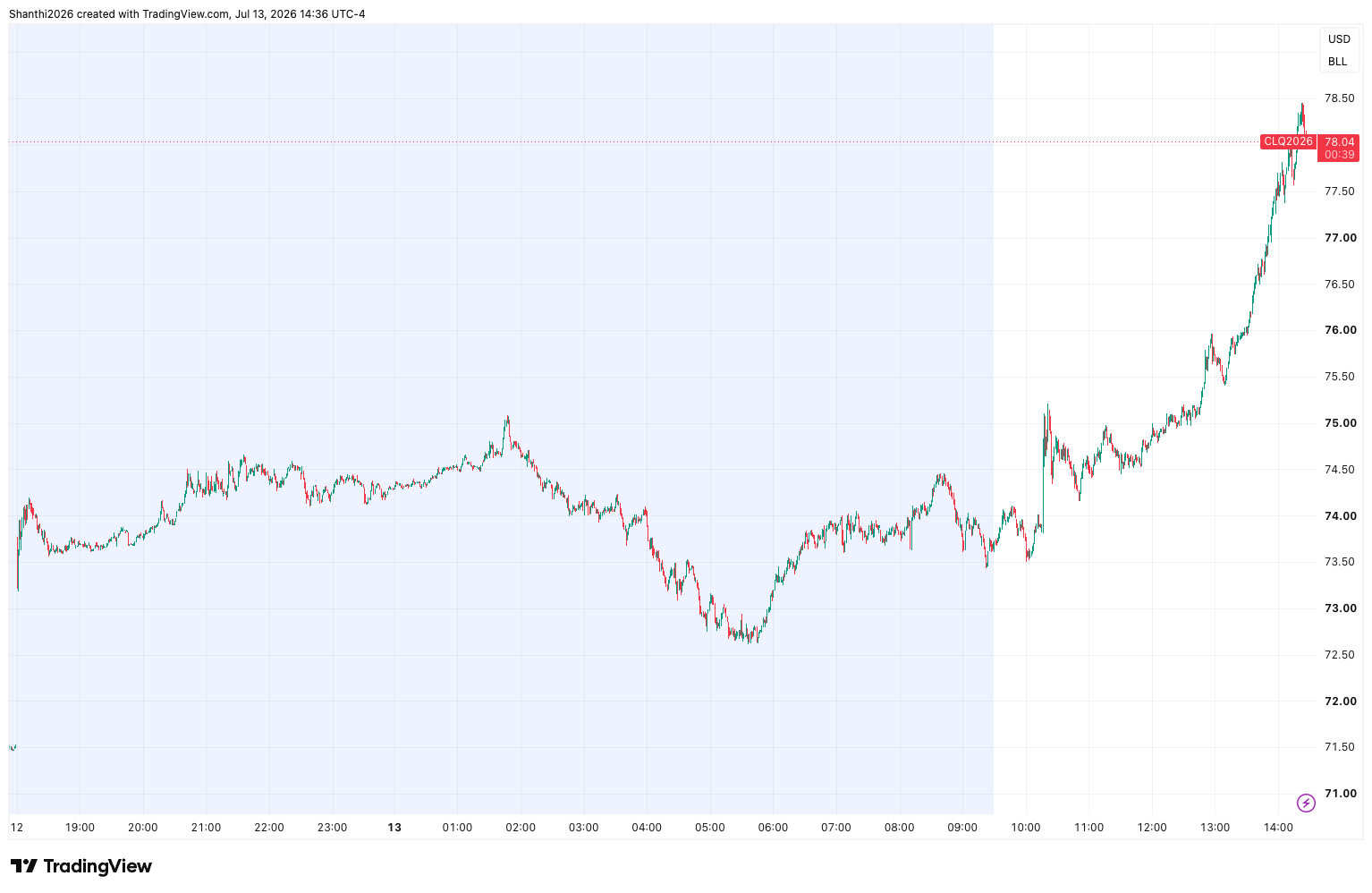
Crude oil prices initially jumped more than 5% during the late Asian session on Monday following the weekend escalation before surrendering much of those gains ahead of the New York open. However, buying interest subsequently re-emerged, lifting prices higher as traders reassessed the potential supply risks associated with disruptions in the Gulf region. At last check, a barrel of crude fetched $78.33, up nearly 10% and marking the highest level since June 22.
Oil Reacts to Middle East Flareup
Source: TradingView
Adding to the uncertainty, U.S. President Donald Trump said on Truth Social that Washington had reimposed a blockade on Iran and would ensure that the Strait of Hormuz remains open under U.S. protection. He also stated that the administration would impose a 20% levy on cargoes transiting the strategic waterway.
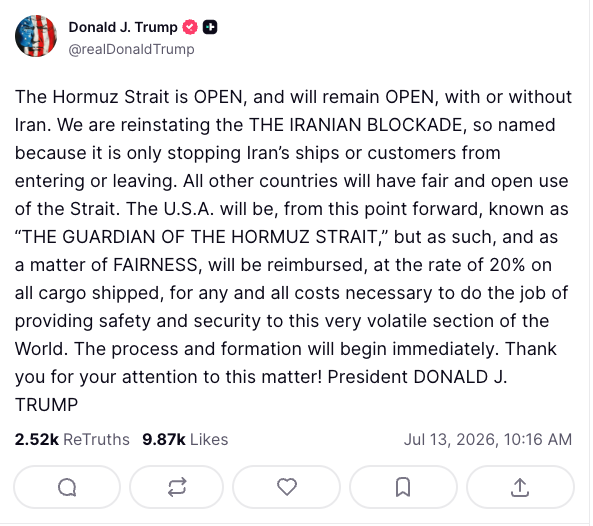
The remarks underscored the growing geopolitical risk premium embedded in energy markets and heightened concerns about the potential economic fallout from a prolonged disruption to global trade flows.
The 20% levy Trump pointed to shifts the U.S. response from merely military deterrence, adding an economic lever that can go a long way in pushing up shipping costs and in turn the price of oil. Whether the measure proves to be a durable policy tool or a largely symbolic gesture tied to the administration's broader messaging remains to be seen. Much depends on enforcement mechanics and whether shipping insurers and carriers treat the threat as credible enough to reroute or reprice voyages. Either way, the move adds a second, distinct risk premium into oil pricing: one layered on top of the physical disruption risk from the conflict itself.
How CPI Could Reshape the Oil Trade
| CPI Outcomes | Oil's Potential Reaction | Implications for Fed funds rate |
|---|---|---|
| Hot CPI (headline annual rate >3.8% and core rate >2.9%) | Crude likely extends gains as inflation and supply risk compound | Hawkish repricing accelerates; Rate hike odds swell |
| In-line CPI ((headline annual rate = 3.8% and core rate = 2.9%) | Crude direction hinges on Hormuz developments, not CPI itself | Fed stance largely unchanged; Warsh testimony becomes the swing factor |
| Benign CPI (headline annual rate <3.8% and core rate <2.9%) | Oil may still hold firm if Gulf tensions persist, capping the market's relief | Rate-hike odds rise, but only if oil doesn't erase the disinflation signal |
Technical Levels: What Traders Are Watching on CL contract
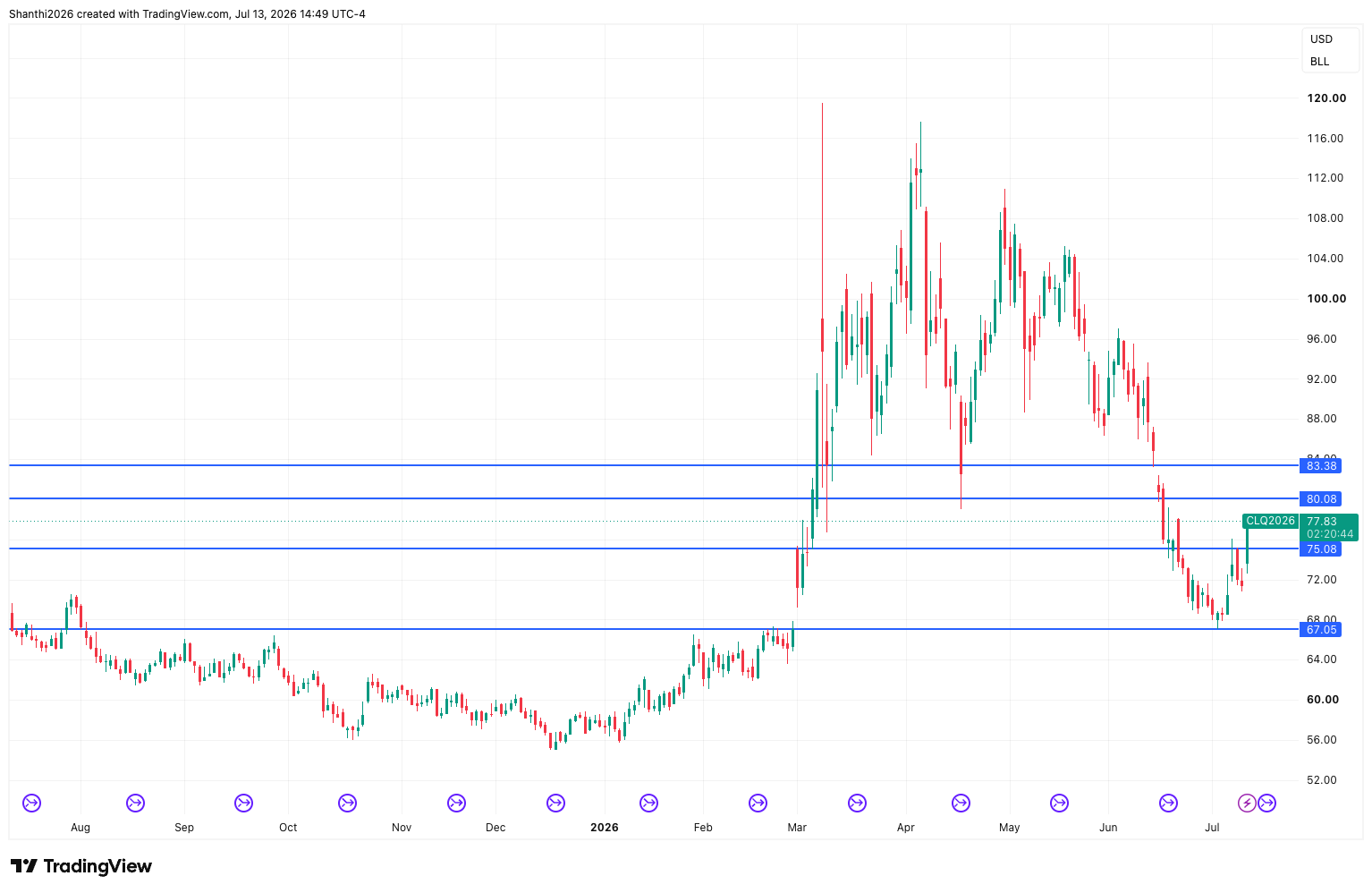
WTI crude oil futures witnessed a sharp reversal from the four-month downtrend that had dragged the contract from April's highs near $114 down to a July low of $67.04. Monday's rally has pushed price back above the $75 mark for the first time since late June, putting a cluster of technical levels squarely in focus for traders positioning around this week's Hormuz-driven volatility.
A decisive close above this zone would open the door toward the $83.08 region.
On the downside, the $75 region marks the first support, and a break back below this level would suggest Monday's spike is unwinding faster than the underlying risk premium justifies. Below that, $67.04, the contract's July low and lowest print since early May, remains the key structural support. A retest of this level would effectively erase the entire Hormuz-driven rally and put crude back at multi-month lows.
Source: TradingView
For now, crude remains caught between support and resistance, with investors weighing geopolitical developments against broader macroeconomic factors. Tuesday's CPI report could prove to be the next major catalyst, helping determine whether prices break higher or retreat toward pre-escalation levels.
What Positioning Data Reveals
According to MarketFramework, positioning data indicate that retail traders have been overwhelmingly bullish on crude oil over the past week. Roughly 60% of winning traders profited from long positions, reflecting the strength of the recent rally. However, long exposure was not universally rewarded, with 53% of losing traders also holding bullish positions, suggesting that sharp intraday reversals and heightened volatility have made trade execution and timing critical. Traders holding the right directional bias have still been vulnerable to stop-outs and margin pressure from the intraday whipsaws. It's a reminder that in headline-driven markets, position sizing and entry timing can matter as much as conviction.
Oil, Financials, and the Week Ahead
If oil prices remain elevated into Tuesday, they could continue to support energy stocks and help underpin the Dow. At the same time, higher oil prices would add to inflation concerns, creating another challenge for investors assessing bank earnings and the Federal Reserve's policy outlook.
The week's three key catalysts, namely the oil rally driven by tensions around the Strait of Hormuz, the June CPI report, and the start of bank earnings season, are becoming increasingly linked. Together, they are likely to shape market sentiment and determine whether investors rotate between sectors or adopt a more cautious, risk-off stance.


