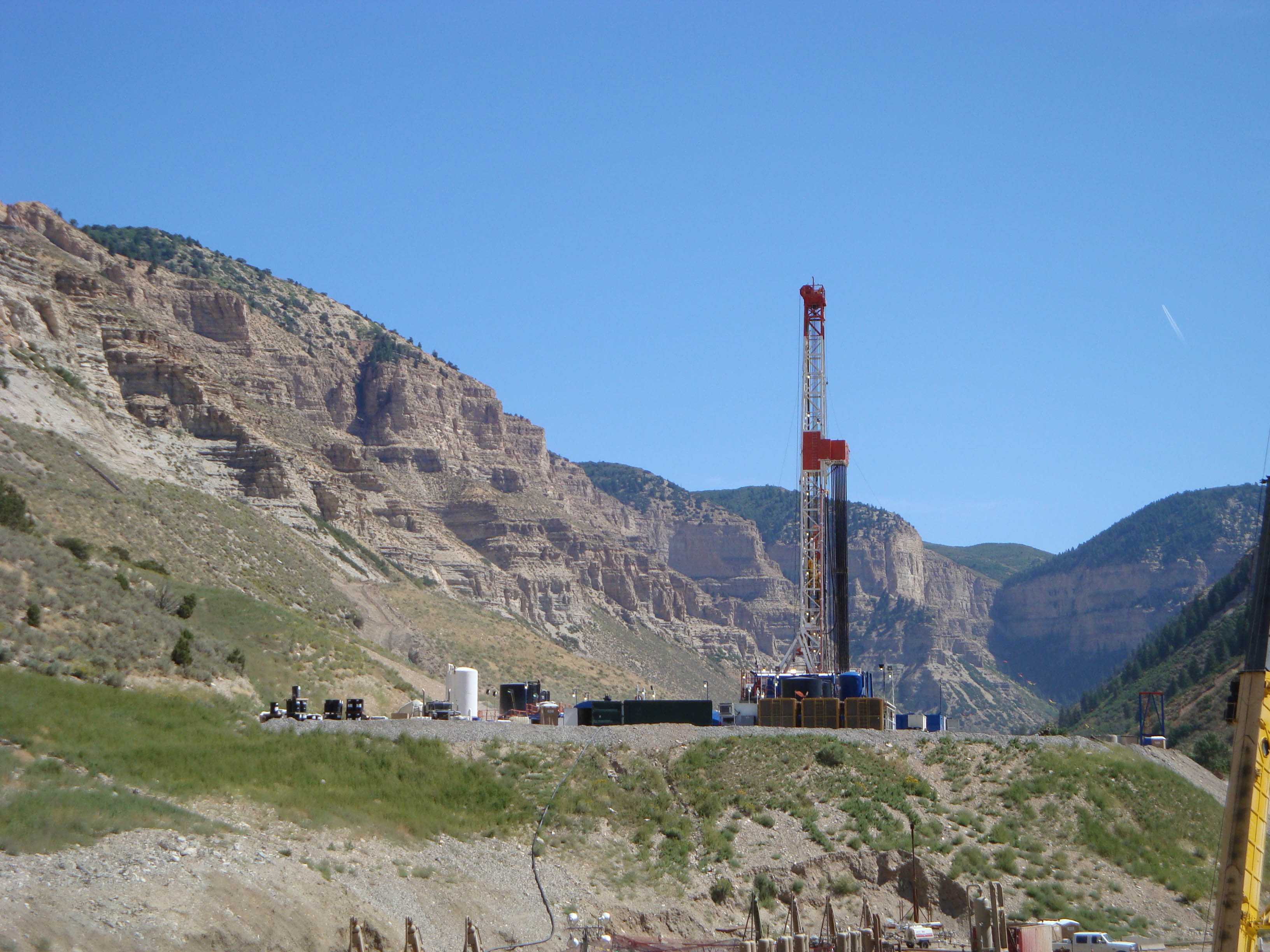
Oil traders just lived through a violent reversal. After surging more than 20% in July on escalating Strait of Hormuz tensions, including Iran's claimed attack on two tankers transiting the waterway under US military escort, crude cratered more than 5% in the first trading session of August. The trigger was almost the mirror image of what drove the rally: President Trump announced that peace talks with Iran would resume after he called off a planned military strike, and traders rushed to unwind the war premium they'd spent a month building in.
Gas Moved — Just Not on the Same Script
Natural gas didn't sit this one out, but it didn't trade Hormuz the way crude did either. Henry Hub futures actually rose early Monday, as a hot August weather pattern squared off against healthy supplies and soft LNG demand, while the same canceled U.S. strike on Iran pressured European gas prices instead. So the Hormuz headline did move gas — it just showed up on the European side of the market (pushing prices down as war-risk premium came out) rather than on Henry Hub, which was busy pricing a domestic heat wave against ample supply.
Gas reacted to the same catalyst crude did; it just reacted somewhere else, and for a different reason at home.
Zoom out from this week's whiplash, and the divergence looks even starker.
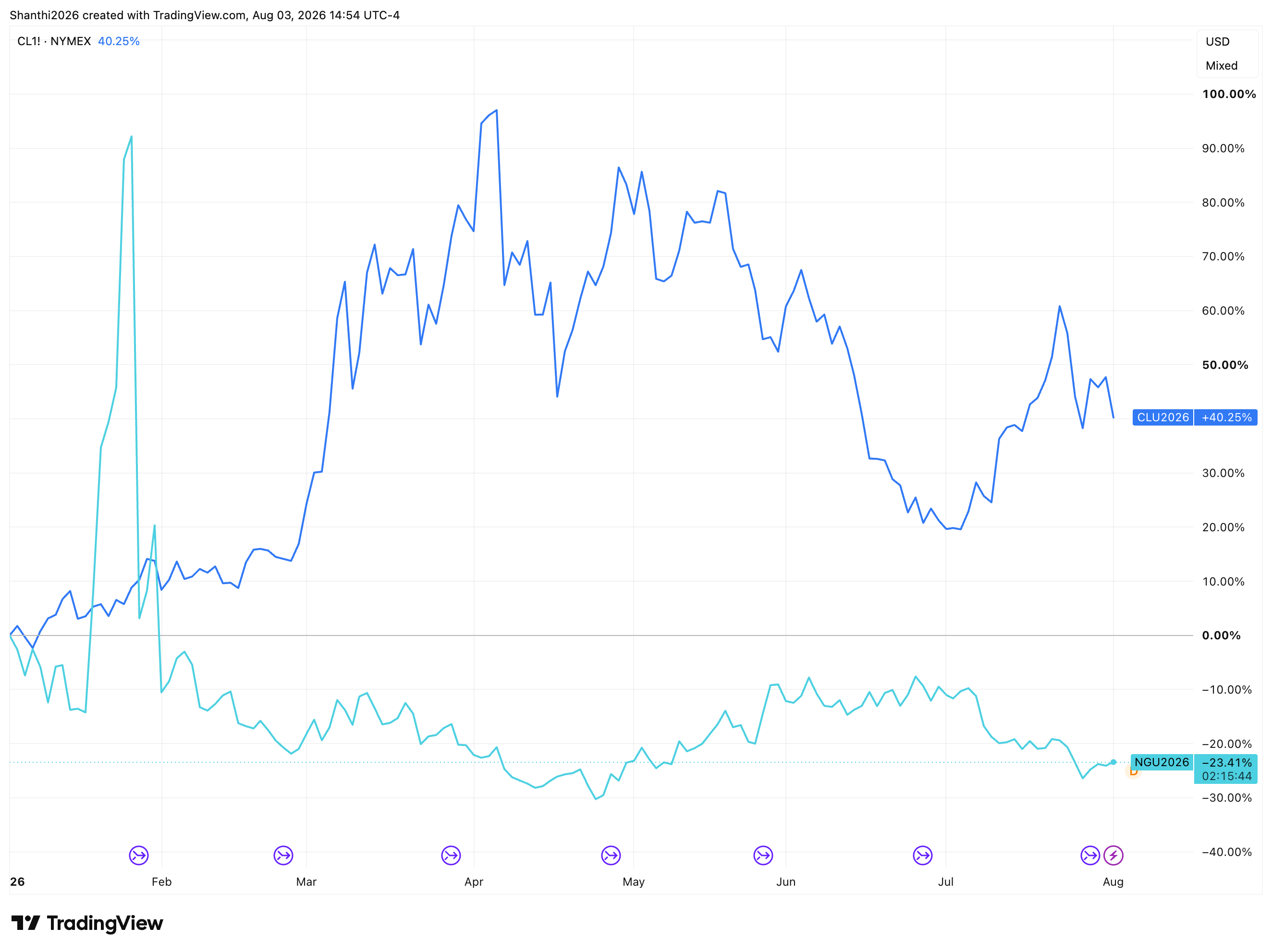
A Year of Diverging Paths — Crude Up 40%, Gas Down 23%
The year-to-date picture makes the divergence impossible to miss. Crude oil is up roughly 40% since January, but that gain has come in violent stair-steps — sharp rallies in March, April, and again in July, each one unwound almost as fast as it built, tracing the same war-premium-on, war-premium-off pattern that defined the Hormuz story. Natural gas, by contrast, is down about 23% on the year and has spent nearly the entire period in negative territory, aside from one brief, violent spike in late January/early February that reversed within days.
Natural Gas Underperforms
Source: TradingView
What stands out isn't just the gap in direction — it's the gap in character. Crude's line is jagged and headline-reactive, lurching on every Hormuz update, OPEC+ decision, or ceasefire rumor. Gas's line is comparatively smooth and grinding, drifting lower through the spring and summer as record Lower 48 production and above-average storage did their slow, structural work. Even gas's recent uptick off the July lows is modest and gradual — nothing like crude's spikes — which is the point: gas isn't reacting to the same news crude is. It's trading its own fundamentals, on its own timeline, largely indifferent to the oil market's mood swings.
Retail sentiment toward Micro WTI Crude (MCL) remains decisively bearish, with 90% of traders holding short positions over the past seven days, according to MarketFramework's "Top Traded Contract" tool. Despite the extreme positioning, the crowd has largely been on the right side of the move, as 74% of profitable trades were long positions—indicating that traders who correctly timed countertrend rallies also captured gains, while the prevailing weekly bias remains strongly short.
The Structural Backdrop: A Storage Cushion, Not a Storage Trigger
The reason a hot spell could barely move Henry Hub is the supply overhang sitting underneath it. US natural gas inventories are running roughly 6.4% to 6.6% above the five-year seasonal average, built on record Lower 48 production, averaging around 110.6 billion cubic feet a day in July, matching the all-time monthly high set in December 2025.
That's the important distinction: storage isn't what moved gas today, weather demand did, at the margin. Storage is what capped how far that move could go. With this much cushion in the tank, a heat wave can nudge prices up for a session, but it can't spark the kind of rally oil just unwound. Call it a ceiling, not a driver.
What Traders Should Watch Next
The next EIA Weekly Natural Gas Storage Report lands Thursday, August 6 — that's the number that will confirm or challenge the oversupply narrative, not this week's price action. A build that keeps running ahead of the seasonal average reinforces the current cap on prices. A smaller-than-expected injection would be the first sign the surplus is shrinking, which is the more likely trigger for gas to start trading with a firmer bias. The EIA's longer-range Short-Term Energy Outlook follows on August 11.
Until then: oil is trading Middle East headlines outright, European gas is trading them at one remove, and Henry Hub is mostly trading its own weather-versus-supply balance — with storage setting the ceiling rather than pulling the trigger.


