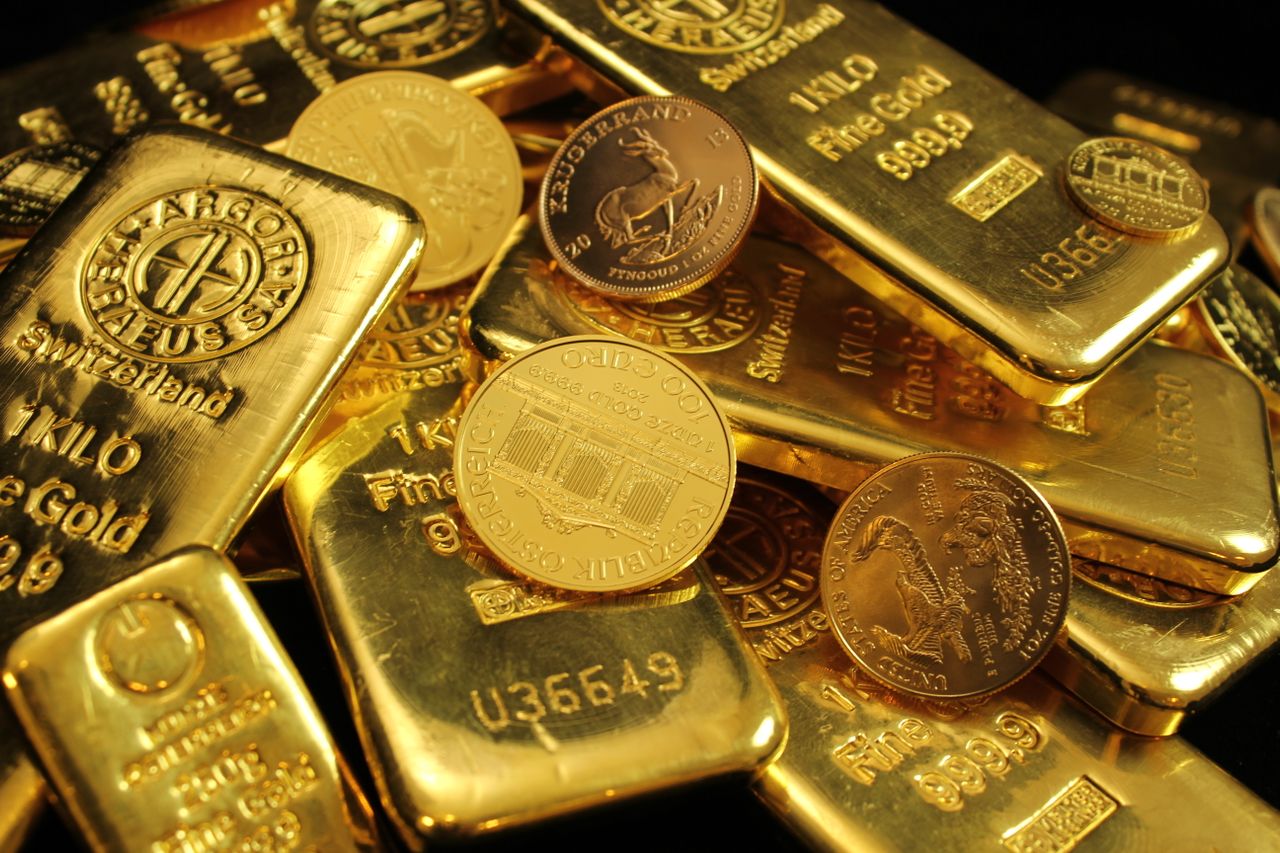
Gold is down for a second straight session, slipping to around $4,045 an ounce as the August COMEX contract (GC) trades near $4,046 into the open of the FOMC’s two-day meeting.
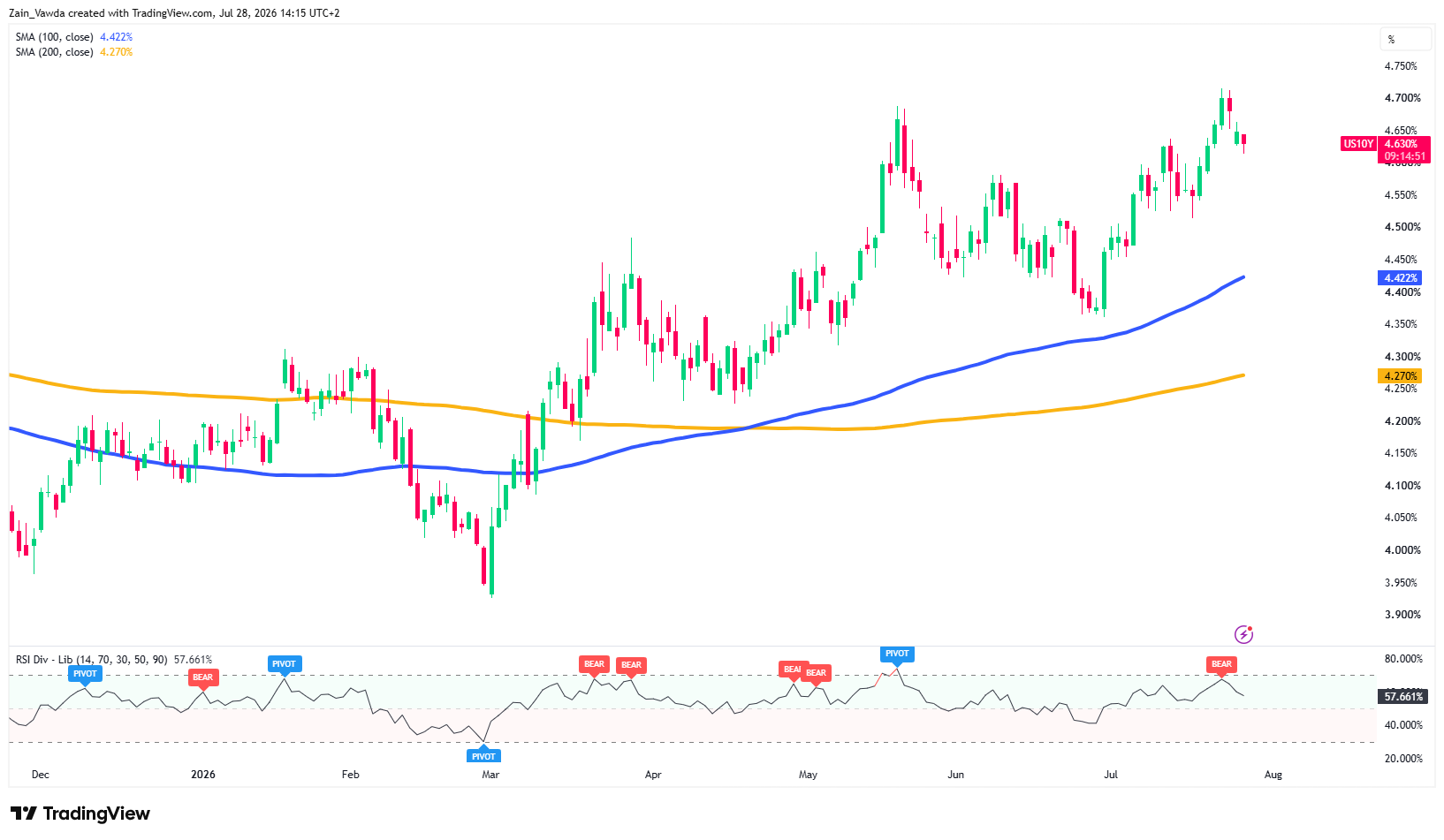
The reflex read is that this is more of the real-yield sell-off that has dogged bullion all year. It isn’t. The 10-year Treasury yield actually eased to roughly 4.64% on Monday — and gold fell anyway.
That single divergence is the story, and it reframes what traders should watch between now and 2:00 PM ET Wednesday Federal Reserve's rate announcement.
The Yield Alibi Doesn’t Hold this Week
Through the first half of 2026, gold’s decline had a clean transmission mechanism: hawkish Fed repricing lifted real yields, and higher real yields raised the opportunity cost of holding a zero-coupon asset. That is the framework we leaned on through the mid-July sell-off.
This week it breaks. Yields have come off their highs, the 10-year retreated from last week’s ~4.70% peak, its loftiest since early 2025 — yet gold has extended lower. When the metal falls while its primary headwind eases, something else is setting the price.
US 10Y Yield
Source: TradingView
The US Dollar (DXY) is the Whole Trade Right Now
That something else is the greenback. The Dollar Index is holding near a one-month high around 101.5, and the move is positioning rather than fundamentals — it is the market hedging a genuinely live Federal Reserve.
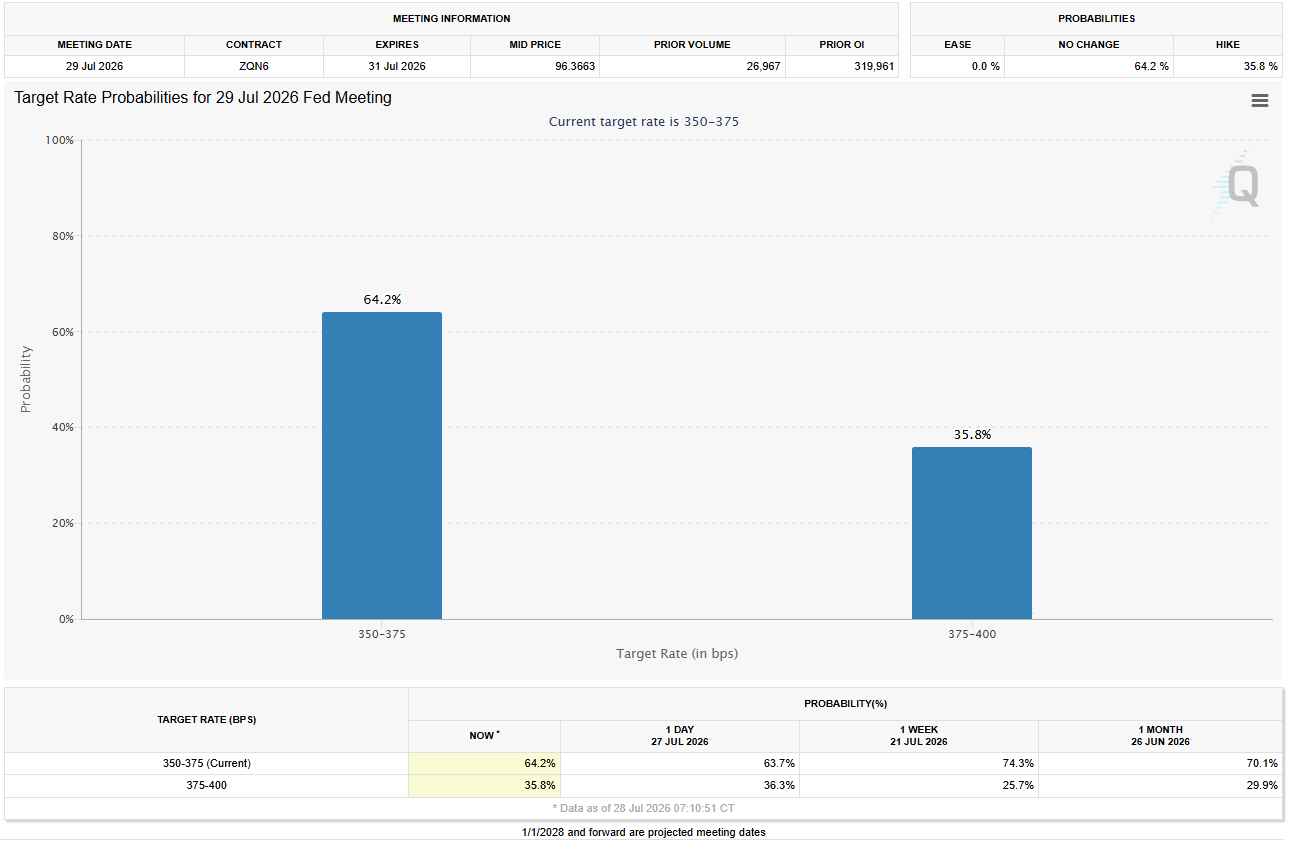
Odds of a 25bps hike at this meeting have climbed to roughly 35%, up from about 25% a week ago, while a September hike sits near an 80% probability.
Source: CME FedWatch
A dollar bid on hawkish-Warsh speculation is directly raising the cost of dollar-priced bullion for overseas buyers; to frame it simply, the market is positioning ahead of Fed signals. De-escalation in the Middle East, which has pulled crude and inflation expectations lower, would ordinarily soften the dollar — but that signal is being crowded out entirely by the Fed
The Asymmetric Setup into Wednesday's FOMC Meeting
Here is why the current pressure is worth fading with care rather than chasing. The dollar strength and the gold weakness are two expressions of the same trade — a hawkish hold or an outright hike.
If Kevin Warsh delivers the hawkishness that ~38% of the market is now positioned for, the dollar extends and gold probes $4,021, then the $3,950 floor of its multi-week range. But if he holds and guides without confirming a September move — disappointing the hike camp — the dollar bid and the gold headwind unwind at the same moment.
That is the asymmetry: the downside is incremental and already partly priced, while the upside is a coiled-spring reversal keyed to a single 2:00 PM release.
Scenario matrix — keyed to the FOMC decision (Wed, July 29, 2:00 PM ET)
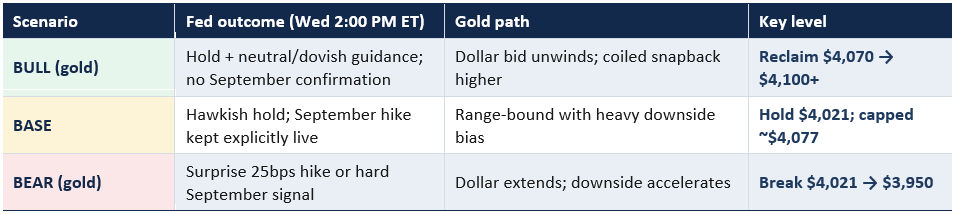
Source: Created by Zain Vawda Using Canva
Retail Trader Positioning
Gold futures positioning data according to the Positioning Edge Tool indicates an extreme bearish divergence. Successful traders are heavily positioned on the short side (70% short / 30% long).
Meanwhile, unprofitable traders are split evenly (50% long / 50% short) with balanced (flat) performance, creating a 20% positioning gap between the two groups.
For traders it appears smart money is aligned short while retail/unprofitable traders remain overly optimistic or neutral, the setup suggests heightened downside risk, making short opportunities more favorable than buying into longs.