
Gold’s recent surge is more than just a geopolitical trade. While headlines around the Middle East and shifting U.S. policy have helped fuel volatility, the deeper driver remains the changing outlook for U.S. interest rates, according to Philip Newman, Managing Director at Metals Focus.
In an interview with MarketFramework, Newman said the precious metal’s breakout above key levels reflects growing confidence that the Federal Reserve may be nearing the end of its tightening cycle. Softer-than-expected U.S. economic data, including the July jobs report, has reduced expectations for further rate hikes and strengthened gold’s appeal.
Gold Benefiting From a Less Hawkish Fed Outlook
Newman noted that market sentiment shifted significantly after the weak July employment report, which suggested less inflationary pressure and reduced the need for aggressive monetary tightening.
“The market is exceptionally sensitive to inflation reports and jobs reports,” Newman said. “We don’t believe the Fed will lift rates this year, and that will continue to support gold.”
While markets still price in the possibility of another rate increase before year-end, Metals Focus believes policymakers may ultimately remain on hold. If that view gains broader acceptance, Newman expects gold prices to remain well supported.
He cautioned, however, that volatility is likely to persist as investors digest upcoming inflation and labor-market data releases ahead of the September Fed meeting.
Metals Focus’ Research Edge
Unlike many investment banks that rely heavily on quantitative models, Metals Focus bases its forecasts on extensive field research conducted across the precious-metals supply chain.
Newman said the firm’s analysts maintain relationships with refiners, manufacturers, wholesalers, retailers, bullion dealers, ETF providers, commercial banks, and hedge funds across more than 10 markets worldwide.
“We’re not just sitting at our desks trying to theorize what could happen,” he said. “We’re speaking directly to market participants and understanding how they would react at different price levels.”
That qualitative approach helps the firm gauge investor behavior and identify turning points that may not yet be visible in publicly available data.
Gold Forecast Trimmed, But Bullish Outlook Intact
Although Metals Focus remains positive on gold, Newman acknowledged that the firm has moderated its year-end expectations.
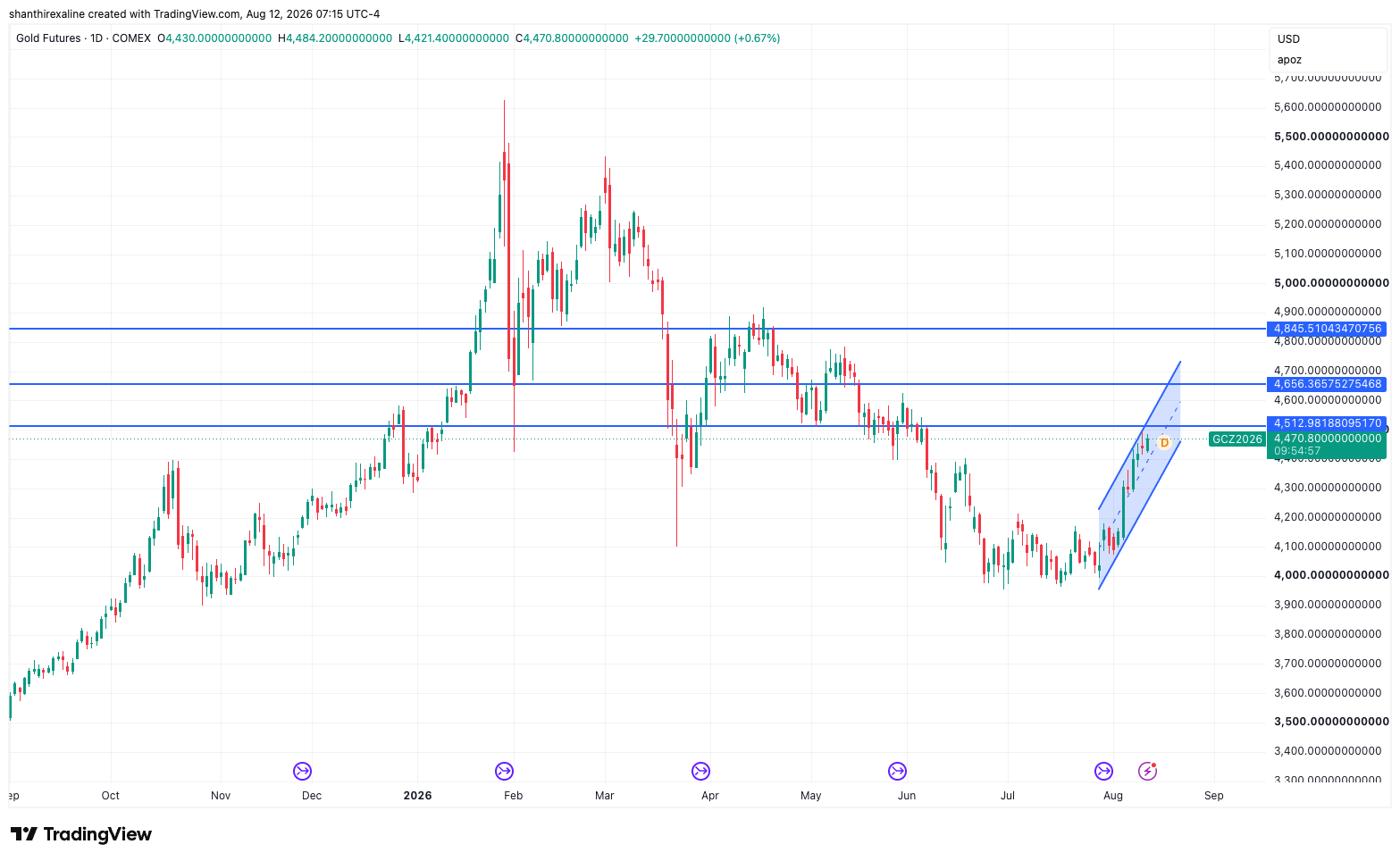
The consultancy now expects gold to finish the year near $5,000 per ounce, down from earlier projections that had been closer to $5,500.
Gold's Uneven Run This Year
Source: TradingView
The adjustment does not reflect a bearish shift. Rather, Newman said it reflects a reassessment of how quickly some of the market’s bullish drivers may play out.
Political uncertainty remains an important support factor. With U.S. midterm elections approaching and renewed discussions around tariffs emerging, Newman believes uncertainty could continue to underpin safe-haven demand.
“One of the questions we’re asking is how Trump mobilizes his base,” he said, pointing to recent tariff discussions and the uncertainty surrounding future trade policy.
Central Banks Continue To Provide A Floor
A major reason Metals Focus remains optimistic is the resilience of central-bank demand.
According to Newman, net central-bank purchases rebounded sharply during the second quarter, reaching nearly 290 metric tons. That represented the strongest quarterly buying since late 2024.
“We still think central banks as a whole will remain on the bid side of the market,” Newman said. “That should help provide a solid floor for prices.”
He noted that official-sector buying not only absorbs supply but also helps reinforce investor confidence in gold’s long-term value.
While traders can monitor official reserve data released through international institutions, Newman cautioned that a meaningful portion of central-bank activity remains undeclared and therefore difficult to track in real time.
Investor Positioning Leaves Room For Further Upside
Despite gold’s impressive rally, Newman believes investor positioning is not yet stretched.
He pointed to the ETF market, where global holdings experienced modest net outflows during the second quarter after a substantial accumulation phase that added nearly 1,000 tons between the third quarter of 2024 and the first quarter of 2026.
Those outflows suggest many institutional investors remain underexposed to the rally.
“Positioning by investors has been relatively light,” Newman said. “Given that, it’s encouraging that gold has held above $4,000 and is now challenging $4,400.”
The relatively subdued participation leaves room for fresh buying should confidence in the macro backdrop improve.
MarketFramework’s proprietary Positioning Edge tool shows a modest bearish tilt among profitable traders in Micro Gold (MGC) futures. Profitable traders hold fewer long positions than their unprofitable counterparts, with only 47.5% of winning traders positioned long compared with 51% of losing traders. The roughly 7% gap suggests more successful market participants remain cautious on gold’s near-term upside, even as prices continue to trade near elevated levels.
Silver Deficit Still Matters, But Not Every Day
Newman also remains constructive on silver, though he stressed that annual supply deficits do not always translate directly into short-term price gains.
Metals Focus expects the silver market to remain in deficit this year, extending a multi-year trend that has steadily reduced above-ground inventories.
He pointed to last year’s squeeze in the silver market as an example of how persistent deficits can eventually manifest in price action.
“Over a period of time, those deficits matter because they gradually deplete available stocks,” he said.
However, Newman believes current market liquidity remains adequate, reducing the likelihood of a prolonged supply squeeze in the near term.
Macro Remains More Important Than Politics
Looking ahead, Newman believes traders should remain focused on inflation, employment data, and Federal Reserve policy rather than political developments alone.
While election outcomes and geopolitical tensions can create short-term volatility, he sees the broader macroeconomic environment as the dominant driver of precious-metals prices.
“The bigger picture is really about the economy, inflation, and the Fed,” he said.
For traders with a three- to six-month horizon, Newman stopped short of providing investment advice but acknowledged that the balance of risks still appears skewed to the upside for both gold and silver.
“The bias is more to the upside than the downside,” he said.


