
Crude extended its climb Tuesday as Iran and the U.S. both claimed authority over the Strait of Hormuz, adding a fresh geopolitical risk premium to an already jumpy market. But two strategists point to the same underlying theme: the headline move in crude is less important than what's happening beneath the surface.
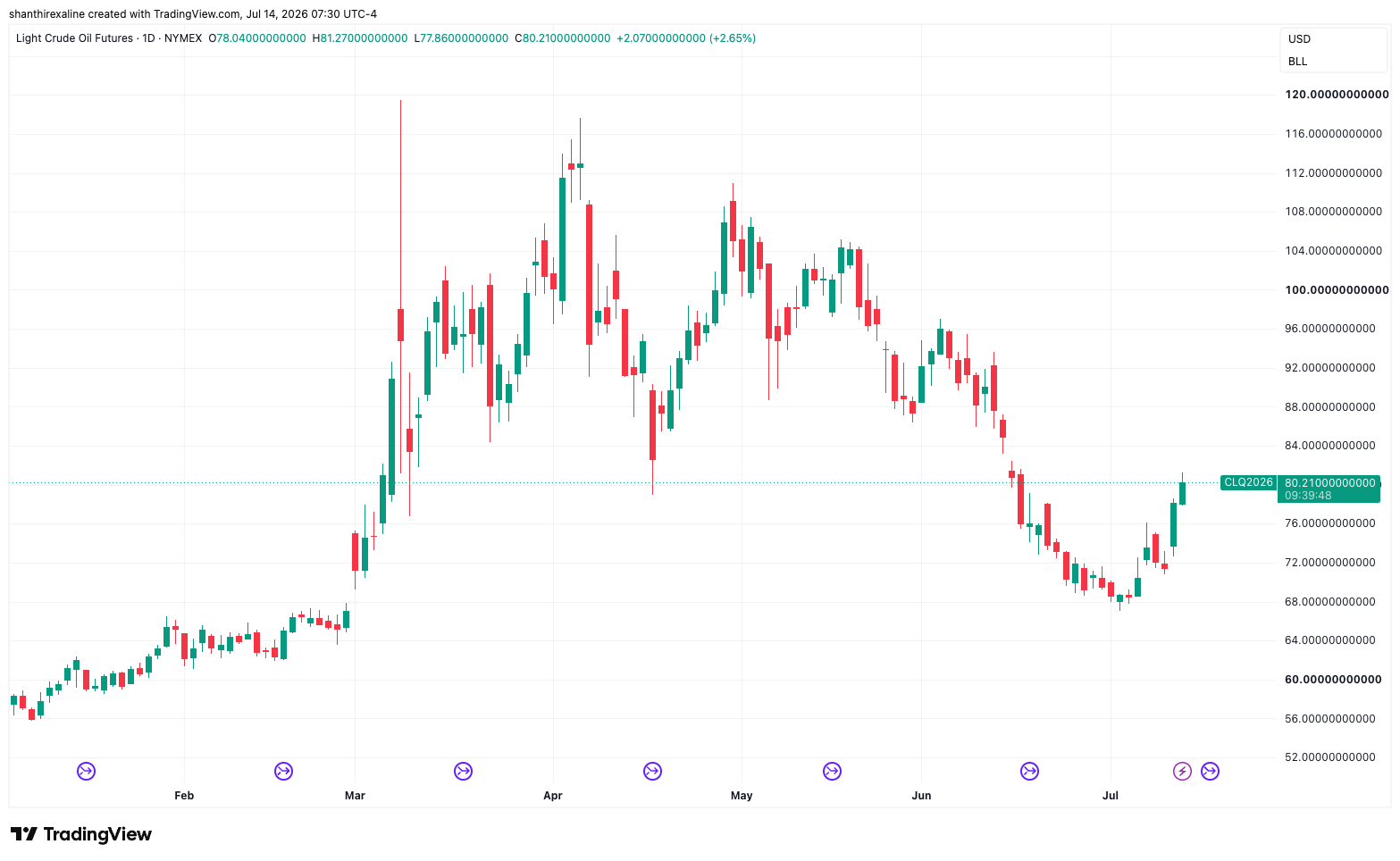
After surging nearly 10% on Monday and extending gains above $80 per barrel on Tuesday, WTI crude has broken above an important psychological level for the first time since mid-June. The move reflects renewed concerns over potential supply disruptions following escalating U.S.-Iran tensions and threats to shipping through the Strait of Hormuz.
However, despite the sharp rebound, crude prices remain well below the intraday highs above $119 reached in March, when fears of a prolonged closure of the Strait and severe disruptions to global oil flows triggered an unprecedented spike in front-month futures. Current prices suggest markets are pricing in a meaningful risk premium, but not yet the worst-case supply shock that investors feared earlier this year.
Crude Rally Resumes
Source: TradingView
Retail traders positioning data for the CL contract shows that about 91% of the winning trades over the past seven days have been long bets, according to MarketFramework. The data tells \about how one-directional this week's move has been, which is exactly the kind of setup that can flip fast if the geopolitical premium deflates.
The threshold that actually matters
LPL Head of Macro Strategy Kristian Kerr frames the question plainly: geopolitical tension alone doesn't sustain a rally — what matters is whether it evolves into a credible threat to actual global supply. Temporary spikes from uncertainty are common, but Kerr notes that lasting price gains typically need evidence that production, processing, transport, or export capacity is genuinely at risk. Absent direct strikes on infrastructure like fields, terminals, pipelines, or shipping corridors, he doesn't see the conditions for a durable repricing.
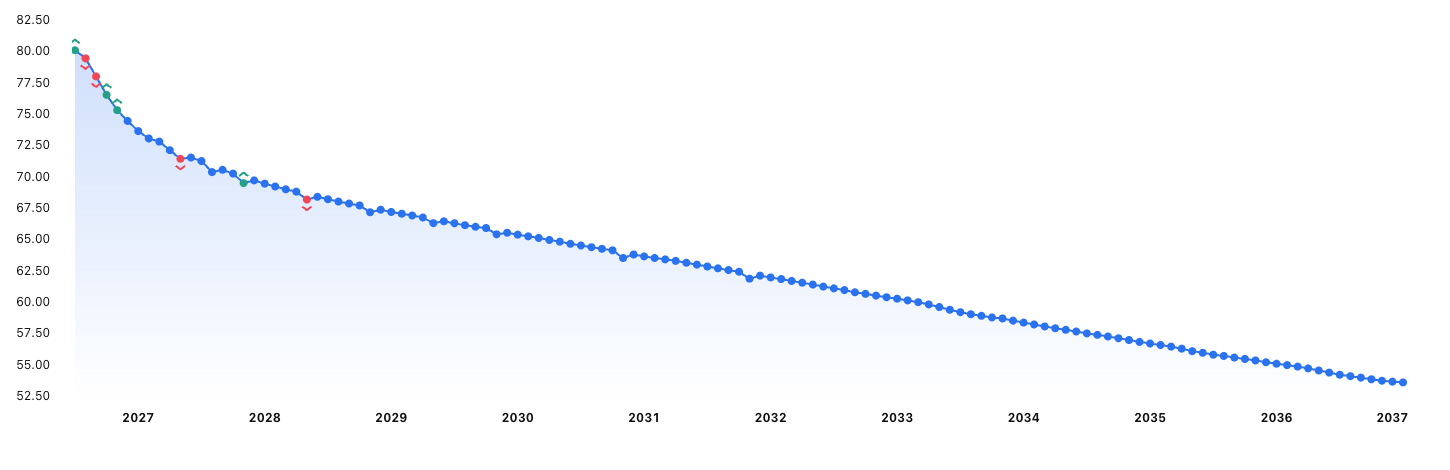
Lloyd Financial Chief Market Strategist Colin Symons' read on the futures curve backs this up empirically. He notes oil is up "a fair amount" on the news and that markets are clearly adding to risk premiums. But when he looks at the curve itself, it shows only a modest bump extending out through next May. In his words, the futures market "seems fairly unworried." That's a meaningful tell: if traders believed Hormuz access was structurally compromised, you'd expect the curve to price that risk much further out than it currently does.
Market Expectations of future prices and related risks
Source: TradingView
Skepticism about the "guardianship" claims
Both strategists are implicitly skeptical that Iran can operationally deliver on its stated control of the Strait. Symons says he questions how much control Iran can genuinely assert under current circumstances, and suggests the posturing is more likely aimed at forcing renewed dialogue than at actually closing the corridor.
Kerr's framing of the normalization process reinforces why that skepticism matters for markets. Restoring confidence in Hormuz transit isn't just about whether ships are moving today — it requires shipowners, insurers, energy companies, and governments to simultaneously believe the route is secure over the long term. Kerr views the weekend's events as another setback to that process, since renewed uncertainty tends to raise insurance costs and shipping caution even if physical flows continue uninterrupted.
Would oil reach the March/April highs?
Both strategists converge on doubting a run back to $100+ oil. Kerr says a swift return to those levels would require direct attacks on major production or export infrastructure — something that so far has been avoided. Symons agrees a return to old highs is unlikely, arguing that this kind of sustained pressure takes considerably more time to build than a weekend of headlines allows.
What this means for Tuesday's CPI print
Here the two strategists offer complementary detail. Kerr argues markets will look past the crude headline and focus on refined products — particularly diesel and gasoline — since those feed more directly into transportation costs, freight, and consumer prices. A soft CPI print could be read as backward-looking if refined fuel markets keep signaling future pressure. On the other hand, a hot print would deepen worries that the Fed's path back to 2% is uneven and that energy-driven inflation is "higher for longer."
Symons adds the rates-market confirmation. He doesn't expect oil's recent move to meaningfully affect the CPI report itself, though it raises the general worry that inflation stays sticky. Importantly, he notes that Monday’s bond market move was almost entirely a risk-premium reaction
Key Takeaway
Strip away the headlines, and both strategists are pointing to the same conclusion from different angles. The oil market is pricing this as an event, not a regime change. The futures curve isn't steepening meaningfully, breakevens aren't flashing durable inflation concern, and neither strategist sees the physical-supply threshold of actual strikes on infrastructure being met yet. Until that changes, this looks like a risk-premium story, not the start of a new energy-driven inflation shock.


