Crude oil's plunge is the kind of move that invariably grabs traders’ attention. On Monday, the West Texas Intermediate (WTI) grade crude oil futures contract was down nearly 7%, Brent down over 8%, both triggered by a weekend pause in the U.S.-Iran hostilities rather than any shift in underlying supply or demand.
For a Federal Reserve that sets policy on trend, not on single-session moves, a geopolitical de-escalation trade is exactly the kind of data point policymakers are trained to look past. One good headline doesn't undo months of inflation readings, and it definitely doesn't erase the tariff-driven cost pressures still working through the pipeline.
Energy's Fed Weight Is Smaller Than It Feels
Energy prices can swing headline consumer price index (CPI) more than almost any other component of the inflation basket, but the Fed's preferred inflation gauge, core PCE, is designed to filter out exactly this kind of volatility. A crude oil selloff driven by a ceasefire that could reverse just as quickly is unlikely to materially influence core inflation. Recent history illustrates the point: it took barely three weeks in July for crude to erase the losses accumulated over the previous two months since June.
Crude's Volatile Ride
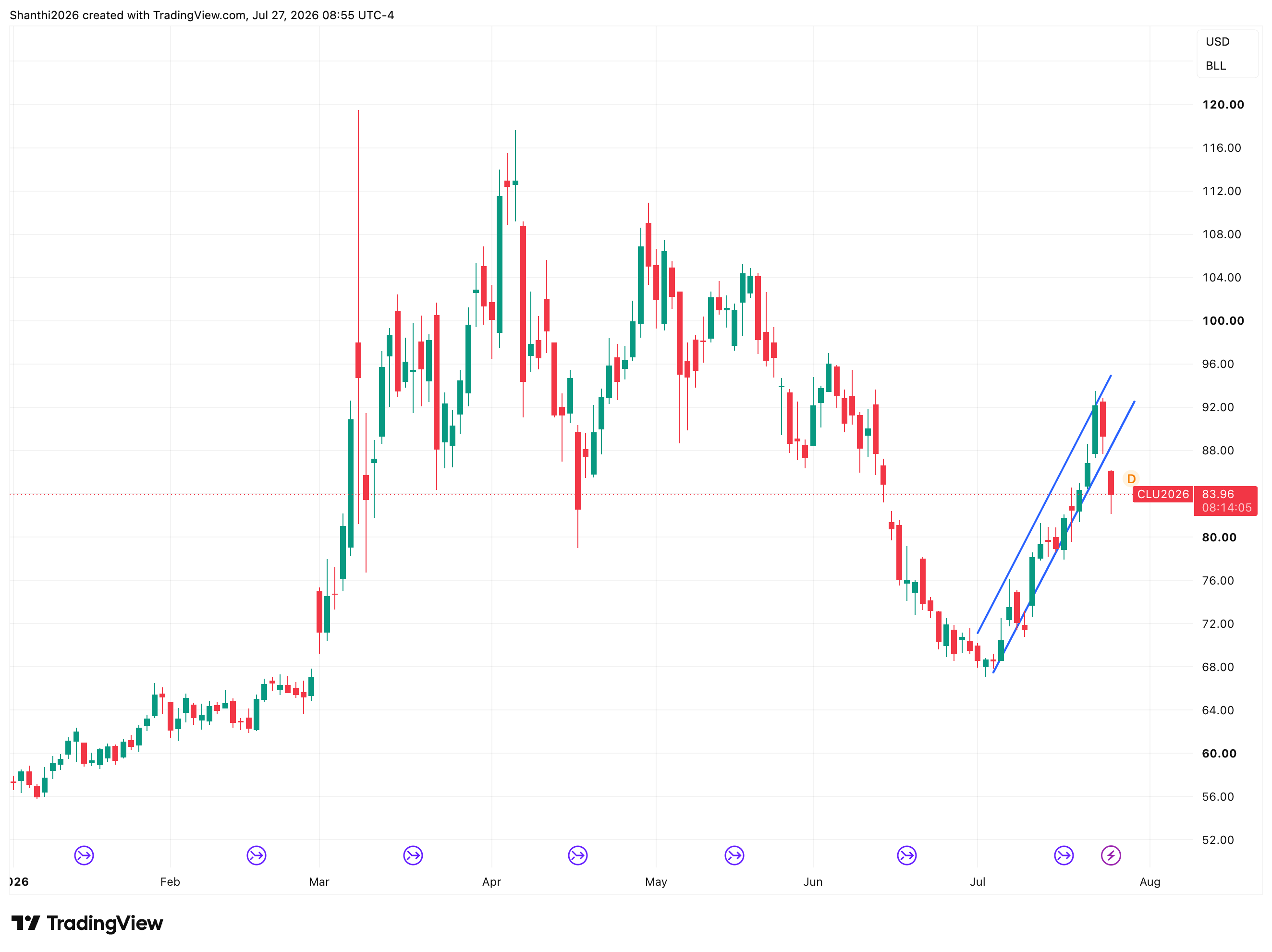
Source: TradingView
More importantly, oil prices say little about the stickier components of inflation, particularly services and shelter, that the FOMC has spent the past two years trying to bring under control.
The caveat worth holding onto: oil prices would matter more to the Fed if a spike starts showing up in secondary effects rather than just the headline number — rising shipping and input costs, firmer breakeven inflation expectations, or businesses passing higher energy costs through to consumers in the form of broader price increases. That's a different story than a single-week price swing tied to a headline that could reverse.
Citing June consumer price inflation report, Morgan Stanley Chief U.S. Economist Michael Gapen said a period of disinflation has begun, catalyzed by three drivers: a reversal in energy prices, the end of tariff pass-though, and diminishing shelter inflation
The tariff pass-through to core goods prices has now been flat since February, providing a strong signal that the corporate sector has adequately adjusted prices to account for higher production costs, the economist said. “If so, our estimates suggest as much as 60-70bp of disinflation may be in the pipeline, providing an important source of disinflation.”
The Truce Is a Headline, Not a Fundamental
The rally in oil isn't a story about new supply or falling demand; It’s a bet that a 13-night bombing campaign stays paused. That's a fragile foundation for a rate decision. If the Fed leaned dovish on a geopolitical de-escalation and the ceasefire broke a week later, it would be repricing an inflation call on the same headline risk it just got burned trusting. Central banks are notoriously reluctant to whipsaw policy on inputs this reversible.
Tariffs Are the Bigger, Slower-Moving Threat
While oil grabs the morning's attention, the more durable inflation risk sitting on the Fed's desk is the reimposed tariff regime. Inflation associated with cost pressure is something that doesn't reverse on a weekend phone call. Section 301 duties, new levies on Brazil and Canada, and their pass-through into goods prices are a slower burn than an oil headline, but a stickier one. That's the inflation debate the Fed is actually having this week, and cheap crude barely touches it.
What Wednesday Actually Hinges On
The Federal Open Market Committee (FOMC) decision will turn on the data the committee has been tracking for months: the labor market's cooling pace, core services inflation, and how confident officials are that tariff pass-through stays contained. Cheaper oil is a welcome data point for households and a marginal tailwind for the inflation outlook if it holds, but it's not the kind of durable, broad-based disinflation evidence that changes a rate call already this close to being made. The most likely outcome: the Fed acknowledges the drop as a positive but treats it exactly as advertised: noise around the signal, not a lifeline for policy.
On the Odds: July and September in FedWatch
CME's FedWatch tool now puts the odds of a hold at Wednesday's meeting around 70%, a month ago. The hike probability climbed as high as 37.5% amid oil's spike on Iran tensions. The weekend truce and crude selloff should ease that pricing further, but the more telling number is September since economists see that meeting as the real test of whether the inflation improvement holds, not this week's decision.
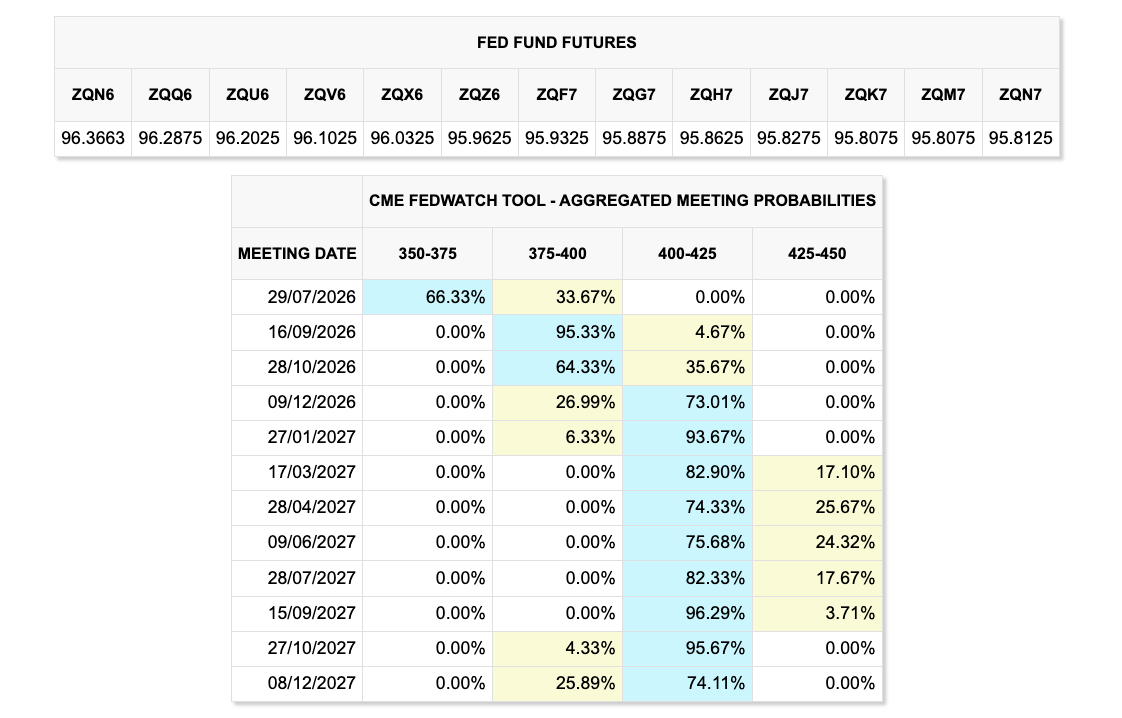
Source: CME
Policymakers will also be watching market-based inflation expectations. Five-year and 10-year breakeven inflation rates rose during the oil spike but remain well below levels associated with persistent inflation scares. Unless those measures continue climbing, the recent energy volatility is unlikely to reshape the Fed's outlook.
Inflation Expectations Not Alarming
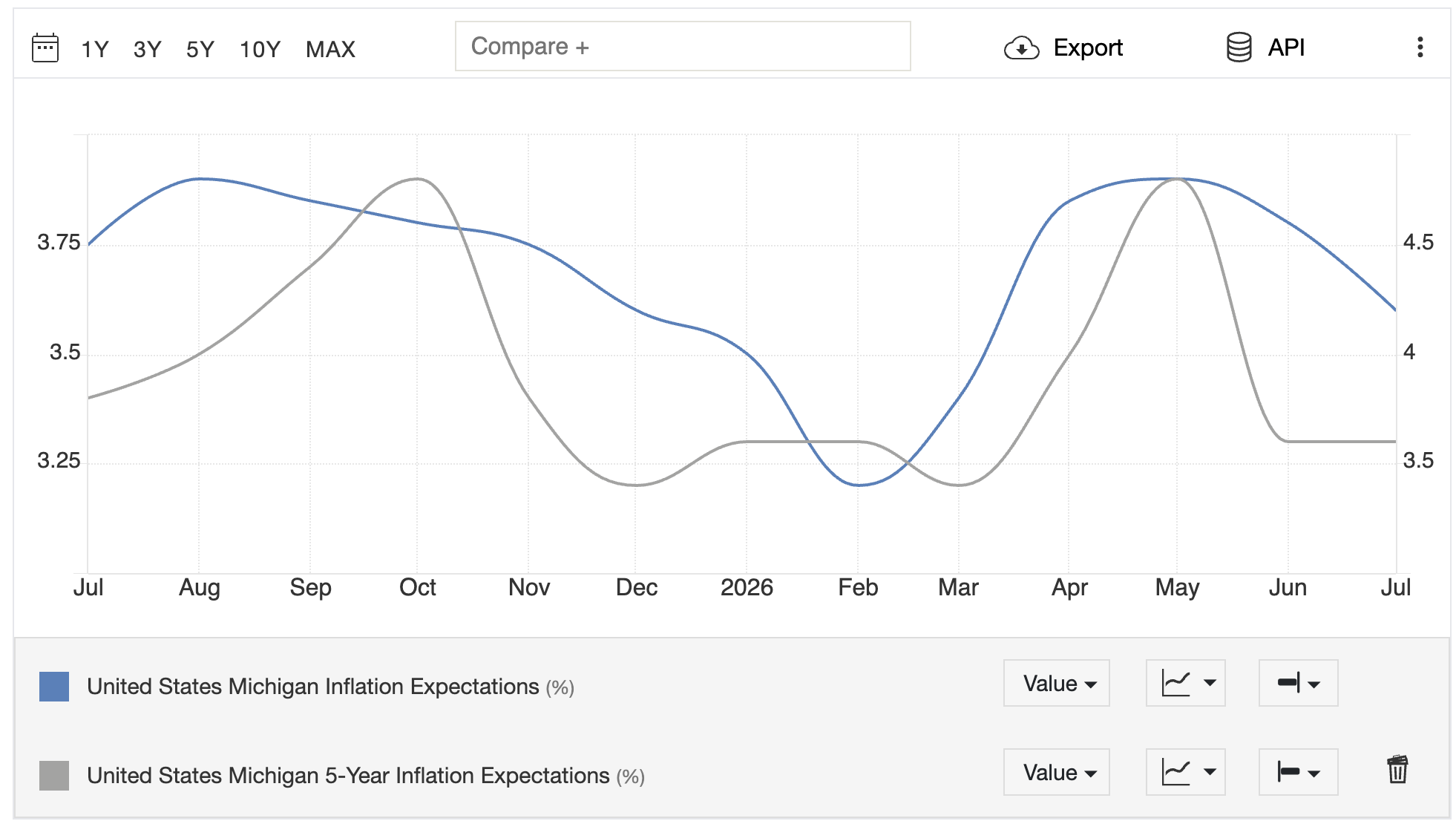
Source: Trading Economics
Why Thursday's PCE Print Is the Real Test
The number that actually matters lands two days after the Fed speaks: the Bureau of Economic Analysis releases June personal consumption expenditure (PCE) data, the Fed’s preferred inflation gauge, on Friday, July 31. It is the first hard read on whether price pressures were already cooling before oil's latest swing. Markets will be watching whether core PCE is tracking toward the 2% target. A hotter print keeps further tightening on the table while a softer one opens the door to easing. Coming right on the heels of a rate decision built on incomplete information, Friday's release is what turns Wednesday's "hold and wait" into either a validated call or a policy path the Fed has to start walking back, making it, in practice, more consequential to markets than the FOMC statement itself.