U.S. equity futures are attempting a tentative rebound Friday after Thursday's brutal tech-led sell-off, but the real story for traders may be sitting in the tariff fine print. A new round of Trump administration tariffs took effect overnight, and the details, not just the headline, are what should shape positioning into next week.
A Durable Tariff Regime, Not a Headline
Markets are digesting the move that landed. This action applies to the top 60 U.S. trade partners covering 99.4% of U.S. imports.
- The fresh batch of Section 301 tariffs tied to alleged forced-labor violations, hitting 60 trading partners and formally replacing what had been a temporary global tariff framework. The applicable rate being
- 10% for 17 nations
- 10%-12.5% for EU, Taiwan, Japan, South Korea and Switzerland, (based on existing most-favored-nations tariff rates)
- 12.5% for the remaining 28; Goods already hit by sector-specific duties such as steel and aluminum and imports under USMCA are excluded.
Section 301 actions are trade-enforcement tools, not emergency-authority measures — historically stickier, harder to unwind quickly, and less exposed to snap reversal by executive order. Traders pricing this as a short-lived headline risk may be underestimating its durability.
Energy Gets a Pass
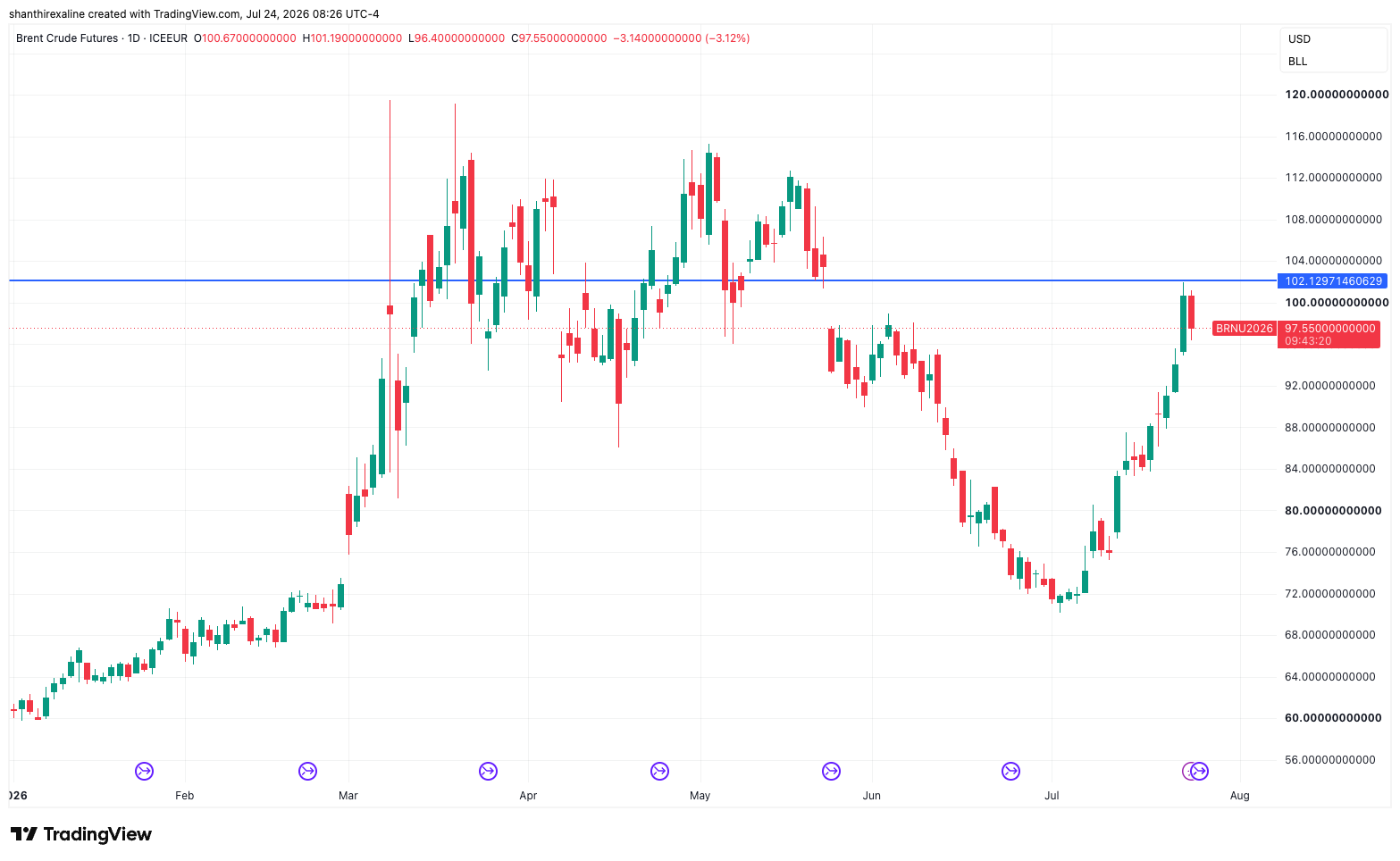
The White House carved out exemptions for select energy products, a deliberate move given oil's recent run toward the $100/barrel mark. Brent crude, which briefly breached that level this week after Houthi attacks on Saudi tankers in the Red Sea, pulled back more than 3% Friday to trade near $97.60. WTI slipped below $90.
Oil’s Renewed Climb
Source: TradingView
The exemption signals the administration isn't willing to let tariffs compound an energy-driven inflation problem it's already contending with — a tell for how policymakers are sequencing risk, even as they escalate trade pressure elsewhere.
Brazil and Canada: The Sharpest Edges
Two countries stand out for facing tariff pressure well beyond the baseline 10-12.5% band applied broadly across the 60 named partners.
Canada is taking the heaviest hit. On top of the new 10% forced-labor duty, Ottawa is separately facing Section 338 tariffs of 50% on close to $20 billion of goods — everything from wine to hockey sticks to cement — set to take effect August 19. The Section 338 tariffs are officially tied to what the White House calls Canada's discriminatory treatment of U.S. commerce in sectors such as autos, dairy and alcohol—not directly to the USMCA review decision.
Brazil is the other flashpoint. A separate 25% U.S. tariff on Brazilian goods — covering thousands of products including ethanol is also in effect.
For traders, both cases sit outside the "energy spared, inflation trade" framing that applies to the broader 60-country action: these are larger, sector-concentrated shocks that could show up in specific commodity and industrial names well before any broad CPI read.
Why the Inflation Trade Is Waking Back Up
The setup is layering, not offsetting. U.S. inflation has remained above the Federal Reserve's 2% target for an extended period. While June's inflation data showed modest easing, price pressures are still running above the Fed's goal, meaning any tariff-driven cost increases would add to an already elevated inflation backdrop rather than offset a disinflationary trend.
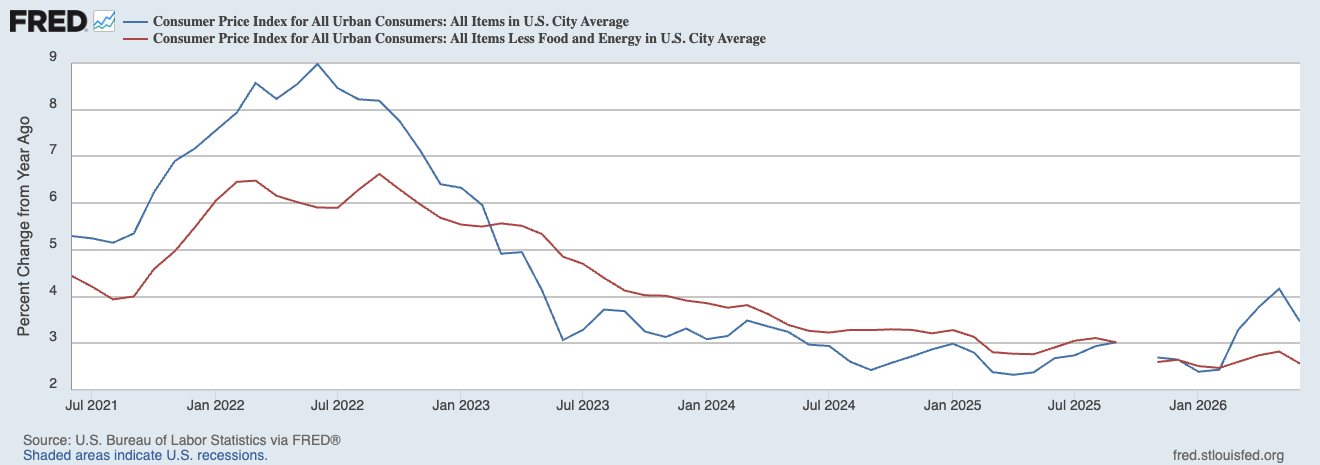
Chart Data source BLS via St. Louis Fed
Even with energy spared, tariffs on 60 countries raise input costs across supply-chain-heavy sectors — apparel, electronics assembly, industrials — sourcing from Asia. Combine that with oil still elevated versus earlier in the year, and the ingredients for a "sticky inflation" narrative are back on the table.
The bond market is already leaning that way. The 10-year Treasury yield eased slightly Friday to 4.685% after briefly breaking above 4.7% during Thursday's rout — a level traders are watching as the pivot point for renewed Fed rate-hike repricing.
Dollar Holds Firm as Tariffs Revive Inflation Bets, Growth Risks Keep Gains in Check
The U.S. dollar traded with a firm undertone as investors weighed the inflationary impact of US President Donald Trump's new tariffs against the potential drag on global growth. Fresh import duties could add to price pressures by raising the cost of imported goods, reinforcing expectations that the Fed may keep interest rates elevated for longer—a factor that typically supports the greenback. At the same time, concerns that tariffs could slow trade and economic activity tempered broader dollar gains, leaving currency markets caught between higher-for-longer rate expectations and a more cautious global growth outlook. The result was a measured rather than a runaway bid for the dollar, with traders looking to upcoming inflation and labor-market data for confirmation of the prevailing narrative.
The U.S. Dollar Index edged up 0.05% to 101.50 during the early New York session on Friday, though it remained below the late-June high of 101.80. The Canadian dollar weakened against the greenback as softer oil prices and fresh U.S. tariffs weighed on sentiment toward the commodity-linked currency. In contrast, the Australian dollar outperformed, finding support despite the firmer U.S. dollar as investors differentiated between commodity exporters and responded to broader risk sentiment. The euro is marginally weaker following an unchanged interest rate stance adopted by the European Central Bank (ECB) at this rate-setting meeting that concluded Thursday.
MarketFramework data showed that futures traders maintained a broadly neutral stance on the Euro FX (6E) contract this week. However, all of the profitable positions were long, suggesting that while overall conviction remained balanced, traders betting on euro strength were the ones generating gains.
What to Watch Next
Retaliation risk: Any response from the 60 named trading partners could reintroduce volatility fast.
Earnings commentary: Watch consumer discretionary and industrial names for tariff-related guidance cuts as this cycle plays out — that's where cost pass-through becomes visible before it shows up in CPI.
10-year yield at 4.70%: A sustained close above reopens the door to more aggressive Fed repricing.
Brent at $100: Still the key psychological level; a retest alongside tariff-driven cost pressure is the combination markets are least prepared for.
Friday's data: Flash PMIs and new home sales will be parsed for confirmation of either the inflation-sticky thesis or the growth-slowdown counter-narrative already showing up in rate-sensitive sectors.