German consumers are worried about inflation and energy costs eroding incomes, and reducing spending appetite, heightening the inclination to save, while economic expectations deteriorated amid fears the conflict could derail recovery.
German consumer confidence fell again in May, falling more than expected, dented by concerns regarding the implications of the ongoing U.S.-Iran conflict, according to the results of the GfK Consumer Climate survey released Monday.
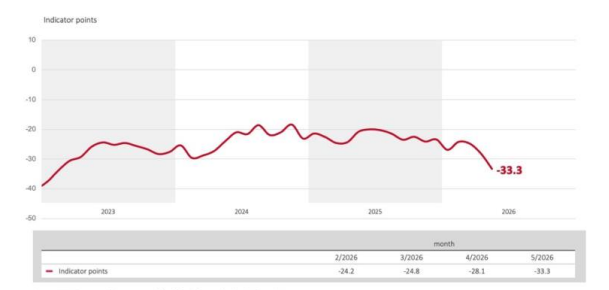
Crunching the Numbers: The headline German consumer climate index fell to -33.3 in May from -28 in April, while economists braced for a more modest drop to -30.2. This marked the lowest reading since February 2023.
Just as was the case in April, the May reading reflected cooling economic expectations and rising price expectations, the Nuremberg Institute for Market Decisions, which publishes the survey results, jointly with the GfK, said.
Consumers’ income expectations fell by 18.1 points to -24.4, and their willingness to buy saw a 3.5 point drop to -14.4, marking the lowest reading in two years. At the same, the willingness to save, which points to whether people currently consider it to be a good moment to save, fell slightly (2.4 points), and yet remained elevated at 16.1.
GfK/NIM German Consumer Climate
Source: GfK
Rolf Bürkl, Head of Consumer Climate at NIM, said, ““Income expectations are literally collapsing because of rising inflation. And in this context, people also currently believe that the timing for major purchases is less favorable.”
GfK/NIM noted that German inflation rose to 2.7% in March from 1.9% in February, due to rising energy prices in the aftermath of the oil shock caused by the Iran war. The price expectations indicator, however, fell less sharply in March, potentially due to falling prices at gas stations following March’s spike.
Outlook Dim: The economic expectations fell 6.8 points to -13.7, reaching levels not seen since the early days of the Ukraine war in April 2022. Aside from the war, consumers are turning less positive about the domestic economy. “Consumer concerns are growing that the tentative upturn in the German economy could suffer a serious setback, especially if the conflict persists and government measures fail to take
effect.”
Read-Across for Rates: The European Central Bank (ECB) is scheduled to meet for a two-day Governing Council meeting that kicks off on Wednesday. The three main rates, namely the deposit facility rate, main refinancing operations and marginal lending facility, are widely expected to be maintained unchanged at 2%, 2.15% and 2.40%, respectively.
The Ifo business survey results released last week showed German businesses are increasingly worried about the adverse economic impact stemming from the Middle East crisis.
The weaker consumer and business morale in Europe’s largest economy and elsewhere will likely keep the ECB on hold for the time being until it can more accurately assess the lasting effects of the war.