
The oil shock stemming from the Strait of Hormuz blockade has introduced a significant supply-side headwind, undermining central banks' disinflationary efforts. Inflationary pressures and expectations have climbed steadily since the onset of the Middle East conflict, and April's inflation readings confirmed that pricing pressures may prove durable, persisting even beyond a resolution of the war.
Global bond yields have begun to tick higher in lockstep with the inflation pickup, as markets price out rate cut expectations and demand a higher term premium. The rise in yields, most visible at the long end of the curve, tightens financial conditions globally, adding another layer of strain to an already pressured growth outlook.
The rising bond yields have sent equity futures sharply lower, implying that the market will likely fall off from record highs. The dollar, meanwhile, has risen to its highest level in more than a month, and is poised to record a weekly gain in excess of 1%.
Bond Yields Feel the Heat
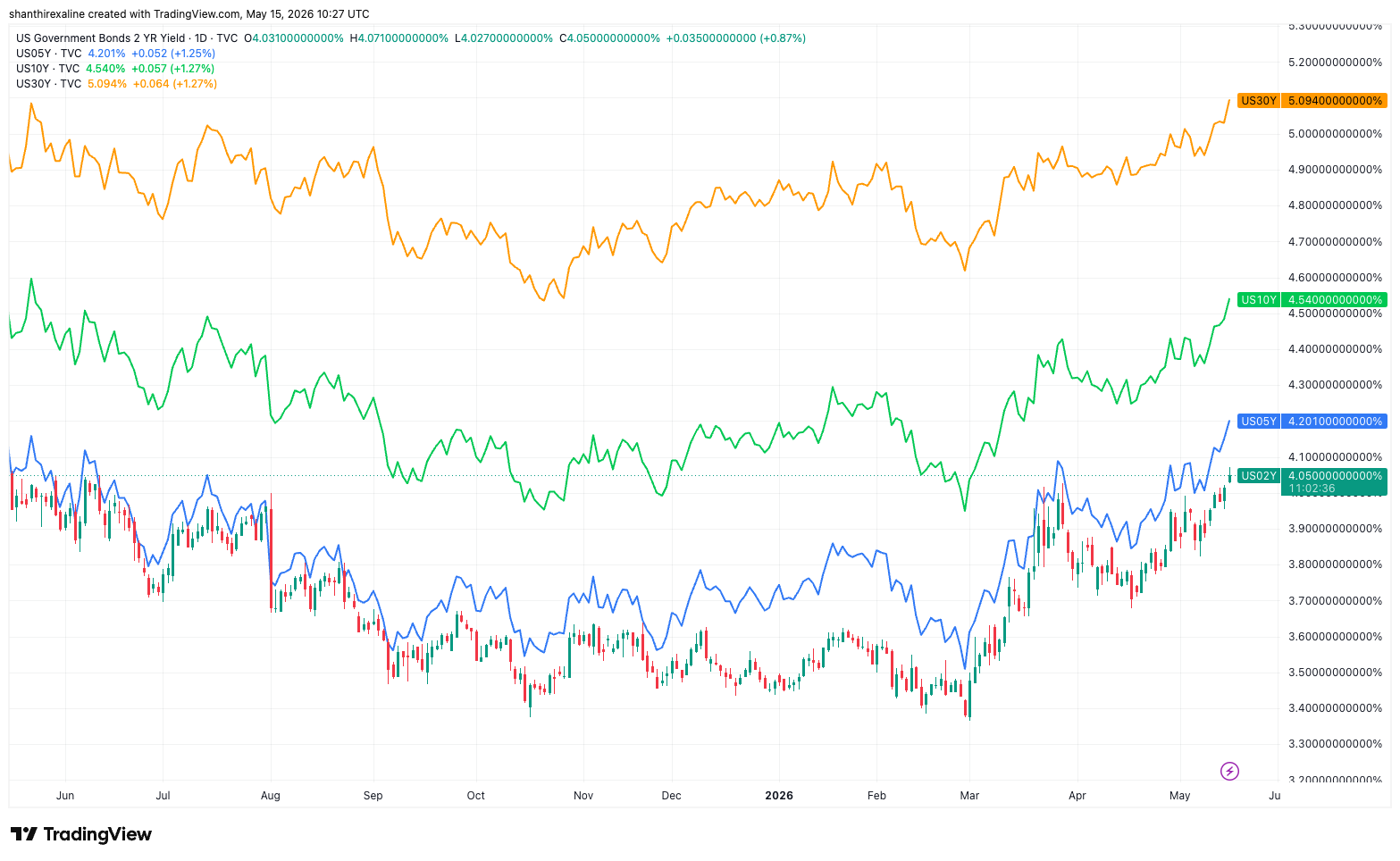
After bottoming in early March, coinciding with the start of the U.S.-Iran conflict, bond yields have been moving broadly higher. The two-year T-note yield has breached the 4% psychological mark, the benchmark 10-year yield was at sub-4.50%, retreating from above the level, and the 30-year bond yield, which broke above the 5% mark on May 12 for the first time since 2007, has held above the level since.
Commenting on the yield dynamics, strategist Ed Yardeni said the short-term two-year yield trading about 25 basis points (bps) above the upper bound of the Fed funds target of 3.50%-3.75% suggests investors believe that the benchmark interest rate should increase by at least 25 bps in the near future.
Bond Yields
Source: TradingView
Yardenis said, “The Bond Vigilantes are sending a clear message to the Fed: Drop the easing bias that was in the April FOMC statement. Don't replace it with a neutral stance, but go straight for a tightening bias.”
The strategist opined that the yield curve might otherwise start pricing in another Fed policy mistake: “failing to turn hawkish quickly enough to fight inflationary pressures stemming from the Gulf War.”
Markets Brace for Fresh Data
With the next Federal Open Market Committee meeting a month away, rapidly shifting macroeconomic and geopolitical conditions could meaningfully alter the market outlook in the interim. Should incoming data continue to reflect entrenched inflationary pressures, the Fed may find itself compelled to resume rate hikes, a scenario that until recently had largely been priced out by markets.
Friday brings two closely watched economic releases. The May Empire State manufacturing PMI will offer the first regional read on manufacturing conditions in New York, while the April industrial production report will provide a broader gauge of output trends across the manufacturing, mining, and utilities sectors.


