The Treasury market delivered a mixed message this week. On the surface, demand for newly issued government debt held up well. The Treasury's benchmark 10-year and long-bond auctions were absorbed without major hiccups, suggesting investors remain willing to finance Washington's growing borrowing needs.
Yet beneath the headline demand figures lies a warning for Treasury futures traders: buyers are showing up only when yields are sufficiently high. The Treasury had to offer some of the highest yields in decades to attract demand, underscoring the market's growing sensitivity to inflation, deficits, and the relentless supply of government debt.
The Numbers Behind the Message
The Treasury's $42 billion 10-year note auction on Wednesday cleared at a high yield of 4.683%, the highest since 2007. The auction drew a 2.53 bid-to-cover ratio, only slightly below the previous month's 2.59, while indirect bidders, often viewed as a proxy for foreign demand, took down 76.7% of the offering. The sale cleared smoothly, indicating investors were willing participants despite elevated yields.
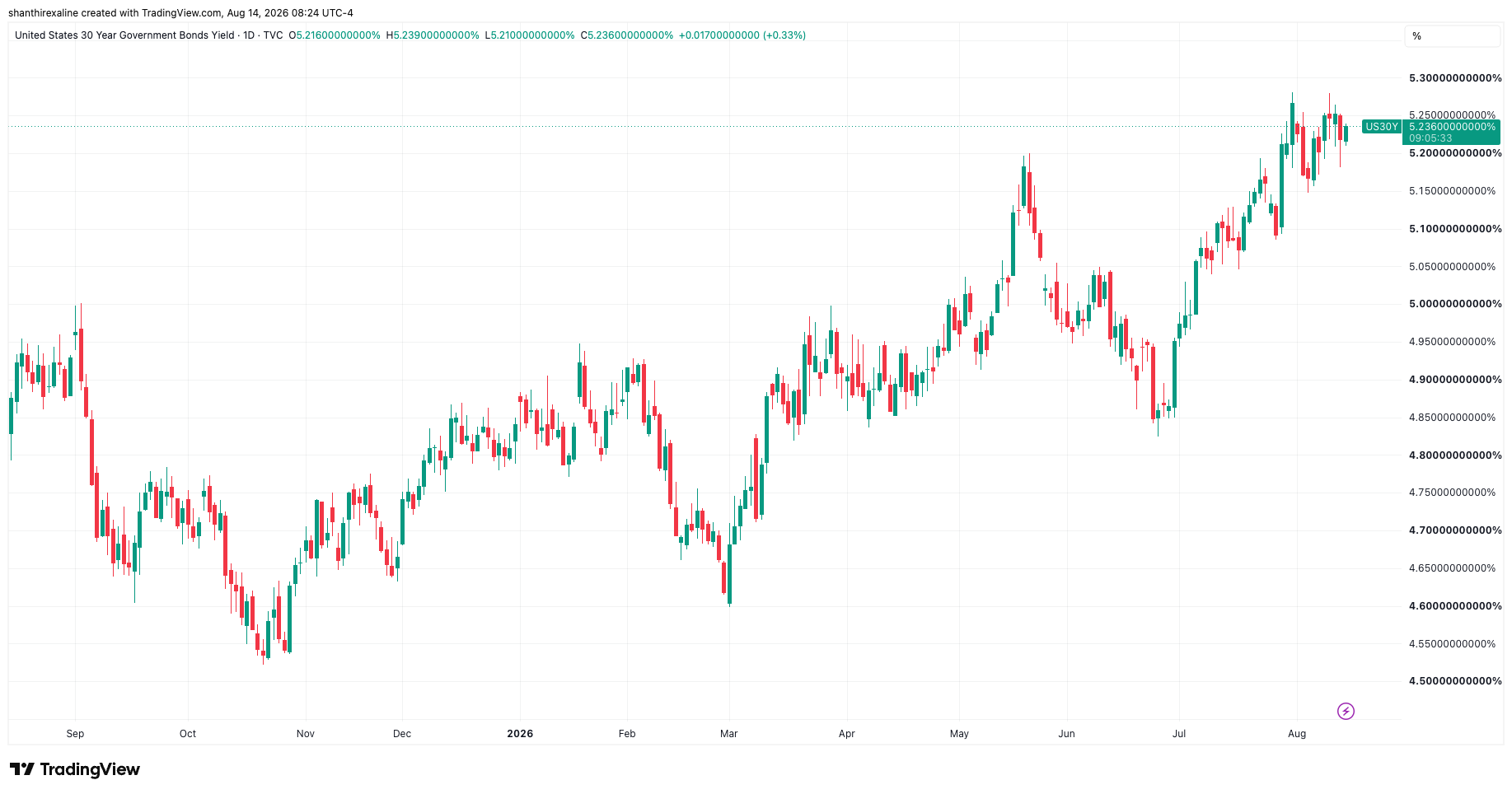
A day later, the Treasury sold $25 billion of 30-year bonds at a yield of 5.216%, the highest borrowing cost for the maturity since 2001. The auction's bid-to-cover ratio slipped to 2.39 from 2.44 in July, pointing to adequate but hardly overwhelming demand.
Together, the results painted a clear picture: investors remain willing buyers of Treasury debt, but only when compensated with yields not seen in years. For futures traders, that distinction matters.
US 30-Year Bond Yield At Elevated Levels
Source: TradingView
Demand Was Solid, The Price Wasn't
The most encouraging aspect of this week's auctions was that there was no sign of a failed sale or a buyers' strike. Demand remained healthy enough to absorb a sizable amount of new supply, easing fears that investors might balk at the Treasury's growing financing needs.
But the Treasury had to pay up. The 10-year note was sold at its highest yield since the global financial crisis, while the 30-year bond fetched the highest yield in roughly a quarter century. In other words, investors were willing to lend money to the U.S. government, but only at a much higher price.
That dynamic suggests the market is becoming increasingly yield-sensitive. Rather than rushing into bonds on expectations of softer inflation or future Federal Reserve easing, investors appear to be demanding additional compensation for long-term fiscal and inflation risks.
Why Futures Traders Should Care
For Treasury futures traders, auction demand is only half the story. The more important question is where investors are willing to buy.
This week's results suggest the market may be establishing a higher yield floor, particularly at the long end of the curve. Despite recent inflation reports that largely met expectations and helped reinforce hopes for Fed easing, long-dated Treasury yields remain elevated.
That signals investors are looking beyond near-term monetary policy and focusing more on structural concerns, including persistent deficits, rising debt issuance, and the prospect that inflation may settle above pre-pandemic norms.
For futures traders, this could mean rallies face greater resistance unless economic data deteriorates enough to materially alter the growth or inflation outlook.
What It Means for the Fed Funds Rate
The auction results also carry an important message for expectations surrounding the Fed's policy rate. While recent CPI and PPI reports have reduced the urgency for an immediate rate hike and reinforced expectations that the Federal Reserve could keep its federal funds target range at 3.50%-3.75% in the near term, the persistence of elevated long-term Treasury yields suggests investors remain concerned about inflation and fiscal risks beyond the Fed's direct control.
In other words, the bond market is doing some of the Fed's tightening work for it. Higher 10-year and 30-year yields increase borrowing costs across the economy even without a change in the policy rate.
However, the reason yields are rising matters. If investors are demanding higher yields because they expect inflation to remain elevated or economic growth to stay resilient, the Fed could maintain a higher-for-longer stance. If yields are rising primarily because of concerns about deficits and Treasury supply, policymakers may view the market itself as doing some of the tightening work that would otherwise fall to the Fed.
Commenting on the auction results, Lloyd Financial's Chief Investment Officer Colin Symons said the multi-decade high auction yields was at the long-end of the auction spectrum, not the short-end, where rates are somewhat calmer. Thus, it's not about Fed policy.
Symons sees the push has been about real rates growing, with inflation expectations having a minimal impact.
I'd posit that's largely due to big AI demand and expectations, which in turn has two effects. First, the large quantity of bonds sold drives up rates just because there's so much supply. Second, AI is expected to grow productivity, helping to keep growth strong and rates relatively high.
The yield spike may stall when AI growth slows, he added. That said, the strategist said there're no signs that real rates are going sharply down anytime soon.
I'd expect the soonest we see a decent downtrend in real rates would be next year, at some point, but that's speculation.
The Bond Market Is Sending a Different Signal Than Stocks
The contrast with equities is striking. The S&P 500 continues to trade at record highs, supported by resilient earnings and optimism that the economy can withstand higher interest rates.
The Treasury market, however, is demanding some of the highest long-term yields in decades before committing fresh capital. While stocks are pricing in a relatively benign economic outlook, the bond market appears less convinced that inflation and fiscal risks are fully under control.
Such divergences can persist for a time, but they rarely last indefinitely. Either economic growth continues to justify elevated yields, or higher borrowing costs eventually become a headwind for broader risk assets.
The Takeaway for Equity and Futures Traders
For equity traders, this week's auctions suggest that the bond market is not fully embracing the "soft landing" narrative priced into stocks. The S&P 500 may be hovering near record highs, but investors are still demanding the highest yields in years to hold long-dated Treasuries. If yields continue climbing, higher borrowing costs could eventually pressure equity valuations, particularly in interest-rate-sensitive sectors such as technology and real estate.
For Treasury futures traders, the auctions reinforce the idea that demand remains intact but is becoming increasingly price-sensitive. Strong bid-to-cover ratios and healthy indirect participation are encouraging, but the fact that both the 10-year and 30-year auctions cleared at multi-decade highs in yield suggests investors want more compensation for inflation, deficit, and supply risks. That could limit the scope for sustained bond rallies unless incoming economic data materially weakens or inflation shows clearer signs of returning toward the Fed's target.
In short, stock traders should watch whether rising yields begin to challenge equity optimism, while Treasury futures traders should focus on whether buyers continue to demand ever-higher yields to absorb the government's growing debt supply. The answer may determine which market's message ultimately proves correct.


