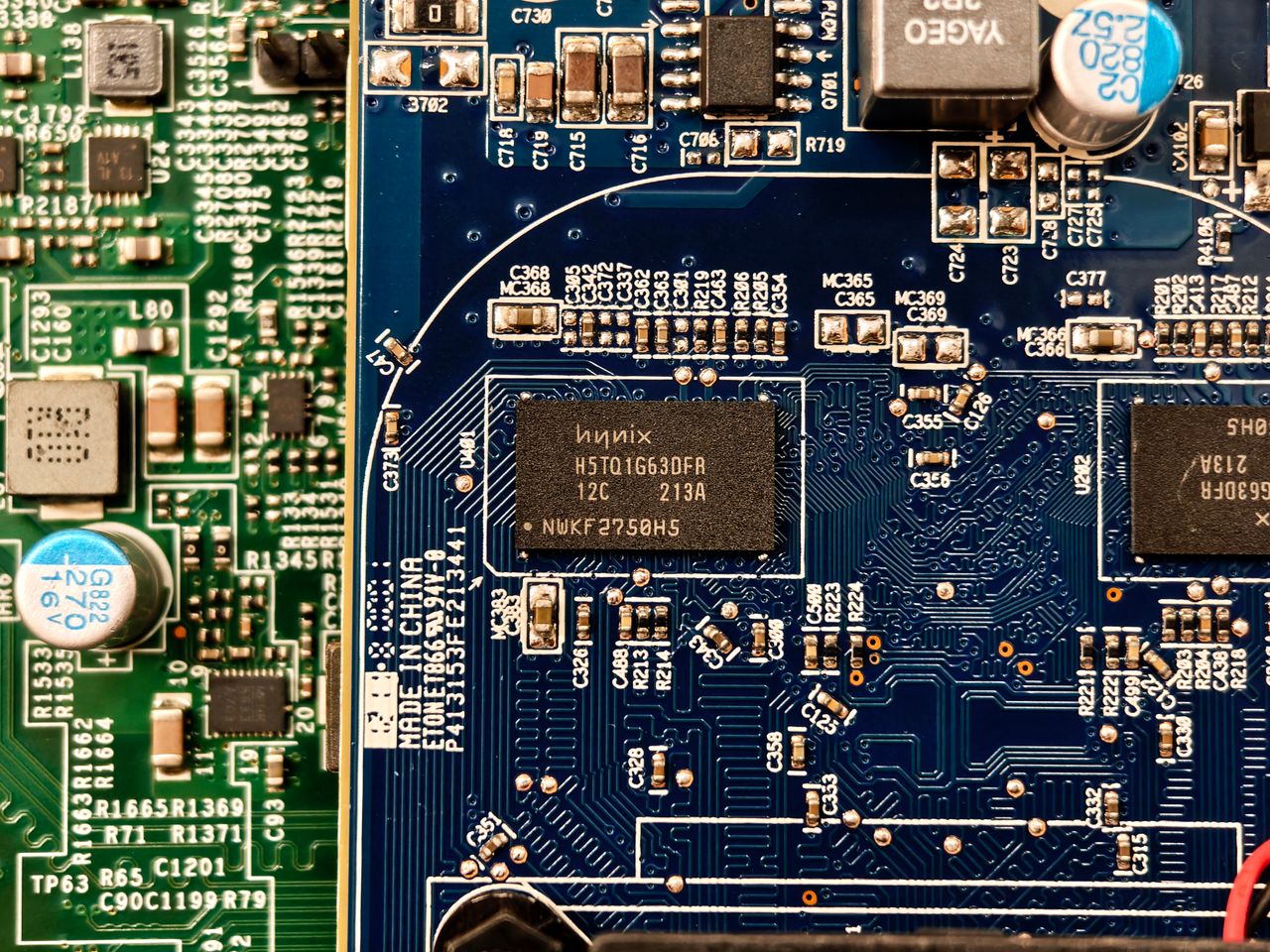
South Korean memory chipmaker SK Hynix is all set for its bumper debut on Nasdaq on Friday, with the company pricing its 17.79 million offering at $149 per American Depository Share (ADS). The offering size, though represents, about 2.5% of pre-issuance outstanding shares.
Through its Nasdaq debut SK Hynix (SKHY) has raised about $26.50 billion, which is less than the $28 billion estimated initially. Nevertheless, the SKHY’s listing was received well, with reports suggesting that the offering was more than seven times oversubscribed.
So far so Good
The gap between the initial $28 billion target and the final $26.5 billion raised is not due to weak demand: SK Hynix's Seoul-listed shares pulled back over the past month alongside broader semiconductor volatility, and the ADS price is pegged to that underlying stock.
In fact, at $149 per ADS, SK Hynix priced its debut at roughly a 3% premium to Thursday's closing price in Seoul. Holding a premium into a 7-times-oversubscribed book, in choppy chip-sector conditions, is typically read as a sign of conviction from underwriters and anchor investors, not caution.
All said and done, SK Hynix’s remains the largest-ever U.S. listing by a foreign company, eclipsing Alibaba's 2014 $25 billion initial public offering (IPO). It is also the second-biggest U.S. listing after Elon Musk-led SpaceX, which raised $85.7 billion.
SKHY arrives with backing from heavyweight long-term holders. Baillie Gifford Overseas, Coatue Management, and Situational Awareness Partners together indicated interest in up to $7 billion of the offering alone. For a deal of this size, a roughly 5% trim from the initial target is a rounding error against a demand book that outstripped supply sevenfold.
What to Watch at the Open
The focus now shifts to the New York open, when SK Hynix begins trading on the Nasdaq. The backdrop appears not too positive. The E-mini Nasdaq 100 futures (NQ) is pointing to a moderately lower open. Retail traders are moderately net long Nasdaq-100 futures (NQ), according to MarketFramework data, a positioning signal that suggests the potential for a rebound in the Nasdaq 100 Index when the cash market opens.
The opening level, the intraday range, and the closing price will provide insight into how the retail crowd has received the offering — a different signal than the institutional demand already captured in the 7x oversubscription.
A few markers worth tracking:
First print vs. $149: A pop at the open would suggest retail interest and late institutional demand piling in beyond the allocated book. On the other hand, a flat or negative open would raise questions about whether the institutional enthusiasm translates to broader market appetite.
Intraday range: Wide swings would point to the mechanical volatility, i.e. the leveraged ETF flows tied to SK Hynix's Korean shares, plus early-day arbitrage activity between the ADS and Seoul-listed stock.
Volume: Elevated turnover on day one, relative to the 17.79 million ADS offered, would signal how much of the flow is fresh capital versus existing holders repositioning.
Sympathy moves in Micron, SOXX, SMH: Watch whether chip peers trade in tandem with SKHY (rising tide) or diverge (rotation out of Micron and into the cheaper SK Hynix valuation). Premarket trading showed Micron and other semiconductor stocks coming under pressure, potentially reflecting profit-taking after the strong gains recorded over the previous two sessions.
Taken together, the first session's action will say more about durable investor appetite for the artificial intelligence (AI) memory trade than the pricing and subscription numbers alone. As opposed to the latter, which measures institutional conviction going in, Friday’s tape measures whether that conviction holds up in the open market.
Since SKHY isn't yet part of the Nasdaq 100 or any major benchmark, there's no mechanical passive-index buying at the open: no QQQ inflows, no forced rebalancing from index-tracking funds. That kind of demand only kicks in after eventual index inclusion, which is a later catalyst, not a Friday-open one. That absence makes Friday's open a cleaner read on real demand than it will be once index flows eventually layer on top.
A Bigger Test Than One Stock
Unlike the private funding rounds, this isn't capital that was already earmarked as venture allocation. It is a $26.5 billion draw on public-market institutional capital, competing directly with the same funds already holding Micron, iShares Semiconductor ETF (SOXX), and VanEck Semiconductor ETF (SMH). That sets up a genuine split. And also SK Hynix is not a speculative growth story absorbing risk capital. The company is the top supplier of high bandwidth memory (HBM) chips, the ones used in AI, to the likes of Nvidia. It is also Micron’s largest industry peer. The capital being pulled in is capital that would otherwise likely be deepening existing AI-chip positions, not diversifying into something unrelated.
This takes us to the next question. Whether this is a one-time absorption, one that gets digested without lasting damage, or a signal that AI trade’s capital is stretched thin, translating to a headwind for the rest of the group.
Bulls argue the listing pulls fresh institutional attention into the whole memory trade, lifting Micron alongside it, while bears argue capital rotates into SK Hynix. A shaky debut would read as a crack in that AI-memory supercycle story; a strong one reinforces AI-infrastructure sentiment broadly. Therefore, SKHY’s debut performance carries weight well beyond one stock.


