
Oil is entering a new phase of the Iran conflict. Oil climbed to a five-week high, with the WTI crude breaking above $90 and Brent above $95 as renewed U.S.-Iran hostilities raise fresh concerns about Gulf supply. Both benchmarks have since given back some of the gains.
The catalyst that precipitated the spike was the U.S. strikes of Iranian rocket launchers near Larak Island, an escalation that extinguished any near-term hope of a negotiated opening of the Strait of Hormuz. Oil’s move has been large enough to ripple into currency markets, Treasury yields and equity futures over the past several trading sessions.
But the subsequent reversal has exposed just how quickly the market's narrative can change. Crude turned lower from its five-week high after U.S. Energy Secretary Chris Wright said more than 17 million barrels of oil flowed through the Strait of Hormuz on Monday, the highest level of crude transit since the Iran war reduced flows.
China added another constructive signal. President Xi Jinping said China is willing to work with Middle Eastern countries to "safeguard" shipping through key regional waterways, reinforcing hopes that at least some normalization of energy flows could be possible.
Saxo Head of Commodity Strategy Ole Hansen said the sharp reversal highlights a market where trader conviction remains low, particularly when it comes to holding long positions. Prices are increasingly capable of turning on a dime in response to any comment suggesting an improvement or deterioration in regional flows, he added.
The rally is nevertheless becoming more significant because the market is facing two forces at once: a tightening reserve picture and a geopolitical threat that could remove a meaningful amount of Iranian crude from global supply. The key question is whether the conflict reaches Kharg Island's oil infrastructure.
Kharg Is the Real Oil Market Trigger
Kharg Island is Iran's principal crude export hub and handles roughly 90% of the country's crude exports. It has a loading capacity of around 7 million barrels per day and storage capacity of about 30 million barrels.
That makes Kharg fundamentally different from other Iranian military targets. Strikes on missile systems, radar installations or naval assets can increase geopolitical risk without necessarily removing oil from the global market. Damage to Kharg's loading facilities, storage tanks or connecting infrastructure would directly threaten Iran's ability to export crude.
That is why President Donald Trump's recent threat to destroy Kharg has become such an important variable for oil traders. There has been no confirmed evidence that the island's oil infrastructure has been destroyed, despite Trump's social-media claim that Kharg was being "blown to smithereens."
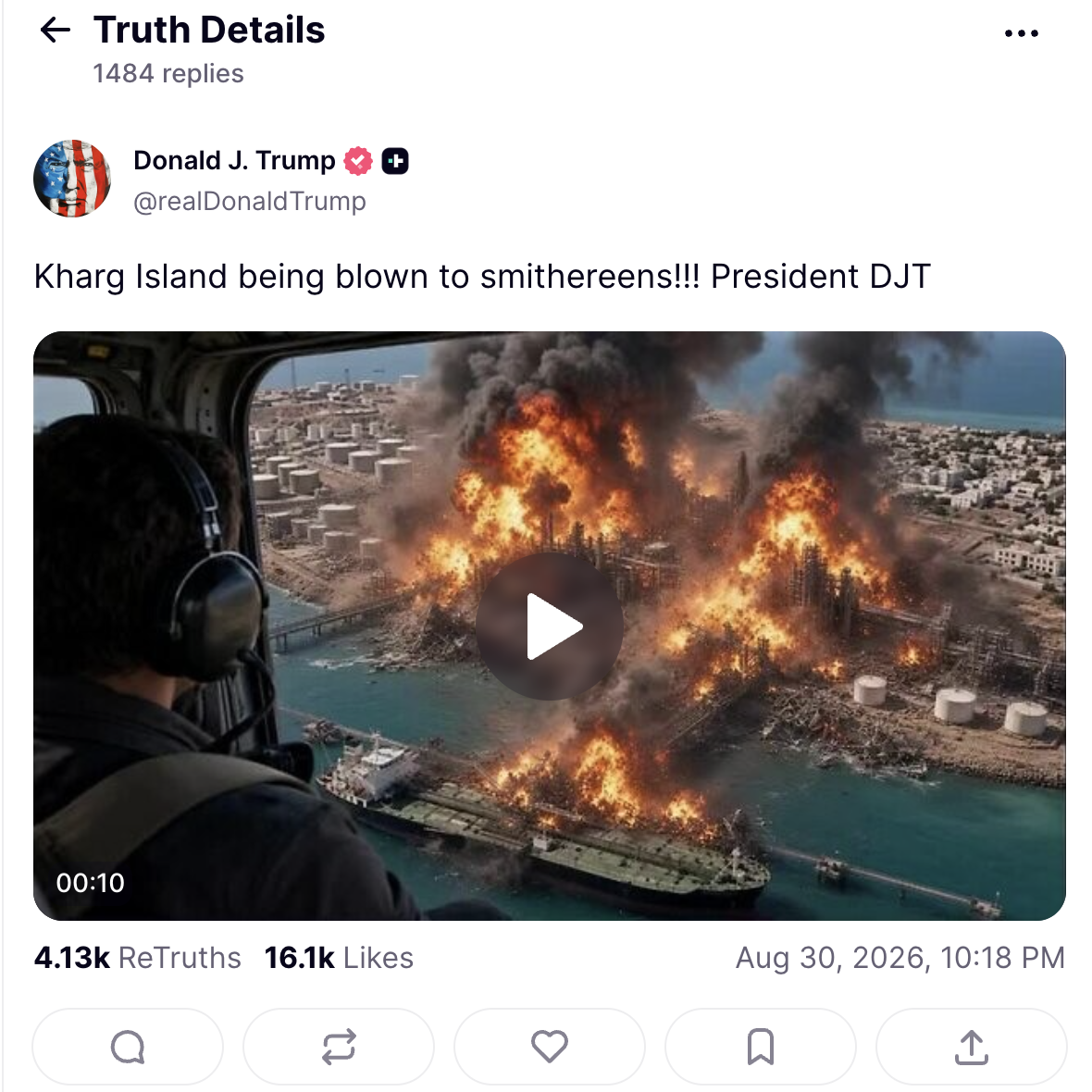
The Market Is Already Pricing the Risk
Crude's move above $90 suggests traders are no longer treating the Iran escalation as a temporary headline risk. Brent has now moved above $95, while traffic through the Strait of Hormuz has fallen sharply amid the renewed fighting.
The distinction matters. If Hormuz disruption remains limited and Kharg continues operating, the market can still argue that the actual supply loss is manageable. But if Kharg becomes a confirmed target, traders would have to price both the loss of Iranian exports and the possibility of retaliation against Gulf energy infrastructure.
That creates the potential for a much larger risk premium.
The SPR Cushion Is Getting Thinner
The other part of the equation is sitting inside U.S. salt caverns.
Washington authorized a 172-million-barrel Strategic Petroleum Reserve (SPR) release as part of an international effort to stabilize global oil supplies after the Iran conflict began. The reserve fell by over 3 million barrels of oil over the week ending on Aug. 28, the Department of Energy (DoE) said, leaving the stockpile at 286.6 million barrels or about 40% of overall capacity.
That matters because the SPR is supposed to provide a buffer when global supply is suddenly disrupted.
The smaller that buffer becomes, the more sensitive the market can become to the next shock. The U.S. may still have substantial commercial inventories and domestic production, but replacing lost Iranian exports or offsetting a prolonged Hormuz disruption is a very different challenge from managing a temporary price spike.
In other words, the market is heading into the next phase of the Iran conflict with less emergency insurance.
Hormuz Remains the Other Half of the Equation
Kharg determines the potential loss of Iranian exports. Hormuz determines how much Middle Eastern oil can actually reach the global market.
Renewed fighting has again raised concerns about shipping through the Strait, with reports of tanker attacks adding to the risk premium.
That creates three increasingly bullish scenarios for crude.
If Hormuz traffic normalizes and Kharg remains operational, the latest rally could lose momentum.
If Hormuz remains impaired but Kharg continues loading, crude could maintain a significant geopolitical premium.
But if Kharg's oil infrastructure is materially disrupted while Hormuz remains constrained, the market would have to price a much more serious physical supply shortage.
$90 Is the Battleground, $100 Is the Scenario
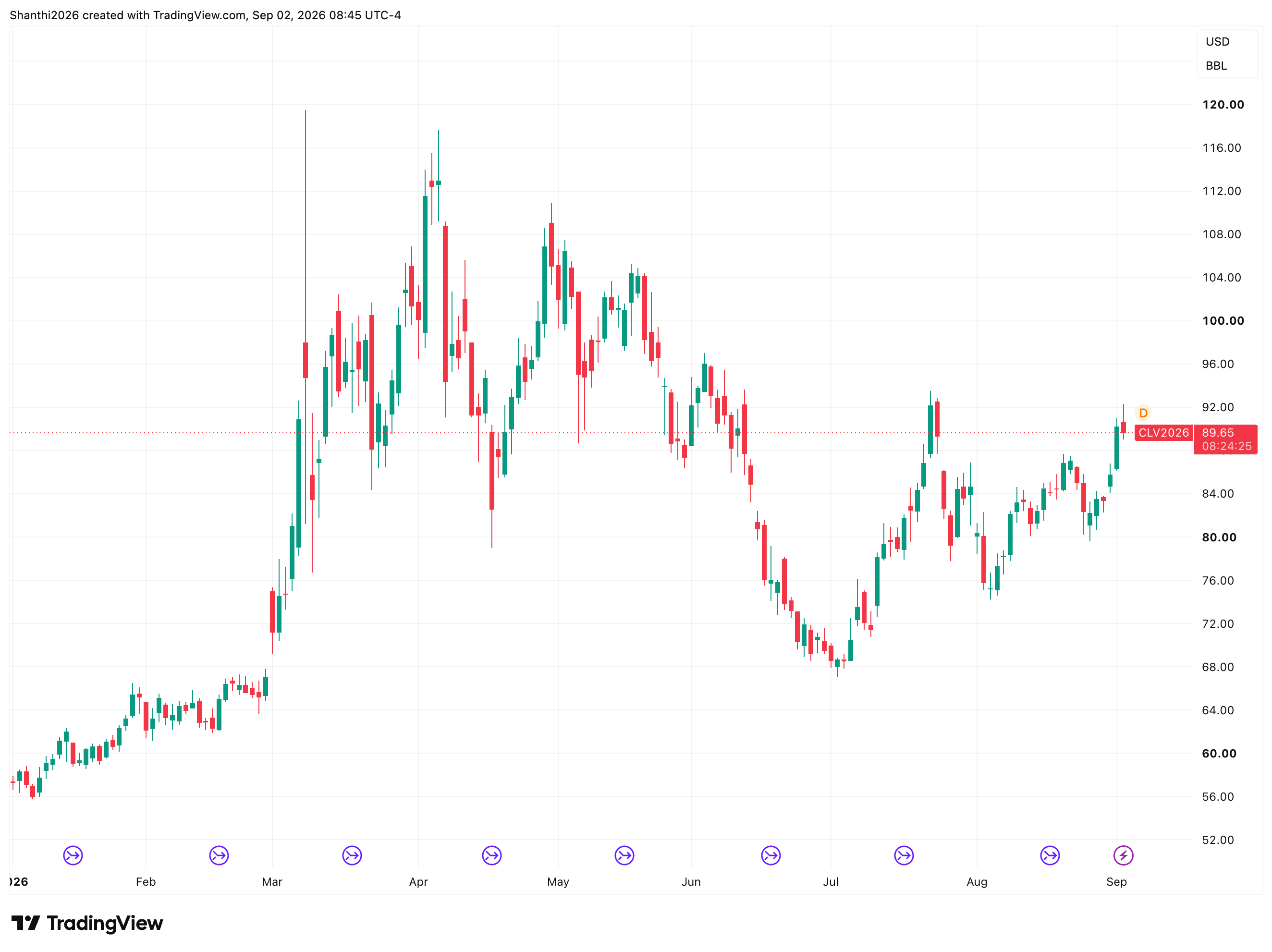
WTI's move above $90 puts the psychological level at the center of the technical setup. If prices can consolidate above $90 rather than immediately reverse, the five-week breakout gains credibility.
Source: TradingView
The next major upside checkpoint is $95, followed by $100. Brent has already crossed $95, bringing the psychological $100 level back into view.
But $100 is unlikely to become a durable target simply because tensions remain elevated. The market needs evidence of an actual supply disruption.
That is where Kharg becomes critical.
The Binary Kharg Scenario
If Kharg remains untouched, oil could struggle to sustain the latest geopolitical premium. If Hormuz shipping gradually normalizes and Iranian exports continue, WTI could find it difficult to hold above $90.
If Kharg's oil infrastructure is hit, the equation changes dramatically. Removing or materially impairing Iran's primary export hub would threaten a significant source of global supply and could push Brent decisively toward $100, with WTI potentially following.
If Kharg is attacked and Hormuz remains disrupted that would represent the most bullish scenario for crude. Traders would simultaneously be pricing lost Iranian exports and difficulty moving oil through the world's most important energy chokepoint.
For now, Kharg is the line between a geopolitical oil premium and a genuine supply shock. Oil's move to five-week highs is telling traders that the risk is being taken seriously. A confirmed hit on Kharg's oil infrastructure would determine whether the next leg is simply another spike or the move toward $100.

