Crude oil is once again commanding investors' attention. West Texas Intermediate (WTI) futures have surged above $87 a barrel, their highest level in nearly a month, while Brent crude has climbed past $94. The rally has extended to a fifth consecutive session, fueled by mounting concerns that disruptions to Middle Eastern oil flows may persist far longer than markets initially expected.
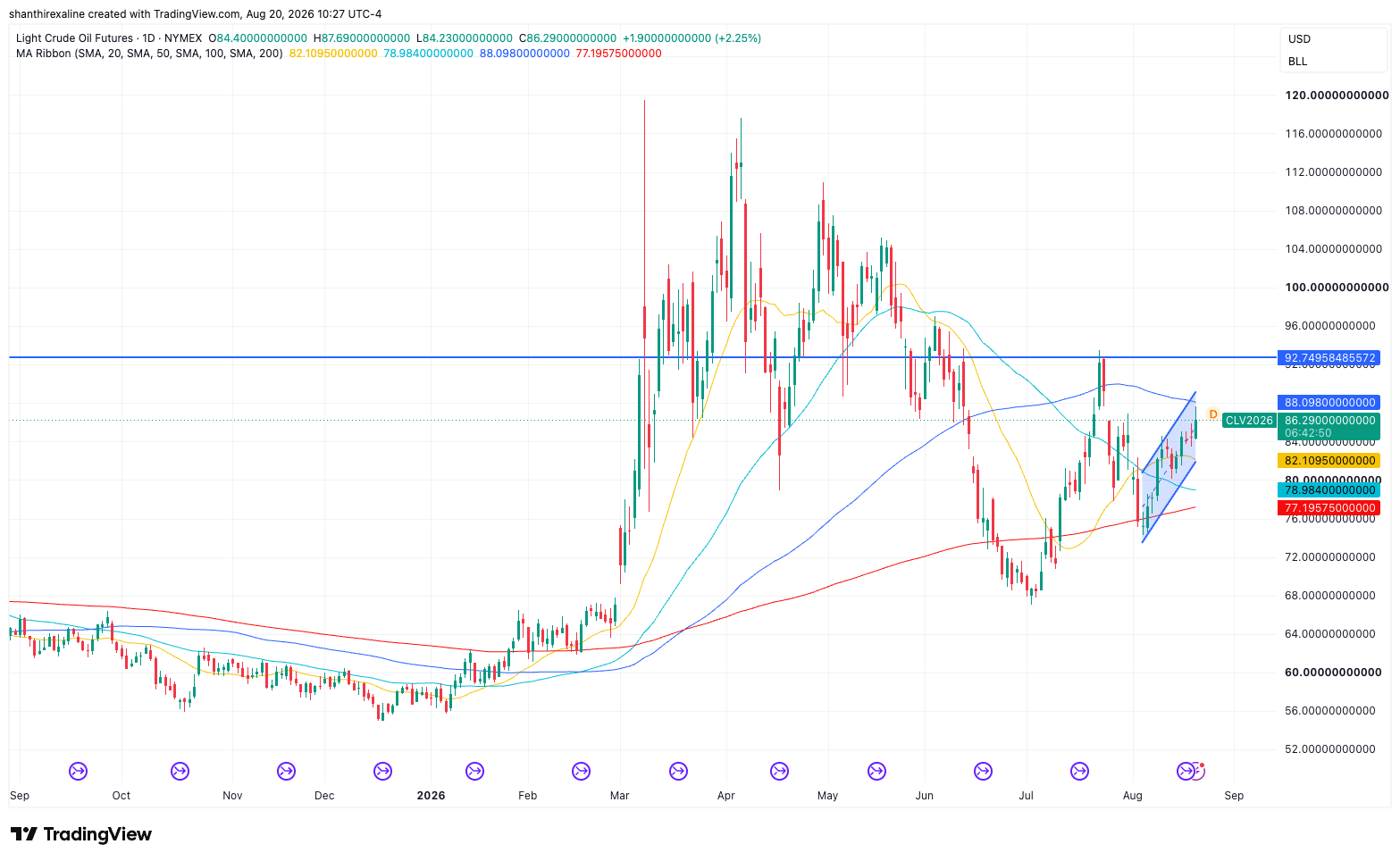
The immediate question for traders is no longer whether oil can rally. It is whether WTI can decisively clear the $88 level, a threshold that could determine whether the current advance evolves into a sustained move toward $90 and beyond.
What's Driving the Latest Surge?
The latest leg higher has been triggered by a combination of geopolitical escalation and worsening supply concerns.
This week, the United Arab Emirates (UAE) suspended economic ties with Iran, adding a fresh layer of uncertainty to an already fragile regional backdrop. At the same time, diplomatic efforts aimed at restoring normal shipping activity through the Strait of Hormuz have shown little progress. The situation intensified further after President Donald Trump signaled a major new economic campaign against Tehran, while Iran continued to insist that the waterway remains effectively restricted.
The Strait of Hormuz remains the market's focal point. Tanker traffic through the corridor is still running well below normal levels, with crude shipments significantly reduced from pre-conflict volumes. Morgan Stanley estimates that flows remain down by roughly 2.2 million barrels per day, keeping traders focused on supply risks rather than demand concerns.
The crisis could also spill beyond the Middle East if the latest reports are any indication. The Financial Times reported Wednesday that Iranian forces have assessed potential attacks on U.S. military assets in southeastern Europe, including facilities in Bulgaria and Cyprus, should President Trump escalate the conflict. The report adds another layer of geopolitical risk for markets, raising the prospect that a broader confrontation could threaten U.S. and allied assets well beyond the immediate theater of conflict.
Why $88 Matters More Than It Looks
The $88 area represents a critical technical and psychological barrier for WTI.
WTI's move above $88 would be significant because the level sits around the upper end of the range established after the late-July reversal in oil prices. The 100-day simple moving average (SMA) also currently sits around this levels. A decisive break above it would put the contract back at levels last seen during the July escalation of the Middle East conflict and could signal that traders are assigning a larger and more durable geopolitical premium to crude.
Such a breakout could encourage momentum funds and trend-following traders to increase long exposure, potentially opening the door to a retest of $90 and eventually the mid-90s.
Source: TradingView
Failure at $88, however, would suggest that the market still sees current disruptions as manageable and temporary.
A Rally Built on Supply Fears, Not Demand Strength
One notable feature of the current advance is that it is occurring despite mixed fundamental data.
U.S. crude inventories unexpectedly rose by 4.4 million barrels last week, matching the five-year average for this time of year, a development that would normally pressure prices lower. Yet the market largely ignored the build, choosing instead to focus on risks surrounding Middle Eastern supply. Distillate inventories, meanwhile, have continued to decline, highlighting tighter conditions in refined fuel markets.
That divergence underscores the market's current mindset: geopolitical developments are carrying far greater weight than traditional supply-and-demand metrics.
Scenario Analysis: What Happens Next?
Bullish Scenario: Break Above $88 Opens Door to $90+
If diplomatic efforts remain stalled and tanker traffic through Hormuz stays constrained, oil's geopolitical premium could continue expanding.
In this scenario, WTI breaks through $88, attracting additional speculative buying and setting up a move toward $90
Base Case: Consolidation Between $85 and $88
A more balanced outcome would see oil consolidating recent gains.
The market would continue pricing in supply disruptions, but rising U.S. inventories and concerns about slowing global demand could limit further upside. Under this scenario, WTI remains supported above $85 while repeatedly testing resistance near $88.
Bearish Scenario: Diplomatic Breakthrough Triggers Profit-Taking
The biggest risk to the rally is an unexpected improvement in the geopolitical outlook.
Any indication that shipping volumes through Hormuz are normalizing or that negotiations are gaining traction could quickly remove a portion of the current risk premium. Because much of the recent advance has been driven by supply fears, even modest signs of progress could trigger aggressive profit-taking and send WTI back toward the low-$80s.
The Bottom Line
Oil's climb to a one-month high reflects a market increasingly convinced that Middle Eastern supply disruptions will not be resolved quickly. Traders have looked past rising U.S. inventories and instead focused on restricted flows through the Strait of Hormuz, escalating tensions between Iran and its regional neighbors, and the lack of diplomatic progress.
For now, $88 is the level that matters. A decisive move above it would suggest the market is preparing for a longer-lasting supply shock. Failure to break through could indicate that the latest rally is already pricing in most of the bad news. Either way, crude's next major move is likely to be determined not by economic data, but by developments in the Middle East.


