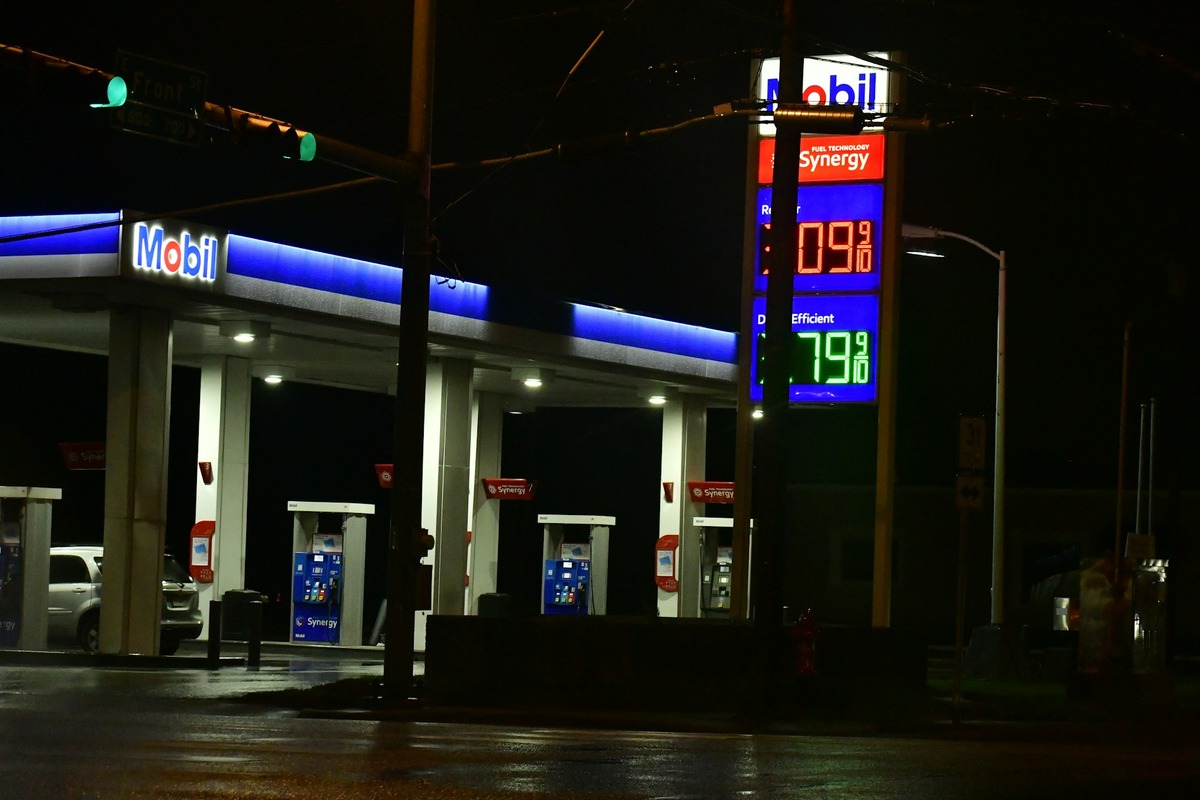
Oil prices may have round-tripped their Iran war spike, but gasoline prices haven't. The U.S. average for regular gasoline is $3.838 per gallon, according to AAA, down sharply from the $4.50+ highs seen in May but still well above the $3.17 recorded a year earlier.
Gas Prices Relent Yet Elevated
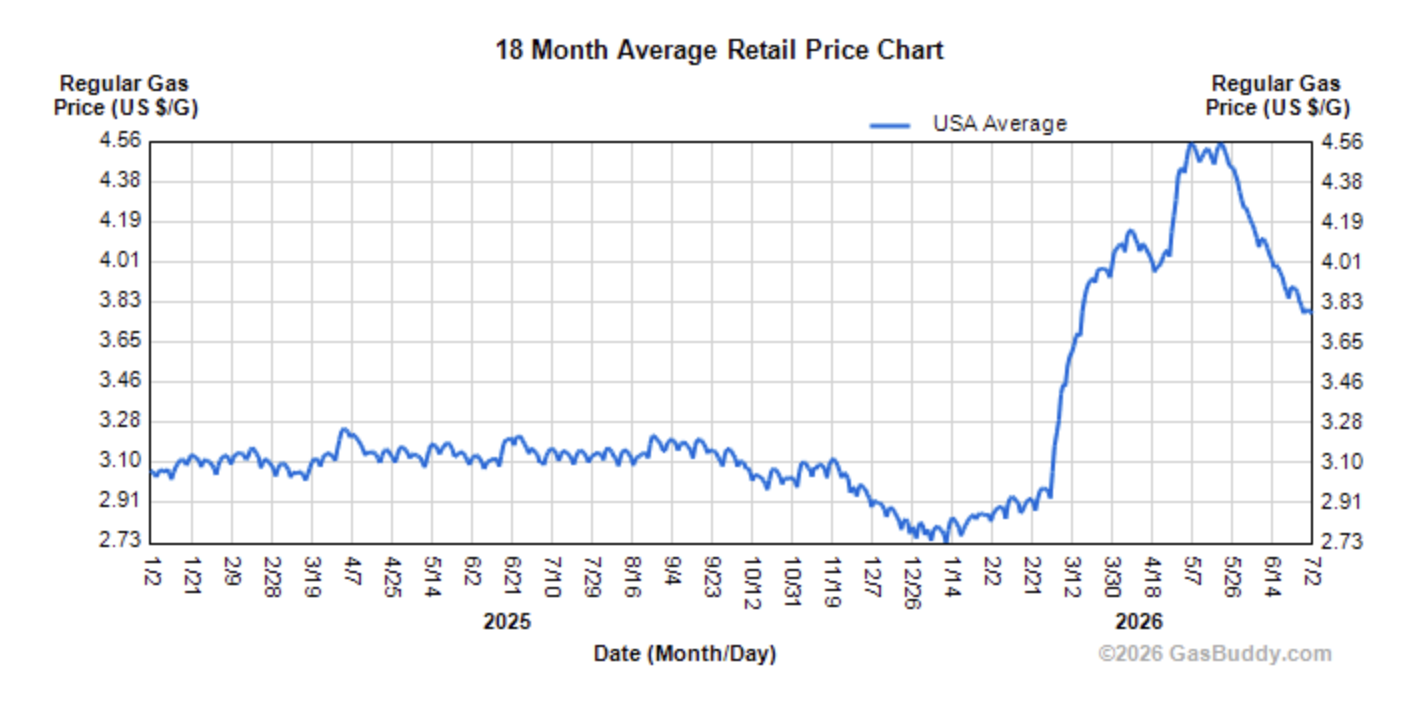
Source: Gas Buddy
Why crude fell faster than gas
A U.S.-Iran agreement to extend the existing ceasefire and reopen the Strait of Hormuz began eating away into the war premium the energy commodity had built up amid the peak of the Middle East geopolitical turmoil. According to MarketFramework data, more than three-fourths of the crude oil futures (CL) traders were short on the contract. The crowd split among winning trades is 75% long. Meanwhile, the share of shorts among the losing trades is 83%.
Gasoline, though, moves on its own clock. Refiners have to work through higher-cost crude already in the pipeline, and summer-blend production costs and strong seasonal demand, keeping a floor under pump prices even as crude eases.
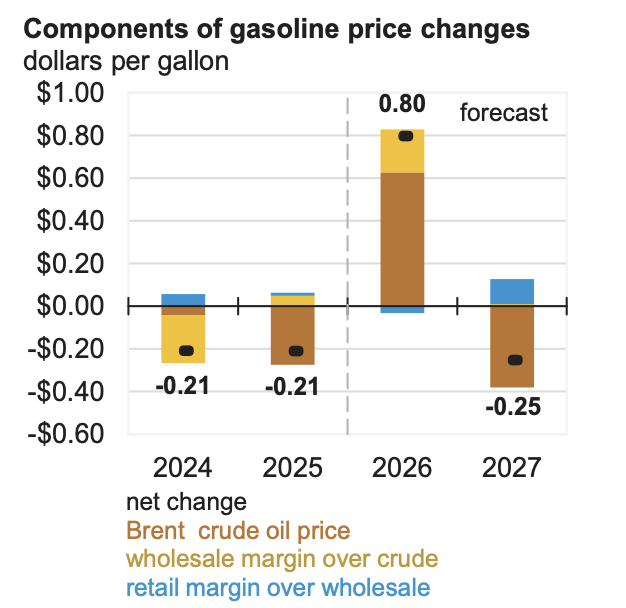
Source: EIA
With the Strait of Hormuz still a geopolitical flashpoint and hurricane season threatening Gulf Coast refining operations, further relief at the pump is far from guaranteed.
The White House is applying pressure of its own
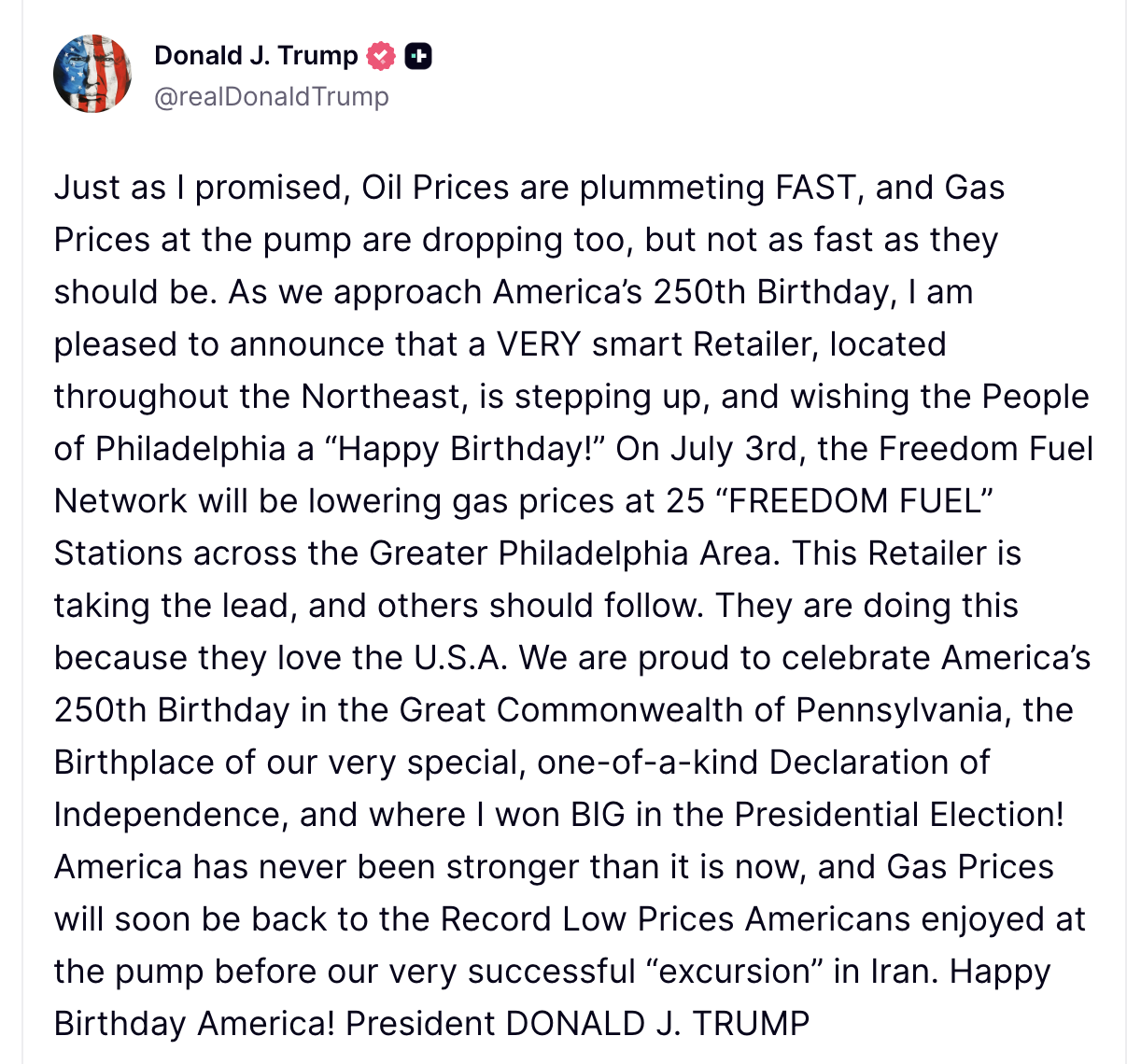
Policy is also playing a role in the pump-price retreat. President Trump has publicly pushed retailers to pass crude's decline on to drivers faster, warning of consequences if prices don't come down. In a post on his Truth Social account on Wednesday, the president lamented that gas prices aren’t falling fast enough
He has also taken more concrete steps to ease supply: waiving the Jones Act temporarily to let foreign-flagged vessels move fuel between U.S. ports, and permitting the summer sale of higher-ethanol gasoline blends that are normally restricted due to smog rules.
It's a notable reversal in tone. Earlier in the conflict, Trump had shrugged off the prospect of higher prices at the pump, telling reporters he wasn't concerned if they rose. With gas now trending back toward $4 and a holiday travel weekend underway, the administration has clearly decided the political cost of expensive gas outweighs the risk of leaning on the industry directly.
The Strait of Hormuz remains the wildcard
While the ceasefire has sharply reduced the immediate risk of supply disruptions, the waterway continues to be the world's most important oil chokepoint, carrying roughly one-fifth of global petroleum consumption. Any renewed tensions between the U.S. and Iran or threats to commercial shipping through the strait could quickly reintroduce a geopolitical risk premium into crude prices, reversing some of the recent decline.
A fresh oil shock would likely slow or even halt the decline in pump prices just as the peak summer driving season, defined as the period between late May to early September, gets underway.
Hurricane season adds a second layer of risk
The other key risk is weather. The Atlantic hurricane season is entering its most active stretch, with August through October historically posing the greatest threat to Gulf Coast refineries that process nearly half of U.S. refining capacity. Even if crude prices remain subdued, storm-related refinery outages or disruptions to fuel distribution could tighten gasoline supplies, widen refining margins, and push retail prices higher.
Together, these two risks suggest that sub-$4 gasoline for the July 4 holiday may not necessarily mark a return to normal prices. Rather, it reflects a temporary easing of geopolitical fears that could quickly be reversed if either Middle East tensions flare up again or hurricanes disrupt U.S. refining operations.
What forecasters are saying about where prices land
The range of expert outlooks underscores just how unsettled this remains:
- Moody's Analytics chief economist Mark Zandi has said that under the most optimistic scenario — no recession, no new shock — he'd expect prices to settle closer to $3.50 by year's end, not drop back below $3.
- GasBuddy's Patrick De Haan has been reluctant to call a peak at all, given that the underlying U.S.-Iran standoff hasn't been fully resolved.
- The EIA's own June outlook projected a full-year 2026 average retail gasoline price of $3.90, compared with its pre-war February forecast of $2.91, a nearly $1-per-gallon upward revision driven entirely by the conflict.
The bottom line for July 4th drivers
This week's dip below $4 is real relief heading into the holiday weekend, but it's built on a fragile and reversible set of conditions: a shipping lane that isn't fully open yet, a hurricane season that's only just getting started, and a crude market still catching its breath from a historic supply shock. Whether prices keep falling through August depends less on this week's headlines and more on whether Hormuz stays open and the Gulf stays quiet.


