
The U.S. economy’s resilience through recent shocks, including the 2022 inflation surge and the tariff-related disruption of 2025, has been due in no small part to a robust consumer sector that continued to spend despite challenging macroeconomic conditions. However, this key engine of growth, which accounts for roughly two-thirds of economic activity, is showing signs of losing momentum. Is the Federal Reserve, which has adopted a decidedly hawkish stance under Chair Kevin Warsh, taking notice?
A Fed That Went Quiet on Consumers
Neither the Fed’s June 17 post-meeting policy statement nor the Summary of Economic Projections (SEP) gave away any hint regarding policymakers’ assessment of the consumer spending environment. The central bank did say the economy was expanding at a “solid pace” but there was no explicit mention of consumers.
Wednesday’s June 16-17 monetary policy meeting minutes could help traders glean clues regarding Fed staffers’ read on consumers’ health. Will the minutes corroborate hard data that points to a slowdown?
Evidence of a Consumer Slowdown Mounts
The final first-quarter GDP report released in late June showed that consumer spending climbed 0.5% quarter-on-quarter, slower than the 1.9% pace in the fourth quarter of 2025 and third quarter’s 3.5% rate.
Sagging Spending
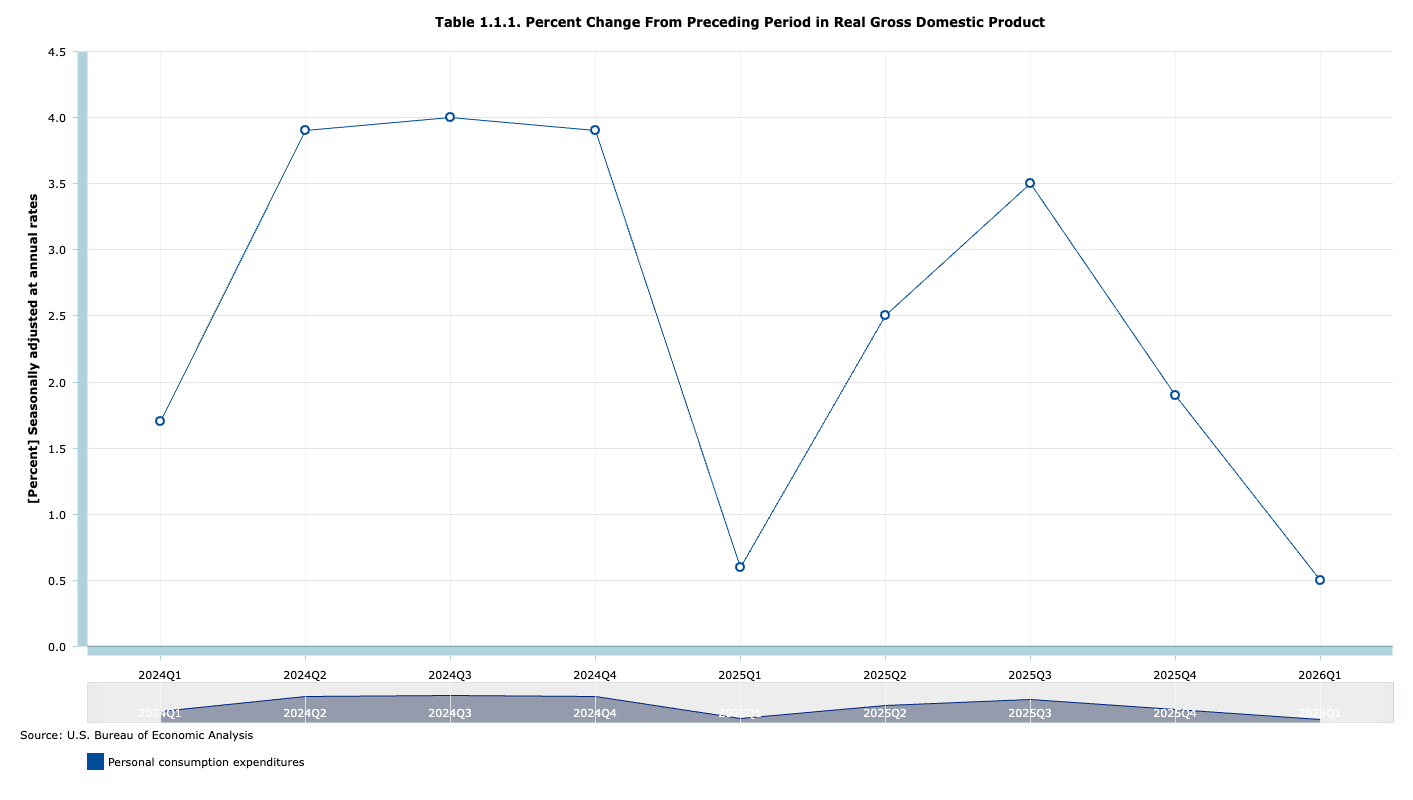
Source: BEA
Real consumption growth is tracking at a 1.2% annualized pace in the first half versus 2.1% in 2025, said Morgan Stanley Economist Heather Berger. The economist attributed the slowdown to higher prices, stemming from tariff-based pass through effects and sharply higher energy prices, denting purchasing power. The softness was concentrated more on services, up merely 1.1% year-to-date (YTD) versus 2.4% growth last year. On the other hand, goods spending accelerated to 1.7% from 1.4%, with the increase attributable primarily to durable goods.
According to Fed researchers, tariff effects have been the greatest for goods imported from China (up 8.5% year over year by December 2025). They estimate at least 30% pass-through effect to consumers for China imports between April 2025 and the year-end.
U.S.-China tariffs have swung dramatically over the past year. Rates that peaked near 145% under IEEPA were slashed to 10% in a May 2025 truce, later extended through November 2026. That truce unraveled legally in February 2026, when the Supreme Court struck down the IEEPA tariffs entirely, replacing them with a flat 10% Section 122 global surcharge alongside unaffected Section 301 China-specific duties.
With Section 301 and Section 232 layers stacking on top, effective rates on many Chinese goods still sit near 30%, and a fresh Section 301 forced-labor investigation (concluding this summer) could push rates higher again before the November truce deadline.
The average nationwide gas prices, although have slipped from $4+ levels seen in May, are still over 60 cents from a year ago, currently at $3.7970 a gallon.
Gas Prices Relent But Not by Much
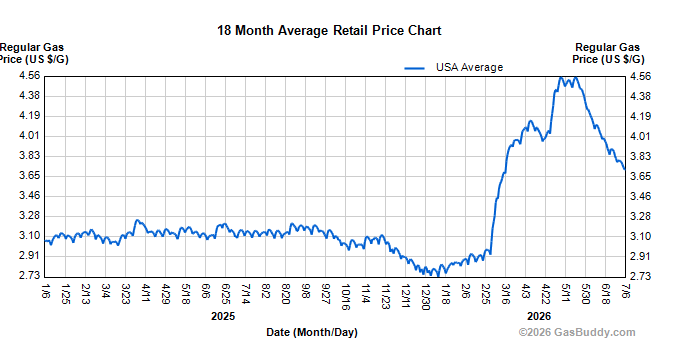
Source: GasBuddy
Check out MarketFramework's Trade Validator for profitable futures trade.
Why Weak Consumer Matters for Fed
This isn't a simple "weak data means rate cuts" story, and that's what makes it a hard one for the Fed to navigate. A cooling consumer normally argues for an easier policy. But the same tariff pass-through that's squeezing household purchasing power is also a source of persistent inflation. That leaves the committee weighing slower growth against sticky price pressure at the same time, a combination that doesn't point cleanly toward either more hikes or a pivot to cuts.
It's the closest thing to a stagflation-adjacent dilemma this cycle has produced, and it's likely the central tension the minutes will either confirm or downplay.
Will Weakness Persist?
The consumer spending slowdown could prove transient. Gas prices are expected to decline further as easing tensions in the Strait of Hormuz help slow energy-price inflation, boosting consumers’ purchasing power. Moreover, the labor market remains relatively healthy despite signs of cooling, providing households with a steady income base. Easing inflationary pressures could also support real wage growth, giving consumers additional room to spend.
Morgan Stanley’s Berger said he continues to expect a slight pickup in consumption growth in the second-half, with services strength returning. The firm expects third and fourth-quarter consumption growth of 2%, rendering the full-year growth to 1.7%, slightly slower than last year’s 2.1%.
The most useful thing traders can do Wednesday is look past the headline "solid pace" framing and hunt for specifics: any staff commentary on consumer resilience, downside risks to spending, or acknowledgment of slowing real income growth would be a sign the committee's internal view is quietly catching up to the hard data.


