Updated with analyst comments
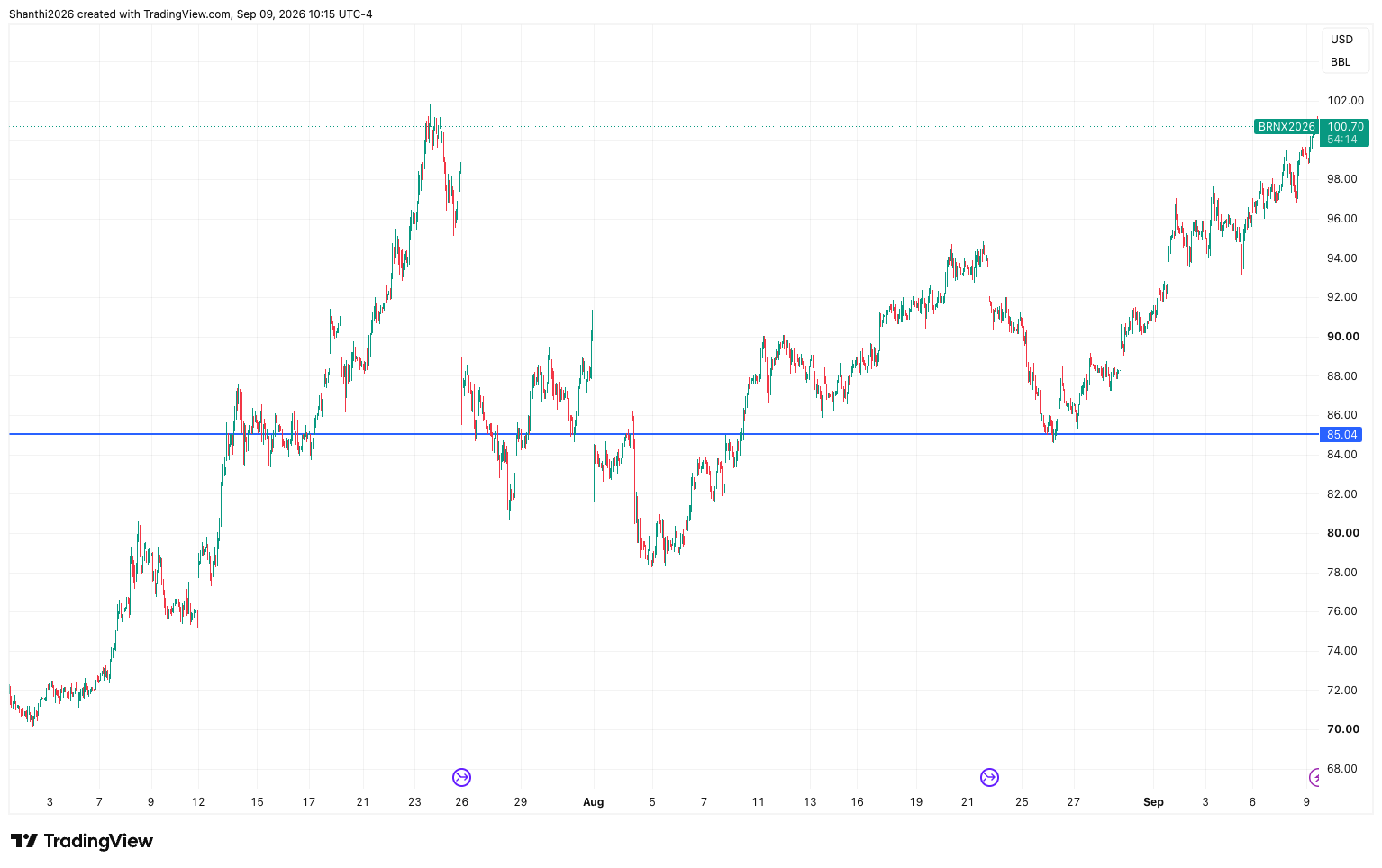
Oil’s extended rally comes just two days before the August U.S. consumer price inflation (CPI), creating a potentially uncomfortable inflation backdrop for markets and the Federal Reserve. The benchmark went past $101 on Wednesday, while WTI climbed above $96 as the Middle East conflict intensified and supply concerns deepened.
The timing is important. The Bureau of Labor Statistics is scheduled to release August CPI on Friday, Sept. 11, at 8:30 a.m. ET, meaning investors are entering the inflation report with oil prices substantially higher than they were when the Energy Information Administration compiled its previous quarterly assumptions.
Oil Has Moved Far Beyond the EIA’s $85 Q3 Assumption
The gap is striking. In its August Short-Term Energy Outlook, the EIA projected Brent crude spot price would average about $85 a barrel in the third quarter. The agency had already raised that estimate by $11 from its previous forecast because of disruptions to oil flows through the Strait of Hormuz.
Brent's Surge Past $100
Source: TradingView
Brent is now trading roughly $15 above that forecast, or about 18% higher. More importantly, the $85 estimate was an average for the entire quarter, while the latest surge suggests the market is pricing a much more severe and persistent supply disruption than the EIA assumed when its forecast was prepared.
The EIA's earlier outlook assumed that reduced shipments through Hormuz would eventually stabilize and that production would begin returning toward normal. But the latest escalation has pushed flows through the waterway dramatically lower, with Reuters reporting volumes falling from roughly 8–9 million barrels per day to below 2 million.
CPI Is About to Test Whether Oil Is Becoming an Inflation Problem
That makes Friday's CPI more consequential than it might otherwise have been. The immediate question is whether August inflation already captured enough of the recent energy-price rebound to alter the market's inflation narrative.
Oil’s $100 Break Is Colliding With Higher Yields Ahead of CPI
Source: TradingView
Miller Tabak Chief Market Strategist Matt Maley said Friday’s August CPI is unlikely to fully capture the latest oil surge. Crude itself is not a CPI component; the transmission comes through refined products such as gasoline. He clarified that diesel, which has seen a huge price spike, is only a very small portion of the CPI data. Also the jump seen over the past week will begin show up only in the coming months, he added.
The bigger issue is what happens if oil remains above $100 through September and October. Energy prices can feed inflation directly through gasoline and other fuel costs, while also raising transportation, production and distribution expenses. A sustained oil shock therefore creates a risk that inflation expectations become harder to contain even if underlying demand remains relatively stable.
That matters particularly for the Fed because the policy debate is no longer simply about whether economic growth is slowing. Higher oil prices introduce a supply-side inflation shock that can make rate cuts, or even a dovish interpretation of policy, more difficult.
Micro WTI Crude Oil (MCL) traders are maintaining a strong long bias, with 72% of positions on the long side, according to MarketFramework’s Top Traded Contracts tool.The bullish skew is reinforced by trader performance data, as winning traders are 76% long, while losing traders are 63% short, suggesting the market's more successful participants continue to favor higher oil prices.
However, conviction has yet to translate into profits this week. The combination of strong bullish positioning and negative aggregate performance suggests traders remain confident in the broader uptrend but have struggled with timing amid recent volatility. If crude oil stabilizes or resumes its advance, the positioning backdrop indicates there is still substantial bullish participation ready to support the move.
The Bigger Problem for Bonds and NQ
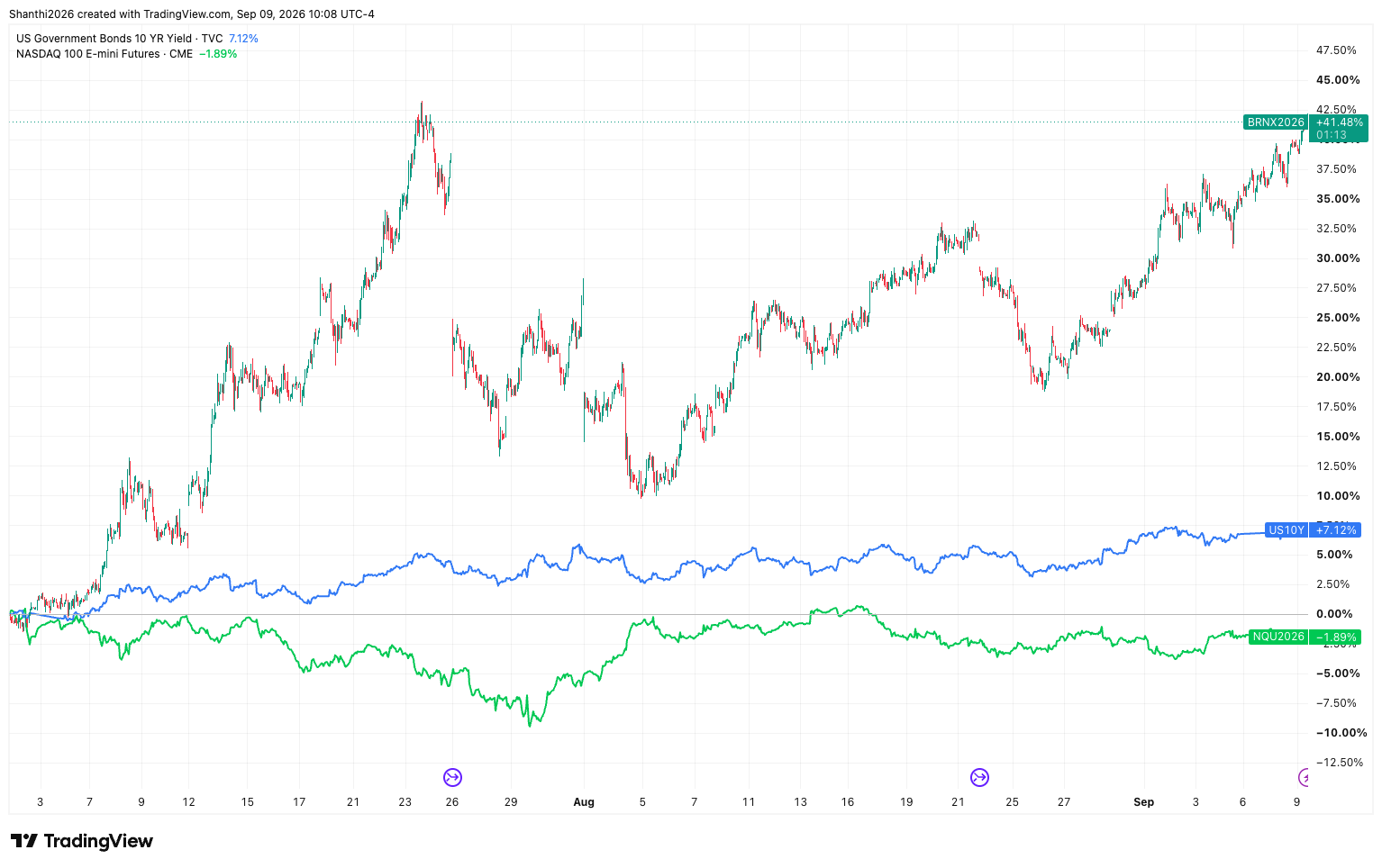
Markets are already responding to that possibility. The 10-year Treasury yield climbed to around 4.81% on Wednesday as oil moved above $100, while Nasdaq-100 futures were under pressure.
For NQ, the combination is particularly uncomfortable. Higher oil threatens to lift inflation, while higher Treasury yields increase the discount rate applied to future technology-sector earnings. That creates a double headwind for high-duration growth stocks.
The key question is whether CPI confirms that energy prices are beginning to push inflation higher or whether underlying price pressures remain sufficiently contained for investors to look through the oil shock.
Maley thinks a push in crude prices past $110 would increase the odds of a Fed hike sooner, rather than later.
Also, at 4.8% 10-year yield, the market is not pricing in a $100 oil, the strategist said, adding that a push in the yield to 5% is not out of question. That said, Maley does not rule out a bounce in the bond market.
The Street is very short the Treasury market…and sentiment is very bearish. Therefore, the Treasury market is getting ripe for a short-term bounce (thus a short-term drop in yields). However, that won’t last very long if oil remains elevated…and it might not happen at all if it pushes above $110.
The Forecast Gap Could Become the Market’s Next Story
The EIA's $85 third-quarter Brent forecast was already higher than its previous estimate, but the market has now moved into a very different price regime. Brent's move above $100 means the remaining weeks of the quarter would have to see a substantial reversal for the average to move back toward the agency's forecast.
The question now is no longer whether oil has exceeded the EIA's forecast; it is whether the forecast itself is becoming stale.
If geopolitical disruptions persist, the EIA may have to raise its assumptions again. And if CPI simultaneously shows renewed energy pressure, markets could begin pricing a more persistent inflation shock rather than treating the oil rally as a temporary geopolitical premium.
What It Means for NQ
For Nasdaq futures, the risk is that $100 Brent becomes a macro ceiling on any tech rally. Even strong company-specific catalysts may struggle to generate sustained upside if oil continues pushing Treasury yields higher.
A cooler-than-feared CPI could provide relief by limiting the immediate inflation reaction. But if inflation comes in hot while crude remains above $100, traders could face the more difficult combination of higher oil, higher yields and a less accommodative Fed outlook.
Maley mirrored this view but pointed to other headwinds ahead.
If the CPI data is soft, it should help the stock market rally. In fact, it’s something that could last for a little while. However, the issues facing the global debt markets…and the questions about the ROI on AI…should create more headwinds over the next 6-12 months...if we don’t get some serious relief on Treasury yields.
For NQ, Friday's CPI is therefore not just an inflation report. It is the first major test of whether the oil shock is becoming powerful enough to change the rate-and-yield backdrop that has been driving technology stocks.