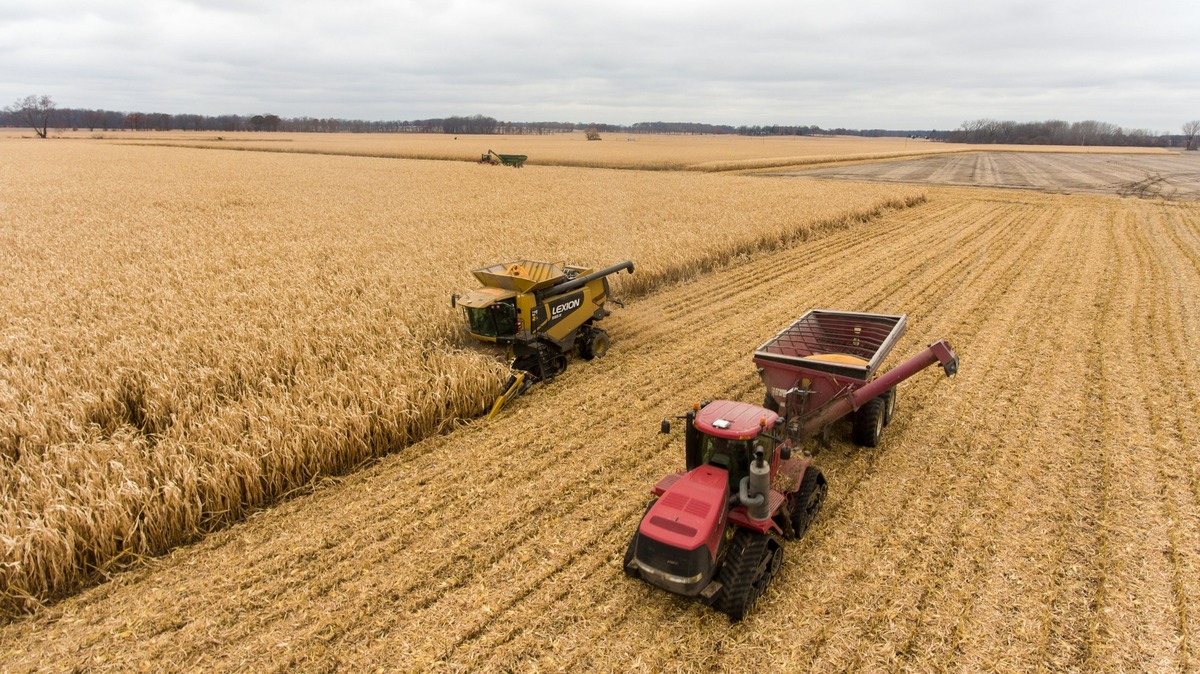
Agricultural commodity futures advanced on Tuesday despite a stronger U.S. dollar following a hotter-than-expected April inflation reading, as traders assessed the latest World Agricultural Supply and Demand Estimates (WASDE) report released by the U.S. Department of Agriculture (USDA).
Wheat and Corn Outlook Weakens Across Key Metrics
The USDA projects a broad decline in U.S. wheat fundamentals for the 2026/27 marketing year. Planted and harvested acreage are both expected to fall, while yields per harvested acre are also projected to decline. As a result, wheat production is forecast at 1.561 billion bushels, sharply lower than the 1.985 billion bushels estimated for 2025/26.
Although wheat imports are expected to rise by 25 million bushels, total supplies are still projected to decline to 2.636 billion bushels from 2.964 billion bushels a year earlier. Exports are estimated to fall to 775 million bushels from 910 million bushels, while both domestic usage and ending stocks are also expected to contract significantly.
The USDA further noted that survey-based winter wheat production for 2026/27 is forecast to decline 25% year over year to 1.048 billion bushels, underscoring tightening supply conditions.
Corn fundamentals also point to a softer supply outlook. U.S. planted and harvested acreage are both expected to decline year over year, with yields edging slightly lower. Despite beginning the season with larger carry-in stocks of 2.142 billion bushels, ending stocks for 2026/27 are projected to slip to 1.957 billion bushels due to weaker production.
Meanwhile, tighter supplies are expected to support prices, with the average farm price forecast rising to $4.40 per bushel from $4.15 in 2025/26.
Soybeans Benefit From Strong Demand
In contrast, soybeans are expected to post stronger acreage and demand growth. Planted area is projected to increase to 84.7 million acres from 81.2 million, while harvested area is forecast at 83.7 million acres versus 80.4 million acres in the prior year.
The USDA projects U.S. soybean crush for 2026/27 at 2.75 billion bushels, up 120 million bushels from the previous forecast. The increase is being driven by favorable processing margins and robust demand for soybean oil as a biofuel feedstock.
What to Watch in Near Term
Looking ahead, geopolitical developments, particularly any renewed trade engagement between the U.S. and China, including the possibility of a high-level visit by Donald Trump to China, could become a major catalyst for agricultural markets. Improved U.S.-China trade relations may revive Chinese demand for American soybeans, corn, and other farm exports, potentially providing additional price support and improving export prospects for U.S. growers.
Read Next: Update: US April CPI Accelerates at Its Fastest YoY Pace In 3 Years as Iran Conflict-Stoked Energy Price Spike Props Up Prices


