Updated with comments from Warsh's press briefing and analysts comments
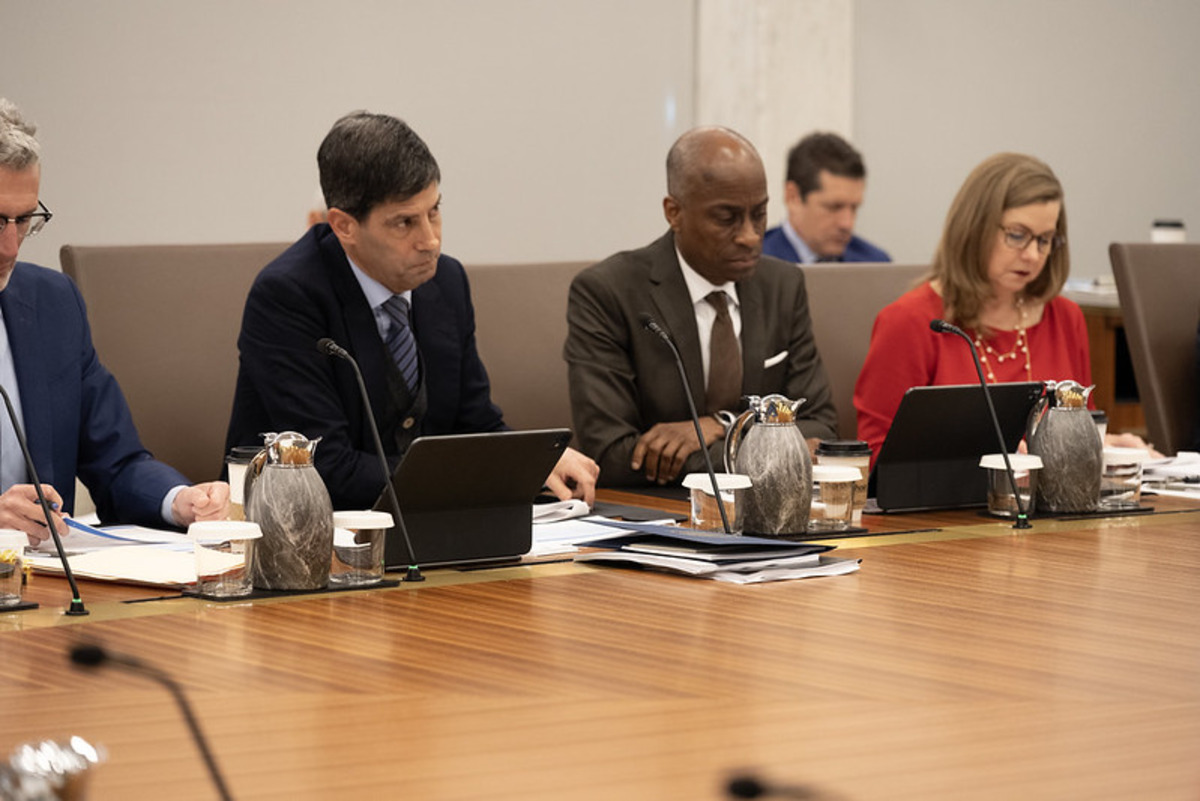
Stung by persistently elevated inflation, firmer inflation expectations and a renewed surge in energy prices, the Federal Open Market Committee (FOMC), headed by Chair Kevin Warsh, raised its benchmark federal funds rate by 25 basis points to 3.75%-4%, at the conclusion of its two-day September meeting on Wednesday.
The decision, adopted unanimously, marks the first Fed rate hike since July 2023, ending a prolonged period of policy stability. The central bank had paused its rate-cutting cycle in January 2026 after lowering rates between September 2024 and December 2025, and subsequently kept policy unchanged through five consecutive meetings leading into September.
The move signals a significant shift in the Fed's policy stance as policymakers confront renewed inflation pressures even as financial markets remain sensitive to the impact of higher borrowing costs. Energy prices have added to the inflation challenge, while rising inflation expectations increase the risk that price pressures could prove more persistent.
Fed Flags Solid Growth, Elevated Inflation
In the policy statement, the central bank qualified the economic activity as "expanding at a solid pace." It also noted resilient domestic spending, despite the elevated uncertainty that owes, in part, to geopolitical developments.
Commenting on the labor market, the Fed noted "strong" productivity growth and "robust" capital investment. "Job gains have kept pace with the workforce, and the unemployment rate has changed little," it said.
The central bank repeated its assessment that inflation remains elevated but left out the previous reference to the driver of inflation namely "supply shocks that have driven price increases in certain sectors, including energy."
In a new addition to its September policy statement, the Fed said, “Today’s policy action will support a timelier return to the Committee’s 2 percent goal.” The addition could suggest that policymakers view the rate hike as a targeted measure to bring inflation back toward its 2% objective, potentially ruling out an extended tightening cycle.
The committee reiterated that it will deliver price stability.
Updated Forecasts and the Dot-Plot
The Summary of Economic Projections (SEP) released along with the post-meeting policy statement showed
Updated 2025 Forecasts and the Dot-Plot
| September Forecast | June Forecast | |
|---|---|---|
| GDP | 2.3% | 2.2% |
| Jobless rate | 4.1% | 4.3% |
| PCE Inflation | 3.7% | 3.6% |
| Core PCE Inflation | 3.4% | 3.3% |
| Fed Funds Rate | 4.1% | 3.8% |
The Fed nudged up its 2027 GDP forecast to 2.4% from 2.3%, while leaving PCE and core PCE inflation forecast unchanged at 2.3% and 2.5%, respectively. Instead of inflation returning to the 2% goal in 2028, the Fed now expects it to happen by 2029. Core PCE is also set to return to the central bank's goal by the same timeframe.
The dot plot grid of individual officials’ expectations indicated that 16 of the 18 participants expected another hike, with four of those seeing two more as possible. Two participants expected the committee to stop at one hike. Warsh refrained from offering his dot yet again at the September meeting.
However, there are no increases forecast for subsequent years, with one cut each indicated for 2028 and at least one for 2029.
Strategists Diverge
LPL Financial Chief Economist Jeffrey Roach said the Fed's latest projections carry a more hawkish tone, suggesting policymakers could keep rates higher for longer if economic growth remains resilient.
"The hawkish overtones are throughout the latest Summary of Economic Projections," Roach said, adding that the inflation debate could increasingly center on how quickly price pressures improve as geopolitical conflicts ease and energy markets stabilize.
Roach said the Fed's focus on bringing inflation back toward its 2% objective remains central to the policy outlook. If the economy maintains its current pace, he suggested that markets may need to adjust to a longer wait for rate cuts, while the possibility of another hike remains on the table.
Lloyd Financial's Colin Symons described the Fed's decision as a “dovish hike,” pointing to the contrast between the unanimous 25-basis-point increase and the median projection for only one additional hike this year.
Symons noted that expectations for the decision had varied widely despite broad consensus that rates would rise, with some investors anticipating a significant number of dissenting votes. Instead, the unanimous decision provided a more hawkish signal on the immediate policy move, while the rate path appeared relatively restrained.
Market reaction has so far been measured. Symons said Treasury yields had already risen sharply in recent years, setting a high bar for the Fed decision to trigger another significant equity sell-off. Following the announcement, the yield curve flattened, with yields in the belly moving higher while longer-dated yields began to decline. The dollar also edged higher, while stocks retained their gains. The U.S. Dollar Index, meanwhile, broke above the 100 psychological resistance.
Warsh Stresses Inflation Risks
"Our predominant focus is on the price stability side of our mandate. The plain fact is that inflation is too high, and has been for too long,” said Warsh in the post-meeting press conference that followed.
The Fed Chair also remarked that This summer’s inflation readings do not tell that underlying trends have meaningfully improved, with many categories within the CPI and PPI data still showing more than 3% increases on a six- and 12-month basis.
Shedding light on what changed during the inter-meeting period, Warsh said data in recent weeks underlined the economic strength, especially the labor market, inflation remaining elevated over the summer relative to the Fed's 2% stated goal and the geopolitical developments, although he did not explicitly refer to the Middle East conflict.
Following Warsh's inflation comment, the major stock market averages declined, reversing their earlier gains, with the Dow bearing the brunt of the sell-off.