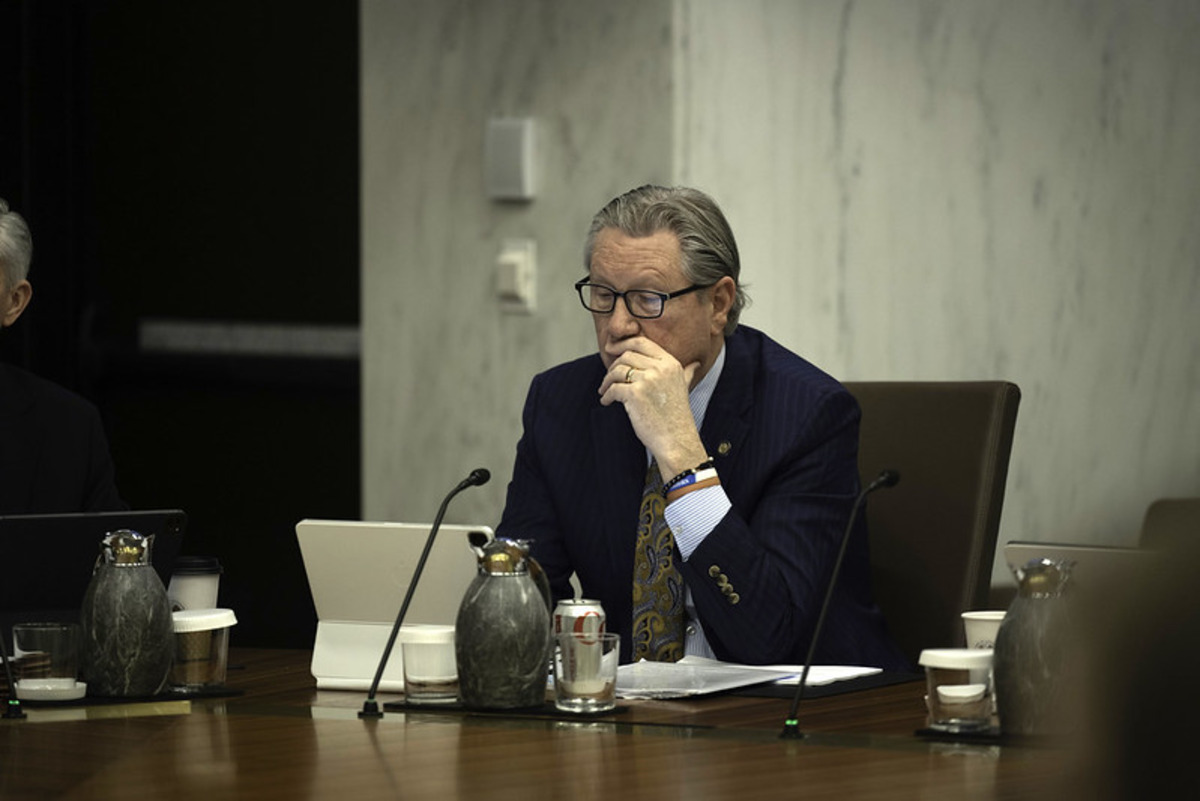
Kansas City Federal Reserve Bank President Jeffrey Schmid backed Wednesday’s interest-rate hike, saying inflation remains his primary monetary-policy concern, while using his first post-FOMC speech to highlight the growing importance of instant payments for community banks.
Schmid Backs Rate Hike, Keeps Focus On Inflation
Schmid said he supported the Federal Open Market Committee's (FOMC) decision Wednesday to raise the policy rate and tighten the stance of monetary policy, arguing that the move responded to inflation that has remained above the Fed's 2% objective for more than five years.
“The most recent readings suggest a pace that is trending above 3%,” Schmid said, adding that the Fed has “work to do on inflation” and that this week's action was a step in that direction.
The comments reinforce the inflation-focused rationale behind the September decision.While higher oil prices have contributed to recent price pressures, Schmid cautioned against attributing elevated inflation primarily to energy or other supply-side factors.
Schmid: Look Beyond Oil
Schmid argued that inflation reflects both supply and demand conditions, with persistent price increases signaling that the two sides of the economy are out of balance.
While acknowledging that supply remains an issue for some commodities, he said the Fed should keep its focus on the overall balance in the economy. High inflation, in his view, is evidence that the economy remains out of balance, meaning monetary policy still has a role to play through its influence on demand.
That distinction is important for markets because it suggests Schmid does not view supply-related inflation as something the Fed can simply look through. Even when commodities such as oil are driving part of the price pressure, he sees broader demand conditions as relevant to the policy response.
Labor Market In Balance, Growth Remains Solid
Schmid's assessment of the broader economy was less concerning. He said the labor market appears to be in balance, with unemployment at 4.1%, while consumer spending and business investment continue to support solid economic growth.
That combination leaves inflation as the dominant issue in his policy assessment. Schmid said that with the labor market in balance and growth resilient, inflation is his “primary concern” when considering the appropriate course for monetary policy.
The comments are notable coming just two days after the FOMC's rate decision, although Schmid did not provide new guidance on the timing or magnitude of future policy moves in the speech.
FedNow Push Targets Community Banks
Schmid also urged community banks to embrace the Fed's instant-payment network, FedNow, arguing that faster payments could become an important competitive tool. More than 1,900 institutions have signed up since its 2023 launch, though participation among smaller banks remains limited.
He warned that banks could risk losing customer activity if they cannot offer instant payments, as customers may increasingly gravitate toward institutions that provide the service.
Policy Signal Is Inflation, Not A New Rate Path
Schmid's post-FOMC remarks provide another indication that inflation remains central to the Fed's policy debate. His comments support the rationale for Wednesday's hike but stop short of offering a fresh signal about what comes next.
The more immediate takeaway is therefore the continued emphasis on inflation. Schmid said the economy remains resilient and the labor market is broadly balanced, leaving persistent price pressures as the key issue shaping his view of monetary policy.
The rest of his speech points to a different, longer-term theme: the Fed sees modernization of the payments system, particularly through FedNow, as increasingly important to the competitiveness and customer relationships of community banks.