
The U.S. dollar is extending its September rebound, with the DXY hovering around 101.3-101.5, close to its highest level in two months. The index is on track for its strongest monthly performance since June (+1.9%), supported by rising Treasury yields, elevated oil prices and expectations that the Federal Reserve could deliver another rate increase as soon as October.
The CME FedWatch Tool now puts the odds of a quarter-point hike at the October meeting at 68.1%.
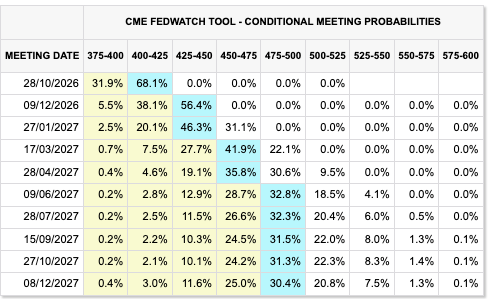
Source: CME
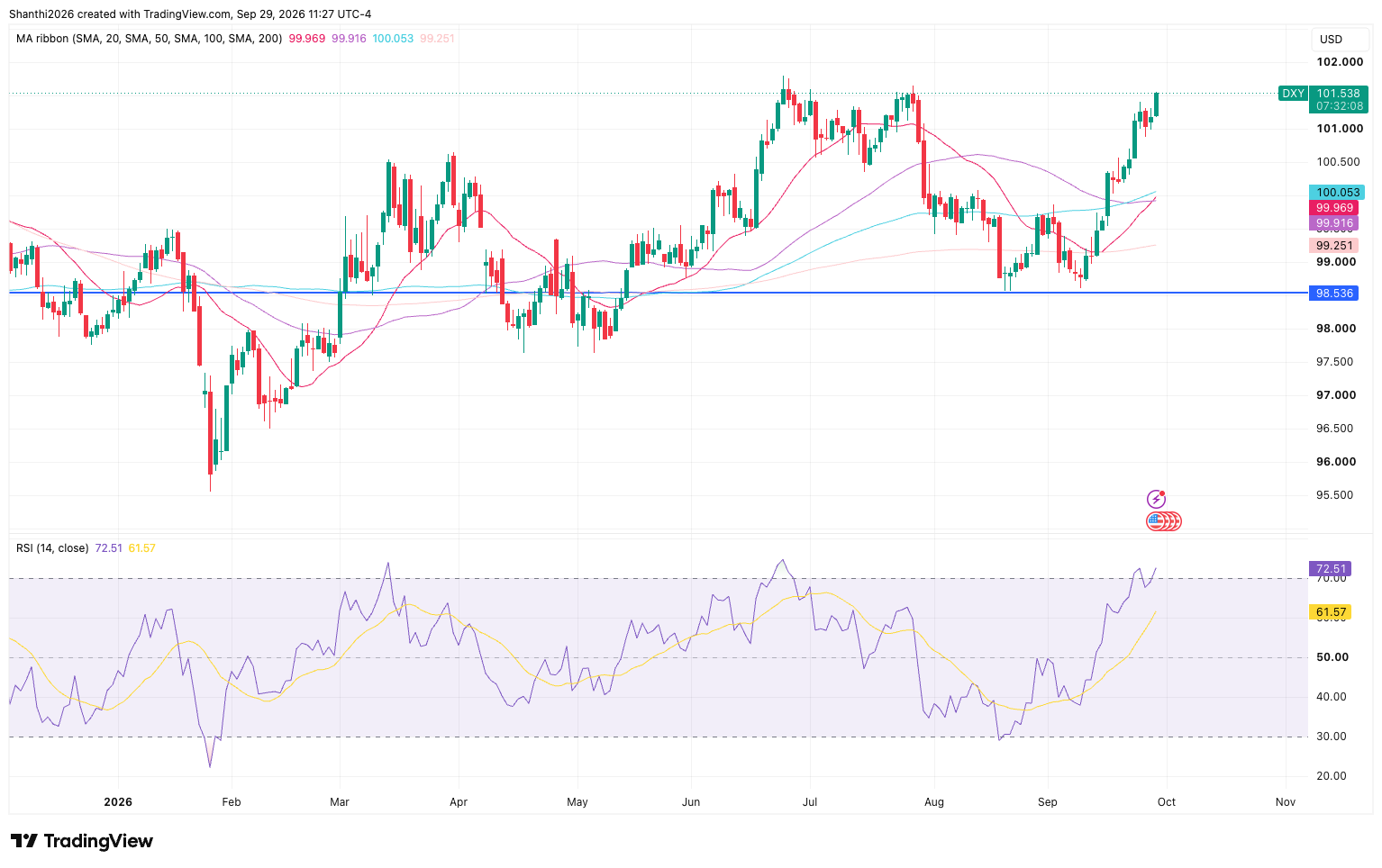
But the latest advance is bringing the dollar back toward a familiar technical ceiling. DXY has struggled to establish a sustained foothold above the 101-102 region, making the current move an important test of whether the September rally represents a broader trend shift or another failed attempt to break higher.
The challenge is becoming more pronounced as momentum indicators move into stretched territory. After a sharp advance from the high-98 area, the dollar has already traveled a considerable distance in a relatively short period, raising the risk of consolidation or a pullback if fresh fundamental catalysts fail to materialize.
Oil and Yields Keep the Dollar Supported
The fundamental backdrop remains favorable for the greenback. Uncertainty surrounding the U.S.-Iran conflict and the Strait of Hormuz has kept energy markets volatile. Higher oil prices are feeding inflation concerns and, in turn, strengthening expectations for additional Fed tightening.
Treasury yields have provided another source of dollar support. The 10-year yield climbed above 5.2%, reaching its highest level since 2007, while the rise in longer-term yields has reinforced the appeal of U.S. assets and increased expectations that monetary policy may remain restrictive for longer.
US Data Could Decide Whether 101 Gives Way
The dollar's next leg may depend increasingly on incoming U.S. economic data. Investors are watching labor-market and inflation readings for evidence that the economy remains strong enough, and inflation persistent enough, to justify another rate increase.
A combination of firm U.S. data, elevated oil prices and high Treasury yields could give DXY another attempt at the 101.50-102.00 zone. Conversely, softer data or a decline in oil and yields could reduce the rate premium supporting the dollar and expose the index to profit-taking.
That makes the upcoming data particularly important because the dollar's recent gains have increasingly been driven by the interest-rate differential rather than a broad improvement in global growth expectations.
Overbought Momentum Meets a Key Technical Test
Technically, DXY remains above its major moving averages after rebounding from support around 98.00-98.50. The index has moved above the 20-day and 50-day averages, reinforcing the recovery structure.
However, the rally is now confronting resistance around 101.50-102.00, while momentum has become increasingly stretched. A decisive close above this zone would strengthen the technical case for a broader dollar breakout and shift attention toward higher levels.
Source: TradingView
Failure to clear resistance, particularly if RSI rolls over from elevated territory, would instead increase the probability of consolidation. In that scenario, 101.00 becomes the first level to watch, followed by the moving-average region around 99-100.
Scenario Analysis (PCE+NFP) for DXY
| Scenario | Likely DXY Reaction | Key Technical Levels |
|---|---|---|
| Inflation, jobs reaccelerate | Strongest bull case | Break above 101.80 could expose 102+ |
| Hot PCE + soft NFP | Initial dollar strength may fade | 101.60-101.80 remains difficult resistance |
| Cool PCE, Strong NFP | mixed-to-positive dollar | 100.80-101.80 consolidation |
| Cool PCE, Weak NFP | bearish dollar scenario | failure to hold 101.60-101.80 could drag DXY toward 101, then 100 |
| Both data broadly in-line | Rally's momentum could fade | Consolidation below 101.80 |
The dollar therefore enters the next phase of its rally with both sides of the setup clearly defined: oil, Treasury yields and Fed-hike expectations are providing the fundamental fuel, while the 101.50-102.00 area and stretched momentum represent the technical test.